
George I Bookcase
A george i bookcase brings refined architectural proportion and rich timber grain to a room.
George I Bookcase
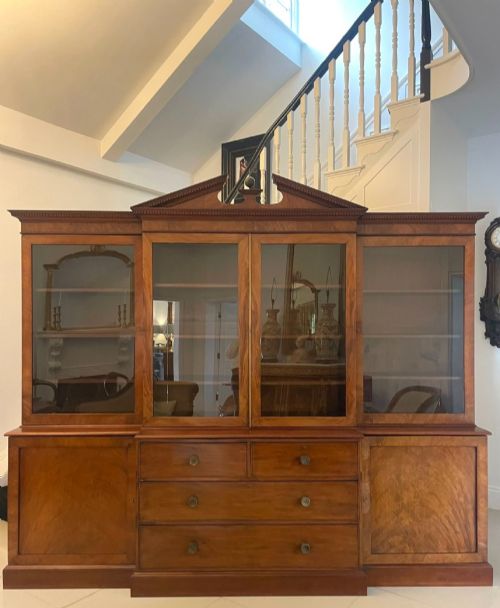
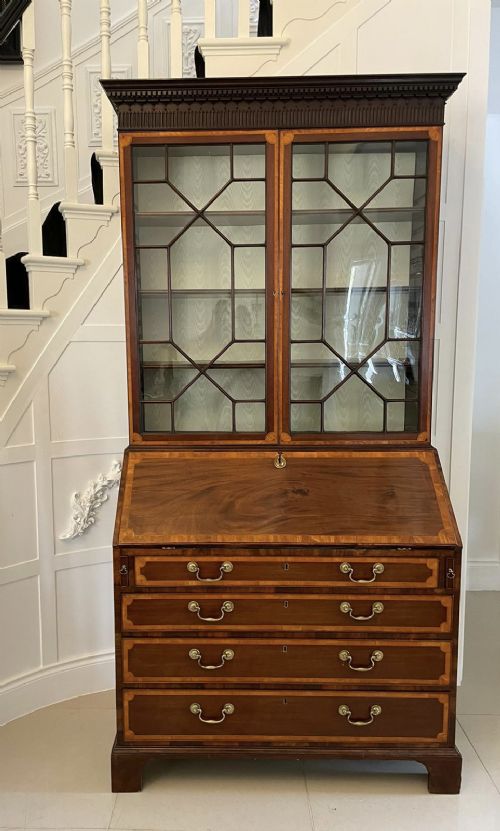
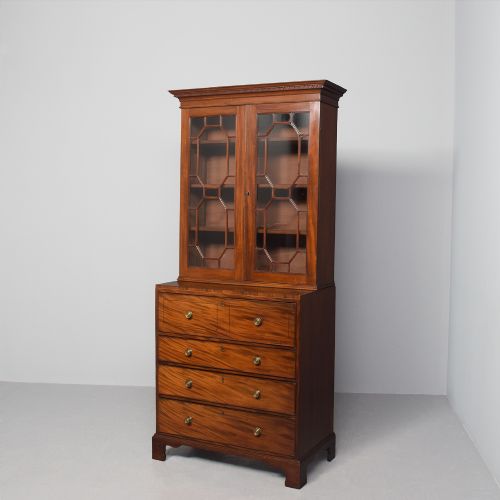
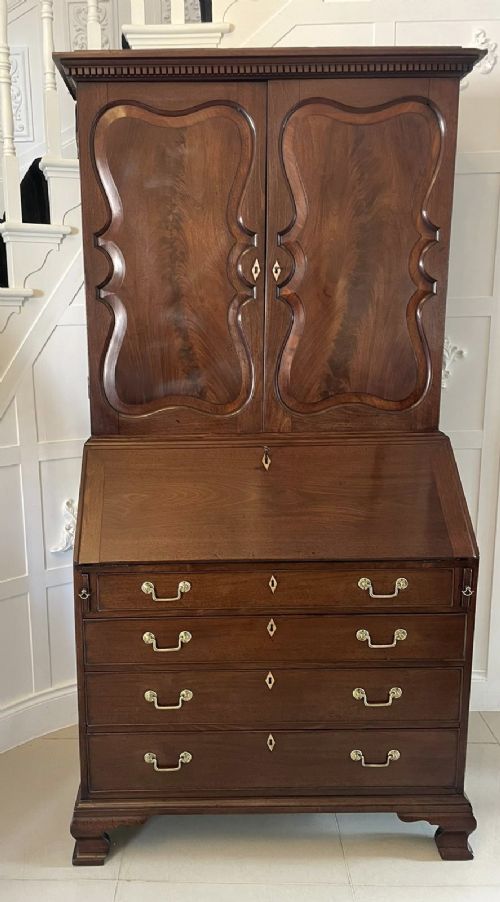
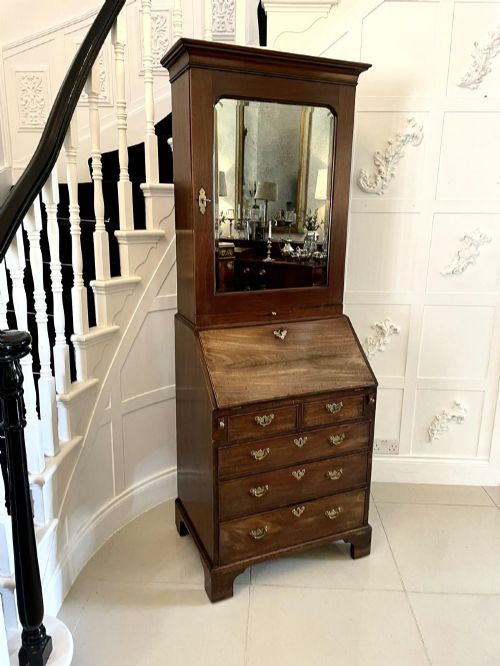
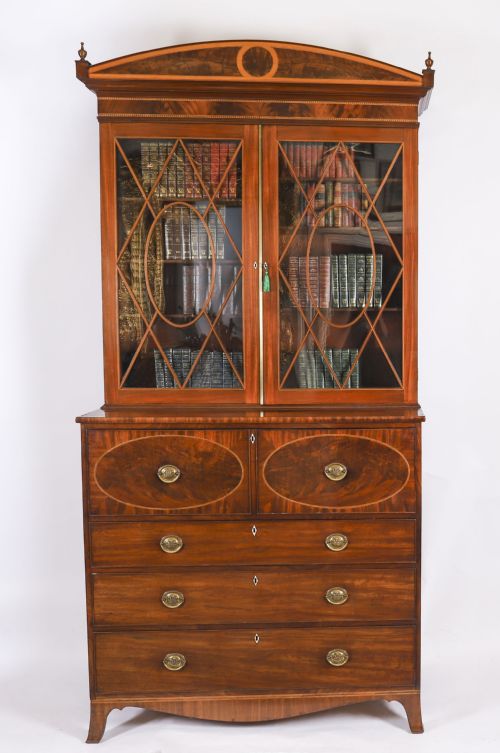
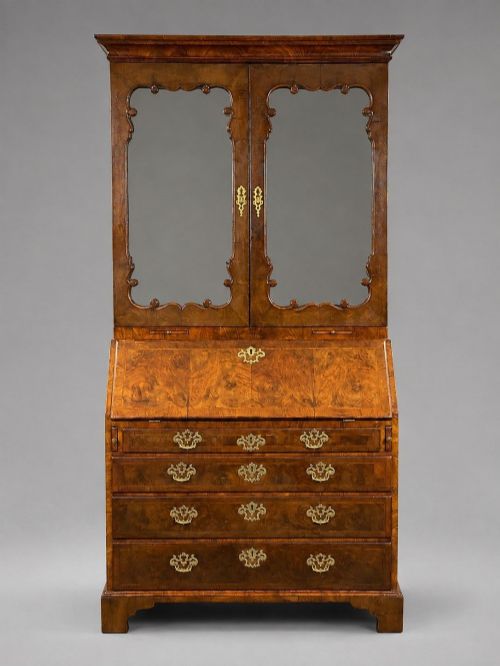
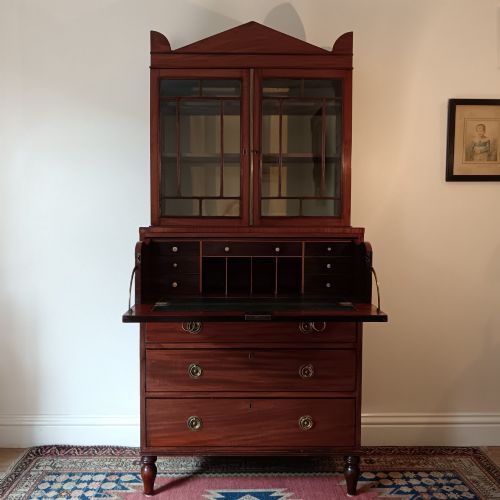
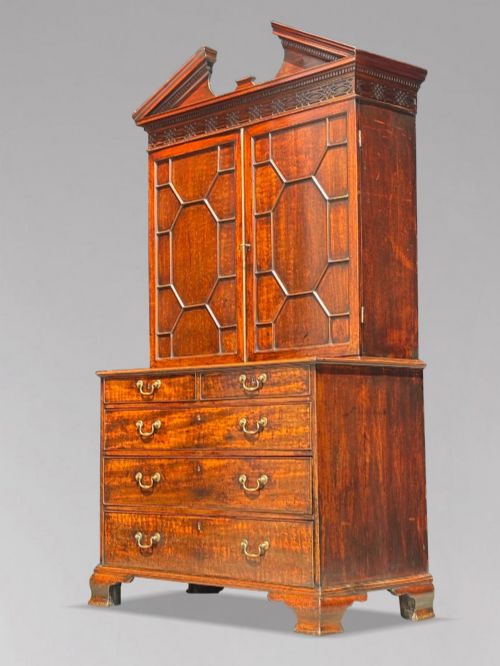
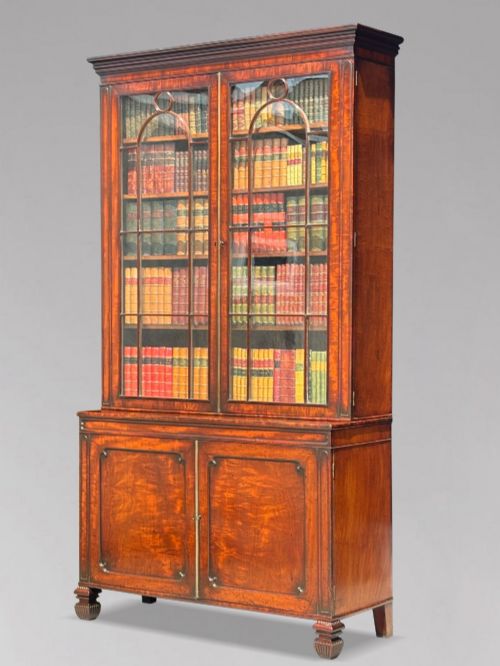
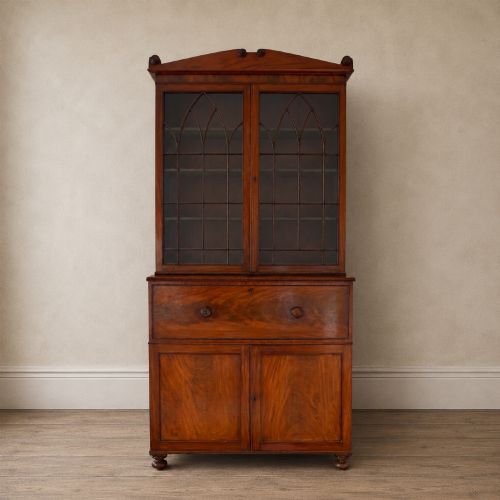
A george i bookcase is a substantial piece of furniture designed for the storage and display of books, frequently combining a glazed upper section with a lower bureau or cabinet base.
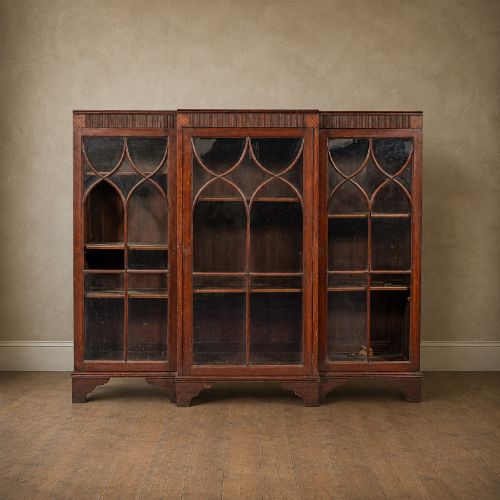
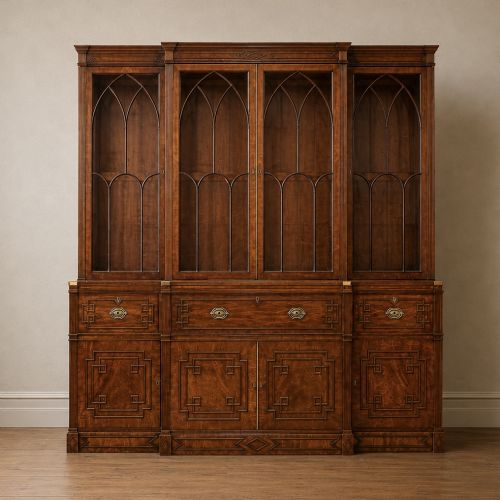
The pieces available here span various periods from the eighteenth century onwards, with bureau bookcases and tall breakfront library cabinets forming the primary types encountered.
Walnut and figured mahogany dominate the early forms, offering architectural pediments, panelled doors, and fitted internal compartments tailored for correspondence.
What varies in quality
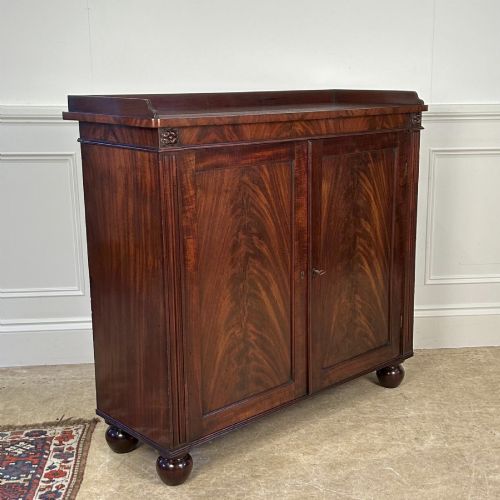
The selection of timber grain on drawer fronts and door panels sets apart the finest examples from standard production pieces.
Internal complexity, such as secret compartments, pigeonholes, and candle slides, demonstrates the level of craftsmanship invested by the maker.
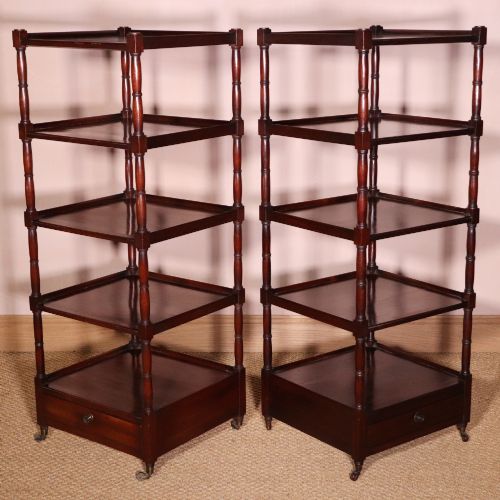
Common formats include bureau bookcases, breakfront library cabinets, and wall-mounted shelving.
Thomas Chippendale·Gillows·George Oakley·William Kent·George Edmund Street
The George I Bookcase Glossary
- Bureau bookcase
- A dual-purpose form featuring a sloping desk flap above drawers, combined with upper shelving enclosed by doors. This layout allowed both writing and reading materials to be housed in one cabinet.
- Breakfront
- A cabinet design where the central section projects forward from the flanking wings. This architectural arrangement creates depth and visual interest across large library bookcases.
- Candle slide
- A pull-out wooden shelf positioned beneath the upper doors to hold a light source for reading. They retract flush into the cabinet frame when not in use.
George I Bookcase: Frequently Asked Questions
How were george i bookcases used?
These pieces served as private libraries and writing desks for affluent households, keeping valuable volumes secure behind locked doors.
The drop-front bureau section provided a stable surface for handling correspondence and managing household accounts.
What woods were used for construction?
Early examples relied heavily on figured walnut and burr walnut, often enhanced by cross-banding and decorative stringing.
Later eighteenth-century pieces transitioned toward mahogany and satinwood, occasionally incorporating exotic veneers like sabicu or purple heart.
How do I tell periods apart?
Early pieces from the first half of the eighteenth century feature rich walnut veneers, double dome tops, and compact proportions.
Later adaptations shift toward heavier breakfront mahogany formats or incorporate stylistic revivals such as gothic tracery during the nineteenth century.
Where should I place a bookcase?
Position your cabinet in a study or principal reception room away from direct sunlight and heat sources to protect delicate veneers.
Ensure adequate wall space is available, as many breakfront and bureau variants require clearance for lower drop-front writing flaps.