





Geometric Panelled Coffer
These heavy timber chests bring authentic seventeenth-century joinery into a room, offering robust storage built with traditional frame-and-panel construction.
Geometric Panelled Coffer
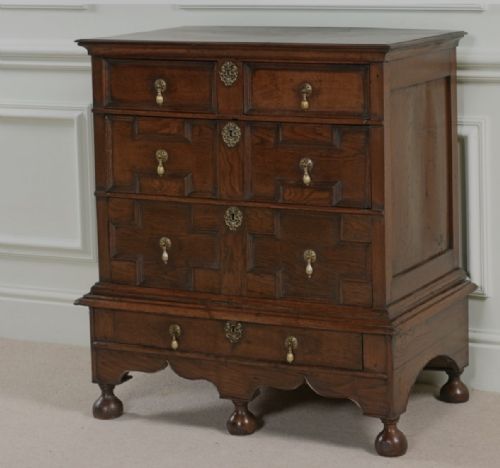
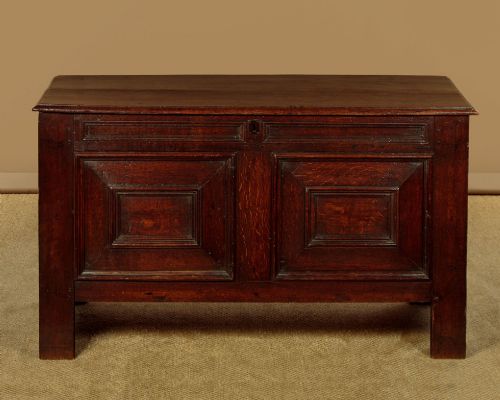
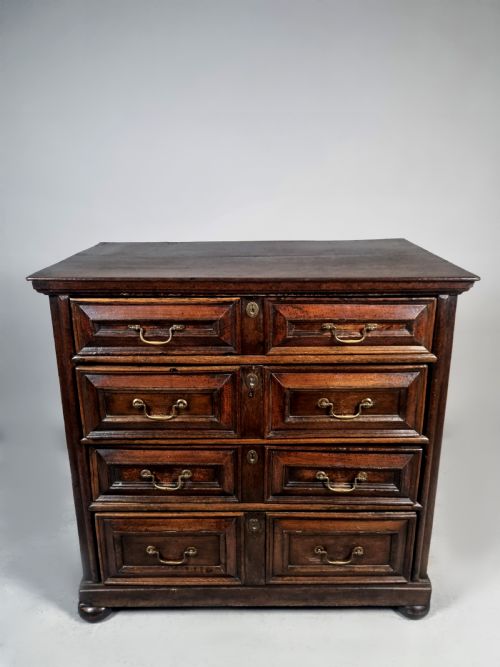
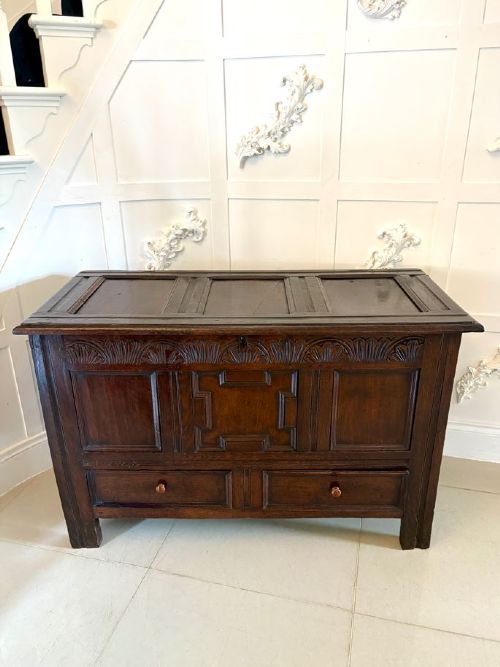
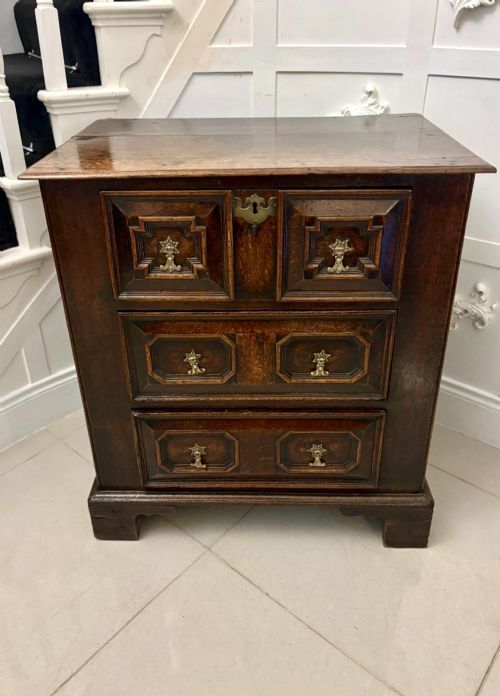
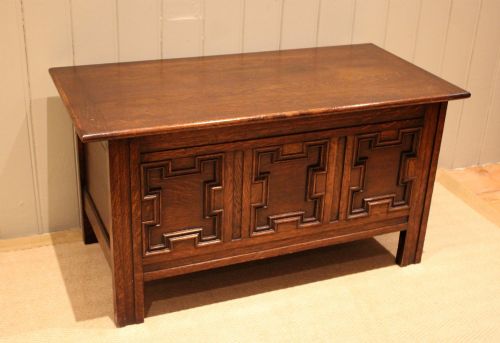
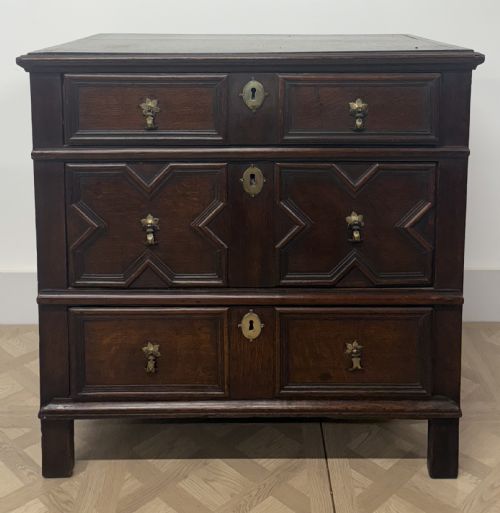
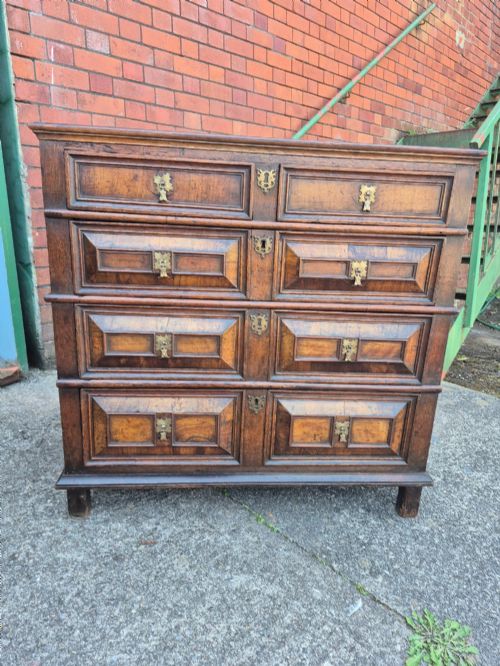
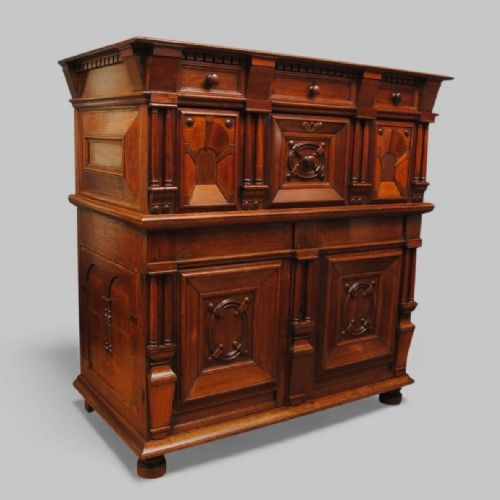
A geometric panelled coffer is a solid storage chest defined by raised or applied mouldings arranged in geometric patterns across its front and sides. These pieces primarily date from the seventeenth century, alongside later revivals from the nineteenth and early twentieth centuries.
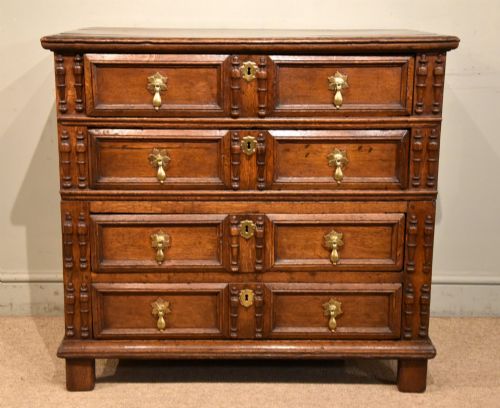
The form frequently overlaps with early chests of drawers, mule chests, and two-part chests sharing the same heavy timber construction. Most examples encountered here are fashioned from English oak, often enriched with contrasting secondary timbers.
Originating as utilitarian domestic storage for household linens, valuables, and dry goods, these chests served as secure furniture before fitted wardrobes and dedicated closets became common. Their robust build allowed them to double as seating or tables within the hall or chamber.
What varies in quality
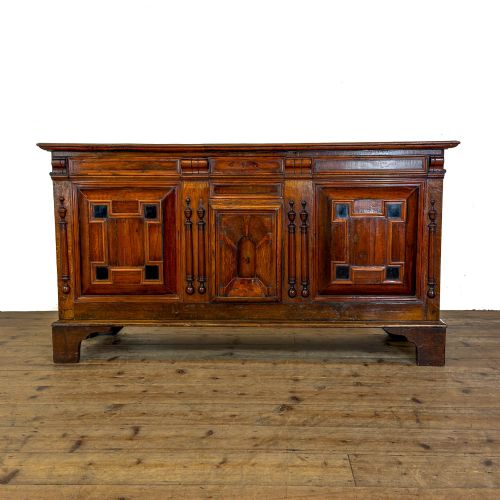
Quality rests in the crispness of the mitred mouldings and the architectural ambition of the geometric layout across the facade. Pieces featuring multiple contrasting timbers, such as walnut and fruitwood applied over an oak carcass, typically reflect higher workshop skill.
The integrity of the original timber frame, including untouched base boards and period hinges, distinguishes superior survivals from heavily restored examples. Retaining a natural, faded surface patina without aggressive modern stripping preserves the historical integrity of the piece.
Geometric Panelled Coffer Retail Price Guide 2026
Typical asking prices for geometric panelled coffer among the pieces listed under this phrase on Sellingantiques today, from the lower quarter to the upper quarter. They describe what is for sale here now, not the wider market.
Listings span oak, walnut, fruitwood, cedar, and snakewood, reflecting seventeenth-century material hierarchies.
The Geometric Panelled Coffer Glossary
- Coffer
- A heavy wooden storage chest with a hinged lid, traditionally used for securing valuables and textiles. Early examples feature boarded or framed-and-panelled construction.
- Moulding
- A shaped strip of wood applied to a surface to create relief and shadow. In these pieces, mouldings form geometric strapwork patterns across the panels.
- Patina
- The surface sheen and colour developed by wood through age, handling, and wax polishing. A desirable patina shows depth and natural softening without chemical alteration.
- Mule chest
- A storage chest fitted with one or more drawers beneath the main compartment. This form bridges the traditional coffer and the modern chest of drawers.
- Strapwork
- Ornamentation composed of flat, interlaced bands resembling leather straps or ribbons. It frequently appears on seventeenth-century panels and friezes.
Geometric Panelled Coffer: Frequently Asked Questions
What is a geometric panelled coffer?
A geometric panelled coffer is a traditional storage chest featuring applied wooden mouldings arranged in patterns across its front panels. These pieces date primarily from the seventeenth century and rely on heavy timber frame construction.
Such chests were designed to hold textiles and valuables safely in the home. Their sturdy build allowed them to function as tables or benches when necessary.
How do I date a seventeenth-century coffer?
Dating relies on examining the joinery methods, timber species, and style of the mouldings used on the facade. Hand-cut peg joints and original iron hardware indicate period manufacture rather than later revival work.
Revival pieces from the nineteenth and twentieth centuries often employ machine tooling or standardised fixings. Comparing the construction details against documented examples helps clarify the age.
Where should I place a coffer at home?
These chests suit entrance halls, living rooms, or bedrooms where their flat lids can function as display surfaces or casual seating. Their deep interiors provide practical storage for blankets, cushions, or household items.
Keep timber furniture away from direct heat sources and dramatic humidity shifts to protect the dry oak and applied mouldings. Consistent indoor conditions prevent the wood from splitting over time.
How do I care for antique oak furniture?
Maintain the surface by applying natural beeswax sparingly and buffing it gently with a soft cloth to nourish the dry wood. Avoid modern silicone sprays or harsh chemical cleaners that can strip the historic finish.
Protect the top surface from moisture by using coasters or felt pads beneath any objects placed on the lid. Regular dusting with a dry cloth keeps the carved recesses clean.