






Geometric Moulded Dresser Base
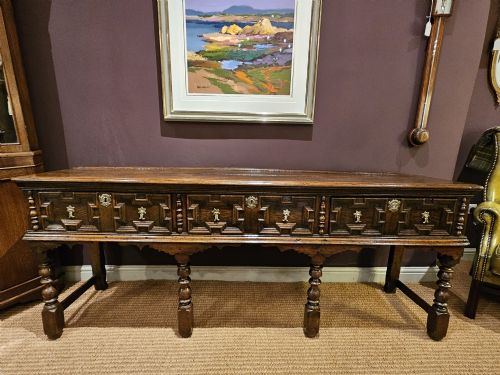
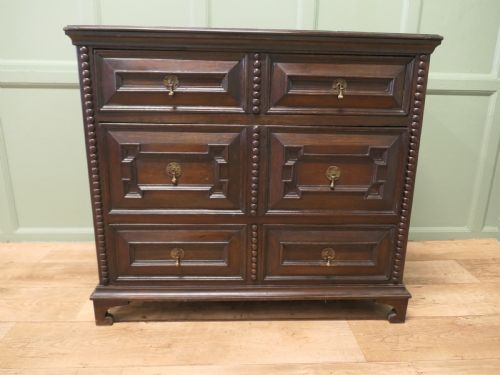
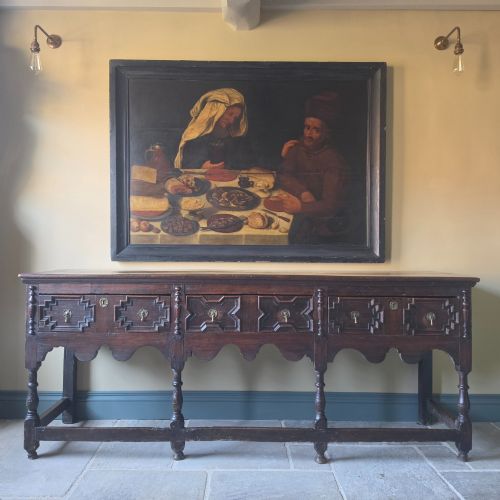
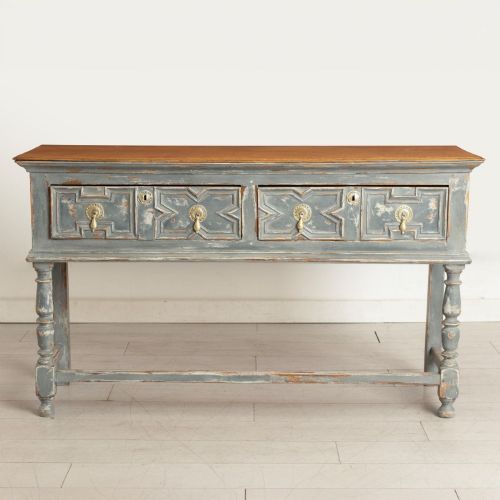
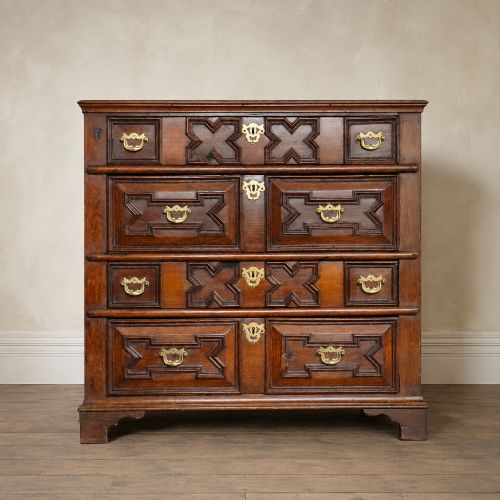
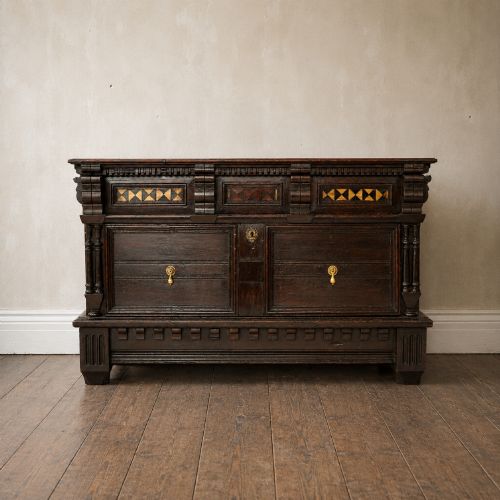
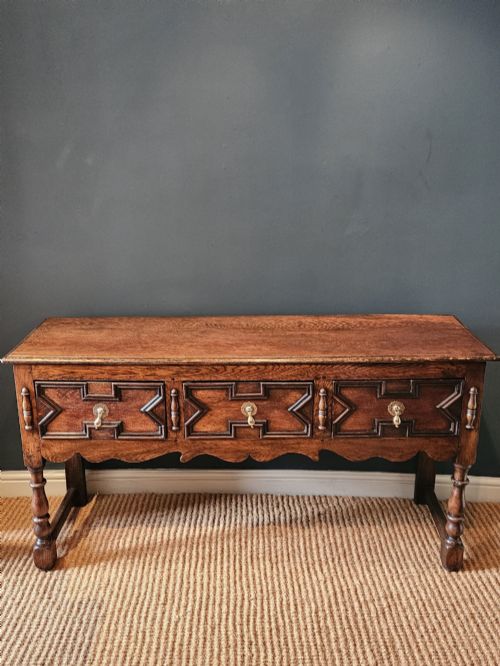
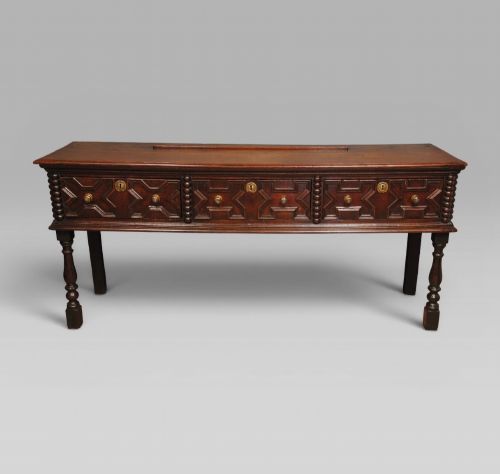
A geometric moulded dresser base brings robust timber and striking rectilinear panels straight from the seventeenth century into a modern room.
Geometric Moulded Dresser Base
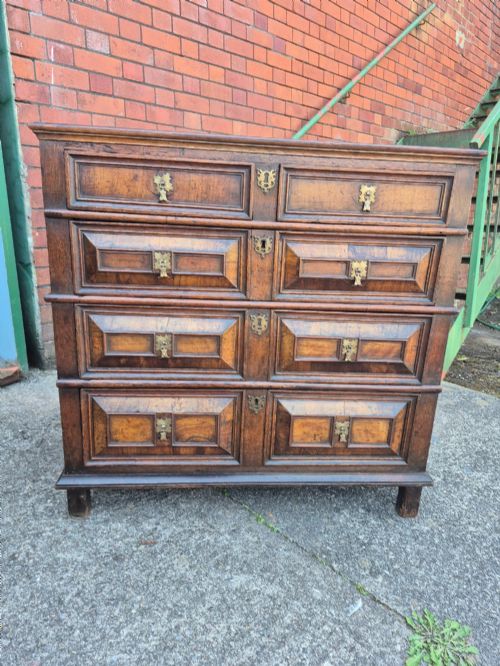
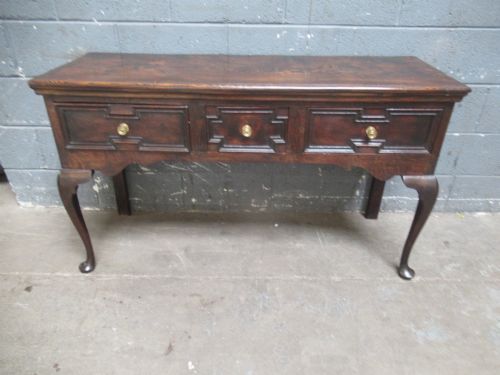
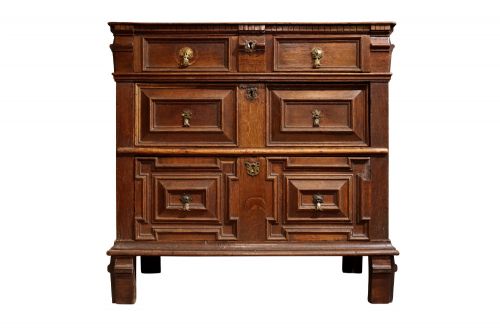
A geometric moulded dresser base is a heavy storage piece built from solid timber, most frequently found in oak or walnut. The form combines low-set proportions with deep drawers or cupboards, designed historically for domestic service and storage in substantial houses.
Most examples encountered here span the seventeenth century and the Georgian period, alongside later revival pieces from around nineteen hundred. Buyers searching this phrase look for the distinctive raised mouldings that frame the drawer fronts in rectangles, octagons and intersecting patterns.
The layout typically presents two or three long drawers set beneath a sturdy planked top. While many survivals retain their original timber surfaces, some pieces show later additions or incorporate elements from different decades.
How they were made
Carpenters constructed these heavy bases using thick oak planks joined with pegged mortise and tenon framing. Drawer fronts received their decorative relief through applied geometric mouldings, often stuck on in contrasting woods like walnut or stained pine to catch the light.
Hardware played a functional and decorative role, with heavy brass drop handles and iron escutcheons fixed to the drawer faces. Timber was frequently hand-planed, leaving subtle tool marks across the carcass and drawer linings that reveal early hand-tool methods.
Geometric Moulded Dresser Base Retail Price Guide 2026
Typical asking prices for geometric moulded dresser base among the pieces listed under this phrase on Sellingantiques today, from the lower quarter to the upper quarter. They describe what is for sale here now, not the wider market.
Early carpenters occasionally recycled old floorboards for drawer bases, leaving faint chalk marks from long-forgotten timber yards.
What varies in quality
Quality rests in the crispness of the applied mouldings and the depth of the timber patination built up over centuries. Finer examples maintain their original drawer linings and unblemished geometric patterns, whereas lesser pieces show heavy replacement timber or poorly matched repairs.
The balance of the proportions and the weight of the brass hardware distinguish a superior workshop build from a plain provincial utility item. Original boarded tops without excessive splitting also elevate a piece above those needing extensive timber remediation.
The Geometric Moulded Dresser Base Glossary
- Geometric moulding
- Raised wooden strips applied to drawer fronts or panels in symmetrical patterns such as rectangles, circles and octagons. This technique created rich surface texture during the seventeenth century.
- Dresser base
- A low wooden sideboard fitted with drawers and sometimes cupboards beneath a flat top. It provided working surface and storage before the upper plate rack became common.
- Parnassus
- The natural sheen and darkening that develops on old wood through decades of handling and wax polishing. Good patination shows depth and warmth rather than a flat modern finish.
- Mortise and tenon
- A traditional joint where a protruding tongue fits tightly into a matching cavity and is secured with wooden pegs. This method formed the rigid skeletal frame of early furniture.
- Block front
- A cabinet face divided vertically into three sections, where the central section recedes slightly behind two projecting ends. It adds strong shadow and dimension to heavy timber furniture.
Geometric Moulded Dresser Base: Frequently Asked Questions
How do I spot a fake?
Examine the timber shrinkage, tool marks, and construction joints to understand the age of the carcass. Old oak develops distinct oxidation and wear around handles and feet that modern workshops struggle to replicate.
Look closely at the applied mouldings and drawer linings for signs of machine cutting or mismatched wood species. Genuine period examples display hand-cut joinery and consistent ageing throughout the internal framing.
Where should I place it?
A low timber base works well in a hallway, living room or dining space where its heavy surface can hold lamps or ceramics. The shallow depth allows it to sit against walls without dominating narrow circulation areas.
Keep the piece away from direct heat sources and strong sunlight to protect the old timber and prevent the dry wood from splitting. Maintain stable room humidity to preserve the original polish and structural joints.
What is geometric moulding?
Geometric moulding refers to raised wooden strips applied to flat surfaces in repeating patterns like rectangles, lozenges and intersecting octagons. Cabinet makers used this technique extensively during the seventeenth century to add architectural relief.
These patterns catch the light and create deep shadows across drawer fronts and cupboard doors. They define the visual character of seventeenth-century and revival case furniture.
Are these pieces functional?
The deep drawers and sturdy top make these bases practical for storing tableware, linens or everyday items in a modern home. Their solid construction handles regular use without losing structural stability.
Drawer sizes vary according to the period and regional workshop traditions, so check internal dimensions if you plan to store specific items. The flat top surface provides a durable display area for books or decorative objects.