



Geometric Mantle Clock
A geometric mantle clock brings striking linear form and period engineering into a room, driven by the enduring appeal of the Art Deco aesthetic.
Geometric Mantle Clock
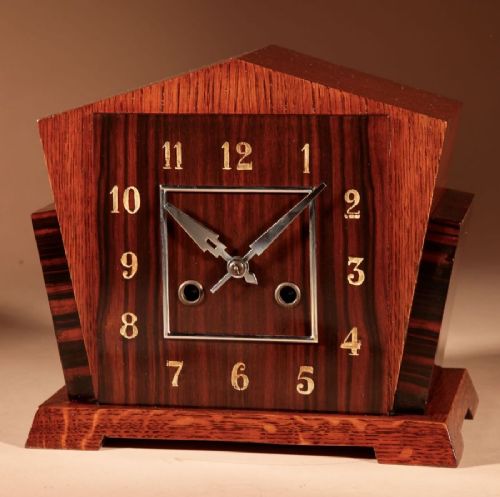
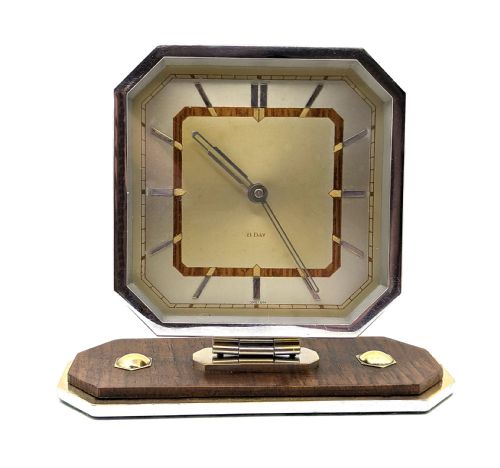
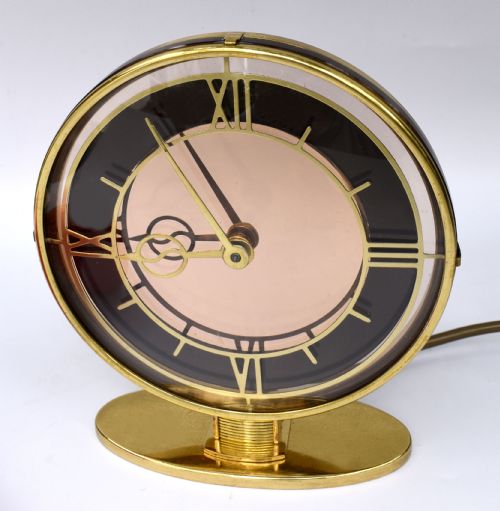
A geometric mantle clock encompasses timepieces designed during the 1920s and 1930s, featuring strong architectural lines and angular silhouettes. You will frequently encounter wooden cases in oak, walnut, and onyx, alongside metallic executions in chrome and brass.
The selection ranges from traditional mantel clocks and chiming Westminster variations to compact desk clocks and occasional wall clocks. Many originate from English, French, or German workshops, displaying regional preferences in materials and movement construction.
Makers such as Asprey, Junghans, Mauthe, Perivale, Garrards, and Blangy appear across the inventory, offering both domestic eight-day movements and specialised chiming mechanisms. These pieces function as both reliable timekeepers and sculptural objects for interior display.
How they were made
Construction relies on a combination of cabinetmaking and metalworking, pairing hardwoods like oak and walnut with polished chrome, brass, and mirrored glass. The cases often utilise contrasting veneers, such as Macassar ebony, to accentuate the angular geometry typical of the period.
Movements are predominantly mechanical eight-day systems, requiring manual winding, and frequently incorporate specialised components like Westminster chimes or trusted manufacturers' escapements. Glass faces and bezels protect the dials, which often feature stylised numeric layouts characteristic of Art Deco design.
Several clocks double as skyscraper replicas, proving that architects in the twenties wanted their furniture to touch the clouds too.
What varies in quality
Quality separates simple mass-produced items from superior examples through the precision of the cabinetwork and the reputation of the movement maker. Signed pieces by established firms command attention due to the refinement of their internal mechanics and casework.
The choice and preservation of materials dictate the standing of a piece, with fine wood veneers, heavy marble, or unblemished chrome plating marking out the higher tiers of production. Originality of components and documented servicing further distinguish the better examples in the range.
Asprey·Junghans·Mauthe·Perivale·Garrards·Blangy
The Geometric Mantle Clock Glossary
- Art Deco
- A design style spanning the 1920s and 1930s, characterised by geometric shapes, streamlined forms, and modern industrial materials. It influences the sharp angles and symmetrical layouts seen in these clocks.
- Amsterdam School
- An architectural and design movement from the Netherlands that emphasises expressive forms, traditional brickwork, and intricate timber craftsmanship. Pieces from this tradition show particularly bold wooden joinery.
- Mantel clock
- A domestic timepiece designed to sit on a fireplace mantelpiece or a flat shelf. These clocks rely on compact proportions to balance height and stability.
- Eight day movement
- A mechanical clock movement that requires winding approximately once every eight days. This mechanism provides convenience alongside traditional timekeeping.
- Westminster chime
- A melodic quarter-hour chime pattern historically associated with the clock tower at the Palace of Westminster. Clocks featuring this mechanism include additional gongs and hammers.
Geometric Mantle Clock: Frequently Asked Questions
How do I wind a geometric mantle clock?
Most pieces use a key inserted into dedicated arbors on the dial face to tension the mainsprings. Care should be taken not to overwind the mechanism.
For chiming models, separate springs govern the timekeeping train and the striking train, requiring distinct winding intervals.
Where should I place a mantel clock?
These clocks suit flat, stable surfaces such as mantelpieces, sideboards, and heavy desks where their architectural forms remain visible. Ensure the supporting furniture does not experience excessive vibration.
Keep the timepiece away from direct sunlight and damp environments to protect wooden veneers and metallic finishes.
How do I tell an English clock from a French one?
English examples frequently feature domestic eight-day movements or regional chime configurations housed in oak or walnut. French variations often utilise marble, onyx, or distinct continental dial designs.
Maker signatures on the dial or movement backplate provide definitive clues to the origin.
What is an Amsterdam School clock?
An Amsterdam School piece displays distinctive Dutch Expressionist woodwork with sculptural timber blocks and varied grain patterns. These designs push the boundaries of standard Art Deco symmetry.
They rely heavily on oak and exotic veneers to create heavy, tactile silhouettes.