
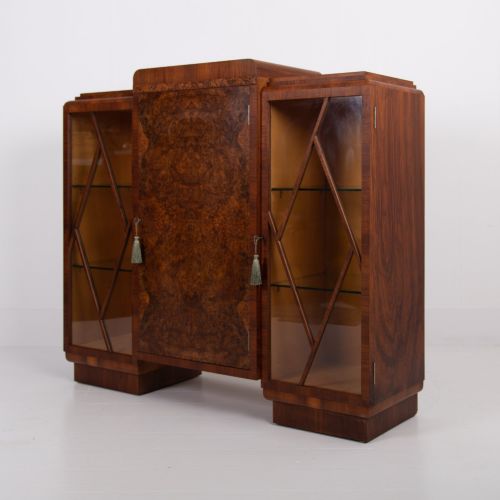


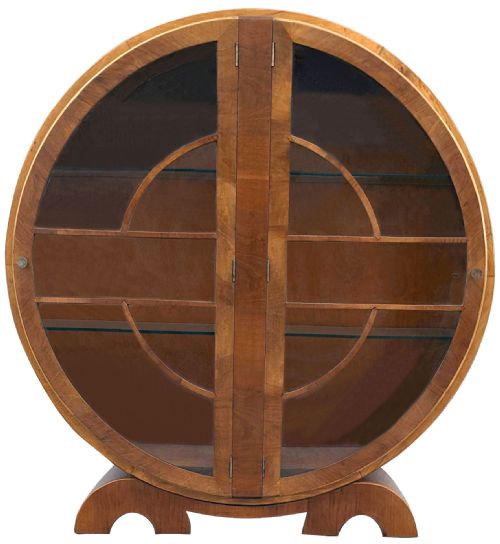


Geometric Glazed Cabinet
A geometric glazed cabinet brings structured pattern and clear display space to a room, prized for combining architectural glasswork with practical storage.
Geometric Glazed Cabinet
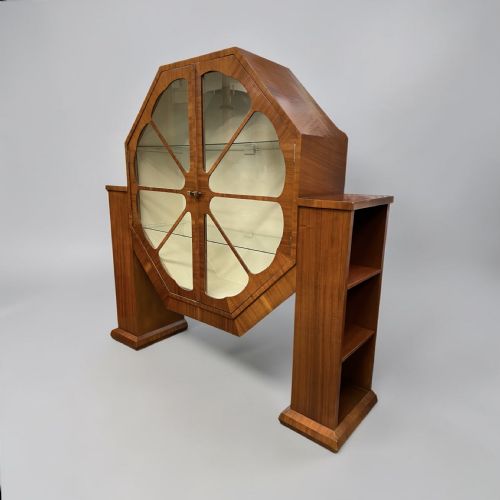
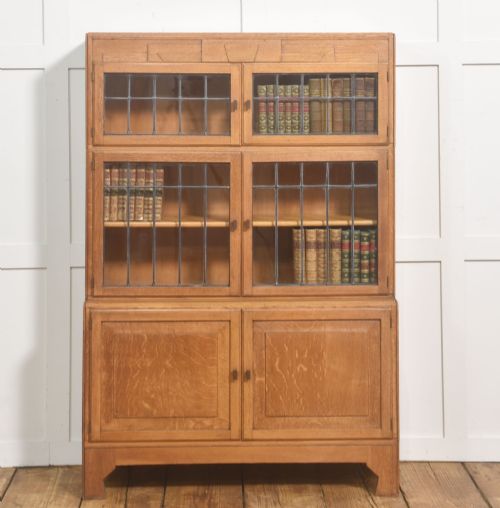
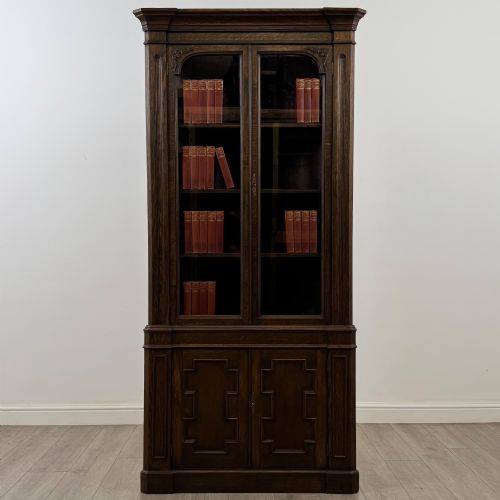
A geometric glazed cabinet combines timber framework with leaded or panelled glass doors arranged in distinct shapes. Buyers searching this phrase encounter display cabinets, bookcases, corner cabinets, and bureau cabinets across multiple periods.
The selection on this page leans heavily towards Art Deco examples from the 1920s and 1930s, alongside earlier Edwardian pieces and 19th-century designs. Forms range from standard rectangular display units to circular and hexagonal silhouettes.
Origins span English, Austrian, and wider European workshops, showing how different cabinetmakers interpreted geometric forms in timber and glass. These pieces serve primarily to exhibit collections while adding architectural presence to an interior.
How they were made
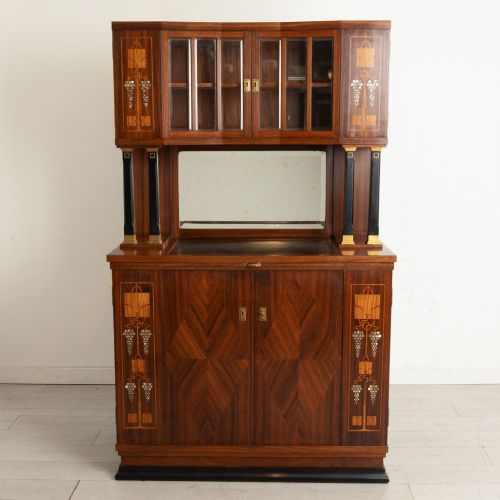
Cabinetmakers built these pieces using solid timbers and veneers, notably walnut, oak, and rosewood, sometimes accented with ebonised wood or mother-of-pearl. Brass hardware provided functional mounts and handles.
The characteristic glazing relied on lead came to hold individual panes of glass in precise patterns, creating the geometric grid or motif on the doors. Marble tops occasionally featured on 19th-century variants to add a durable working or display surface.
Materials recorded across the inventory include walnut, oak, rosewood, brass, and mother-of-pearl.
What varies in quality
Quality shows in the precision of the timber selection and the complexity of the cabinet form, such as curved circular structures or hexagonal shapes compared to standard right-angled carcasses. The execution of the leaded glass work and the choice of figured veneers like walnut also define the upper tier of pieces.
The integrity of the construction, from the fit of the doors to the matching of wood grain across the panels, separates standard production items from superior workshop creations.
August Ungethüm·Rurka
The Geometric Glazed Cabinet Glossary
- Leaded glass
- Glass panes joined together by strips of lead known as came. This technique creates geometric patterns across cabinet doors.
- Bureau cabinet
- A hybrid form combining a sloping writing flap with enclosed shelving or cupboard space above. These often feature fitted interior compartments.
- Ebonised wood
- Timber treated to resemble ebony through a staining and finishing process. It provides dark, high-contrast detailing on cabinet frames.
- Viennese Secessionist
- An early 20th-century artistic movement associated with Austrian designers who rejected historicism in favour of geometric simplicity. Pieces from this circle display clean architectural lines.
- Corner cabinet
- A storage unit specifically constructed with an angled footprint to fit neatly into the corner of a room. These maximise floor space while offering display capacity.
Geometric Glazed Cabinet: Frequently Asked Questions
What rooms suit a geometric glazed cabinet?
These cabinets work well in living rooms, studies, or dining spaces where display and storage are both required. Their architectural glass doors add visual interest to empty wall space.
Smaller corner versions fit neatly into tight layouts, while larger circular or hexagonal freestanding units anchor the centre of a room.
How do I care for walnut and oak cabinets?
Keep wooden surfaces away from direct sunlight and steady humidity levels to prevent the timber and veneers from drying out or warping. Regular dusting with a soft, dry cloth maintains the finish.
Avoid using silicone-based polishes, opting instead for traditional beeswax applied sparingly when the wood appears dry.
How do I distinguish Art Deco from earlier styles?
Art Deco pieces from the 1920s and 1930s typically feature streamlined geometric shapes, contrasting veneers like walnut, and circular or hexagonal formats. Leaded glass patterns in these pieces focus on bold symmetry and stepped motifs.
Earlier 19th-century and Edwardian examples, such as Jacobean Revival or William IV pieces, rely on darker oak, heavy mouldings, and traditional architectural detailing.
Can these cabinets support heavy books?
Bookcase variants and bureau bookcases are engineered with sturdy internal shelving designed to hold substantial volumes. Display cabinets are generally optimised for lighter decorative objects rather than dense libraries.
Check the thickness and support of the interior shelves before loading heavy items into older display furniture.