
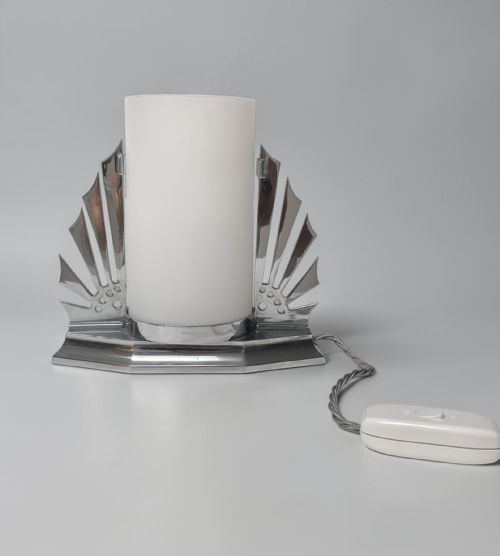
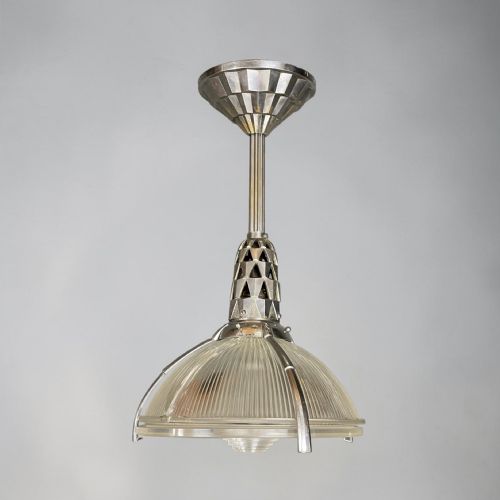


Geometric Frosted Glass Light
These geometric frosted glass light pieces deliver period illumination through clean lines and diffuse glow.
Geometric Frosted Glass Light
When you search for a geometric frosted glass light, you encounter pieces primarily from the nineteen-twenties and nineteen-thirties reflecting Art Deco design. The selection includes ceiling lights, pendant lights, wall lights, and table lamps that merge angular metalwork with softened glass panels.
The version you are most likely to meet on this page is an Art Deco ceiling light or pendant pairing frosted or opaque glass with brass, chrome, or bronze frameworks. These fixtures utilise geometric shapes to structure the illumination within domestic spaces.
Materials and construction
The construction relies on combining moulded or frosted glass with structural metals such as brass, chrome, copper, bronze, and wrought iron. Glass shades and panels are formed to fit secure metal mounts, lanterns, and plafonniers.
Makers utilised acid-etching or mechanical moulding to create the frosted and opaque finishes that diffuse light evenly across the geometric planes.
Sailors and landlubbers alike can illuminate their quarters with a chrome lamp shaped precisely like a racing yacht.
Distinctions in quality
Quality rests in the weight and finish of the metal armature, whether solid brass, heavy chrome, or cast bronze, compared to lighter plated alternatives. Substantial framing ensures the geometric silhouette holds its structural integrity over decades of use.
The definition and precision of the moulded or frosted glass panels further divide the range, with specific shades bearing distinct maker attribution or heavier glass walls that alter the diffusion of light.
Émile-Jacques Ruhlmann·Muller Bros·Karl Palda·Walther and Sohne
The Geometric Frosted Glass Light Glossary
- Frosted Glass
- Glass treated to scatter light and create a translucent, non-glossy surface. This technique softens harsh bulb glare in interior lighting.
- Plafonnier
- A ceiling-mounted light fixture designed to sit flush or close to the ceiling surface. These fixtures often feature large glass bowls held by metal frames.
- Art Deco
- A design style dominant in the nineteen-twenties and nineteen-thirties characterised by geometric symmetry and stylised forms. It heavily influences the lamps and lanterns seen here.
- Pendant Light
- A light fixture suspended from the ceiling by a cord, chain, or metal rod. They concentrate illumination downwards over specific areas of a room.
- Opaque
- A material property that prevents clear visibility through the glass while allowing light to pass. It is frequently utilised in period shades for diffuse illumination.
Geometric Frosted Glass Light: Frequently Asked Questions
How do I install an old glass light?
Modern electrical wiring must be fitted to these vintage fixtures by a qualified professional to ensure safety compliance with current domestic standards.
The original mounting brackets often require bespoke adaptation to fit contemporary ceiling junction boxes securely.
What rooms suit these ceiling lights?
Hallways, dining areas, and living rooms accommodate the drop length and spread of light provided by plafonniers and hanging lanterns.
Lower ceiling heights benefit particularly from flush or semi-flush ceiling lights that maintain adequate headroom.
How do I clean frosted glass?
Warm water and mild soap applied with a soft cloth safely remove dust without damaging the textured or acid-etched surface.
Harsh chemical abrasives must be avoided entirely to preserve the original finish of both the glass and the surrounding metalwork.
Are these lamps from the 1930s?
The listings span the nineteen-twenties and nineteen-thirties, capturing the height of the Art Deco period and twentieth-century design.
Stylistic markers such as skyscraper steps and linear chrome mounts help distinguish these specific manufacturing decades.