


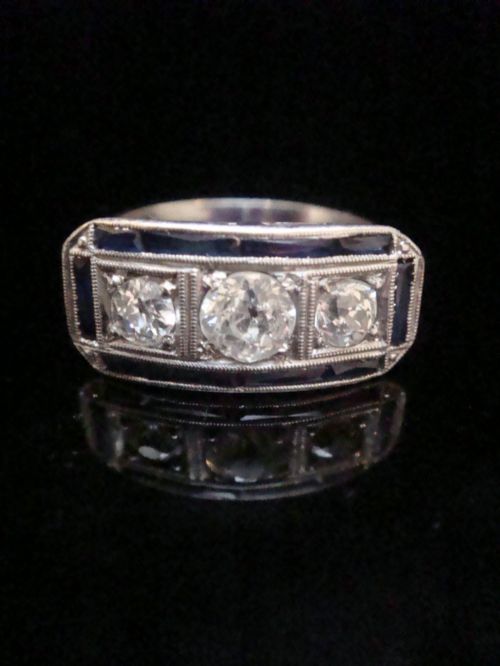


Geometric Diamond Engagement Ring
A geometric diamond engagement ring delivers the sharp lines and architectural symmetry characteristic of the 1920s.
Geometric Diamond Engagement Ring
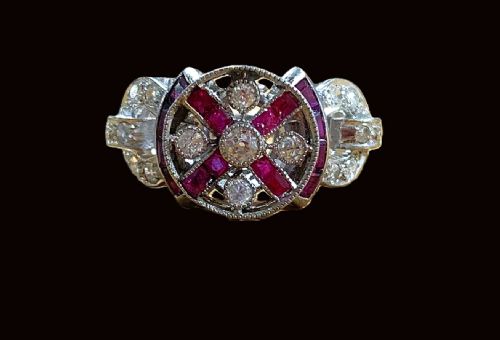
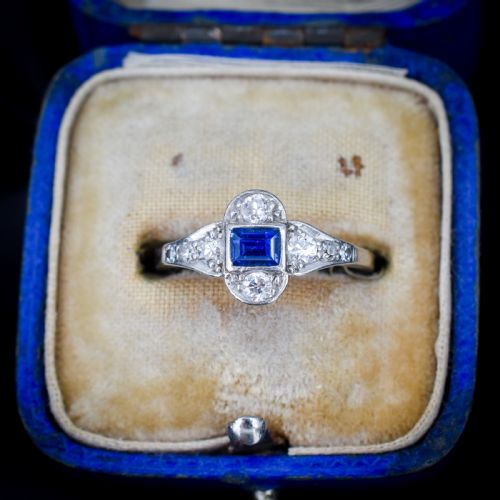
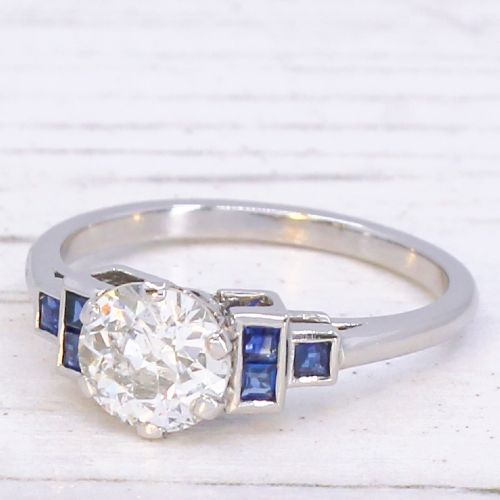
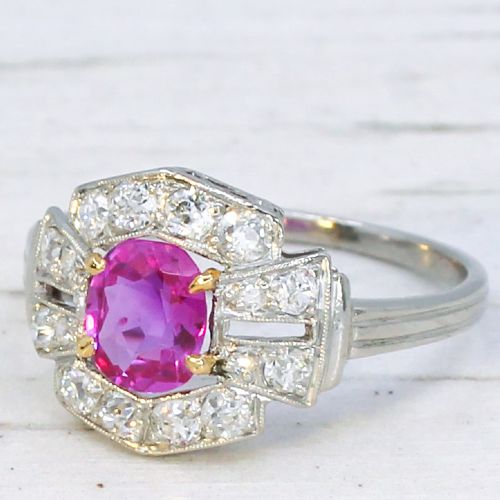
A geometric diamond engagement ring combines linear motifs with brilliant stones, anchoring the jewellery of the early to mid-twentieth century. The geometric diamond engagement ring most often appears in platinum or white gold, frequently pairing diamonds with calibre-cut sapphires, emeralds, or rubies. Pieces span the Edwardian era through the 1950s, drawing heavily on Art Deco aesthetics and French craftsmanship.
How they were made
Makers constructed these rings primarily using platinum and 18ct white or yellow gold, often combining gold shanks with platinum settings to securely hold smaller stones. Master jewellers employed precise hand-cutting techniques, producing calibre-cut gems tailored to fit exact geometric channels within the metal framework.
Diamonds within these pieces are typically old cut, transitional cut, or single cut, shaped by hand rather than modern machinery. Open-work millegrain detailing and delicate bezel settings define the metalwork, securing stones while maintaining an intricate linear profile.
Several rings conceal tiny, secret hand-engraved initials inside the band left by romantic buyers a century ago.
What varies in quality
The distinction between standard commercial output and exceptional work lies in the precision of the metal geometry and the uniformity of the calibré-cut accent stones. Superior examples display seamless stone-to-stone alignment where coloured gems and diamonds fit flush into bespoke channels without visible gaps in the foil or mounting.
Hand-finished millegrain work and the crispness of pierced platinum galleries separate refined Parisian or British studio pieces from mass-produced output. The integrity of the original claw settings and the matched brilliance of old-cut diamonds further determine the tier of a piece.
The Geometric Diamond Engagement Ring Glossary
- Calibre cut
- A method of cutting gemstones into specific geometric shapes, such as triangles or trapezoids, to fit tightly together in a structured pattern.
- Old cut diamond
- A diamond cut by hand before the mid-twentieth century, featuring a smaller table, higher crown, and distinctively large culet that produces a softer candlelight sparkle.
- Millegrain
- A decorative technique involving a row of tiny raised metal beads along the edge of a setting, adding a soft textured border to crisp geometric lines.
- Plaque ring
- A ring featuring a flat, wide top face, often pierced and engraved in elaborate geometric patterns covered with diamonds and coloured gemstones.
- Target ring
- A circular cluster design featuring a central diamond surrounded by concentric rings of contrasting coloured gemstones or smaller diamonds.
Geometric Diamond Engagement Ring: Frequently Asked Questions
How do I care for a vintage diamond ring?
Clean these rings gently using warm water and a soft brush, avoiding harsh ultrasonic cleaners that can loosen old-cut stones in their delicate platinum settings.
Have a professional jeweller inspect the millegrain edges and claw settings periodically to ensure the diamonds and calibre-cut side stones remain secure.
Can these rings be resized easily?
Resizing depends on the specific geometric pattern around the band, as heavy engraving or channel-set side stones can complicate metal adjustments.
Consult a specialist skilled in working with platinum and vintage gold to alter the band without compromising the structural integrity of the shoulders.
What defines Art Deco ring design?
Art Deco design relies on bold geometric symmetry, clean linear silhouettes, and strong contrasts between white platinum and deep-coloured gemstones.
This aesthetic moved away from flowing Edwardian curves in favour of architectural structures, triangles, chevrons, and stylized starburst motifs.
Are these rings suitable for daily wear?
Platinum and 18ct gold provide robust durability for everyday wear, though the intricate open-work galleries require mindful handling during heavy physical tasks.
Removing the ring during manual labour protects fragile calibre-cut sapphires or emeralds from unexpected impacts.