




Geometric Border Carpet
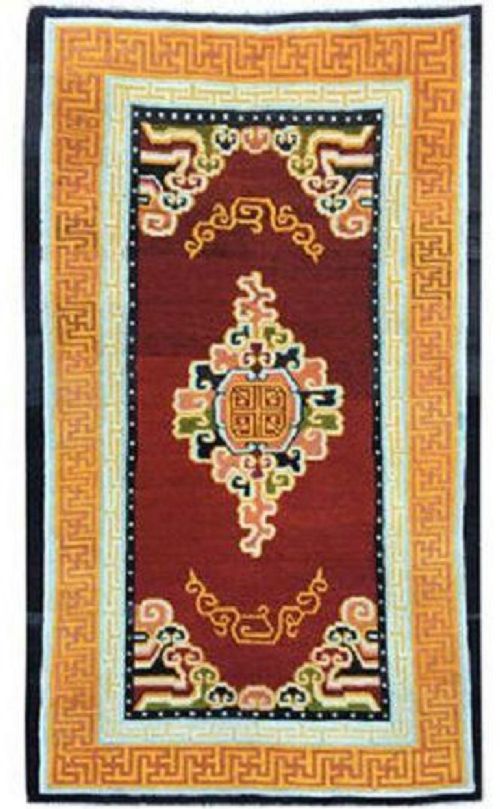
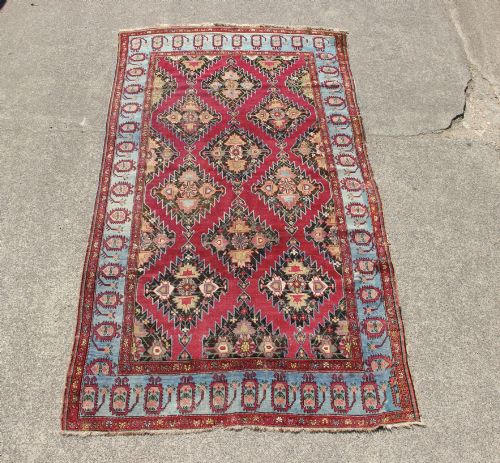
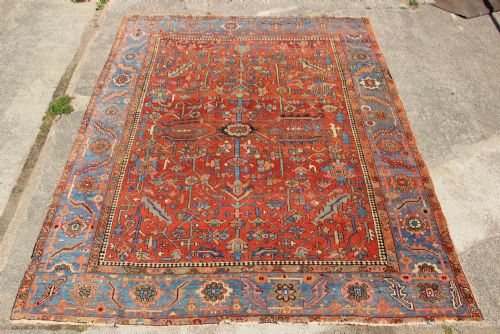
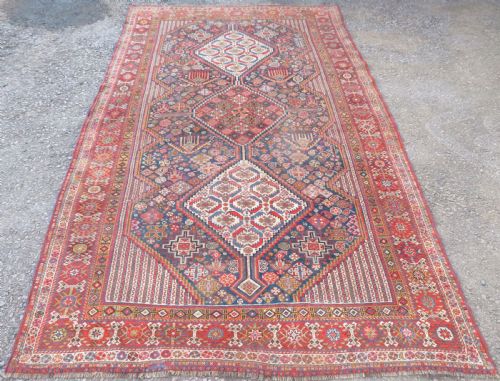
These floor coverings feature a geometric border carpet design, offering striking linear frames that anchor room schemes with antique character.
Geometric Border Carpet
A geometric border carpet comprises woven floor textiles defined by structured perimeter bands of angles, stars, lattice motifs, and repeat patterns. When exploring a geometric border carpet, buyers encounter regional forms originating from Persian, Caucasian, Turkish, Kurdish, and Tibetan weaving traditions.
The inventory on this page spans area rugs, long runners, corridor carpets, prayer rugs, and saddle covers dating from the mid-nineteenth century through the early twentieth century. Heriz, Bakshiash, Kazak, Shirvan, and Baluch regions supply the bulk of the surviving examples found here.
What varies in quality
The fineness of the knot density and the precision of the graphic border layout dictate the structural tier of each textile. Greater precision in the repeat of motifs and tighter foundation weaving distinguish finer workshop pieces from rustic tribal production.
The clarity and saturation of the dye work, alongside the integrity of the original wool pile across large expanses, mark the divergence between standard domestic examples and superior furnishing carpets.
Listings span production dates from 1850 to 1930, showcasing wool pile on cotton and wool foundations across Persian, Caucasian, and Tibetan styles.
The Geometric Border Carpet Glossary
- Pile
- The upright yarn loops or tufts that form the usable soft surface of a carpet. This layer absorbs foot traffic and displays the woven design.
- Warp
- The vertical foundation threads stretched lengthwise on the loom before knotting begins. Cotton and wool serve as the primary materials for these structural elements.
- Weft
- The horizontal threads passed across the warp strands between rows of knots to bind the structure firmly. Proper tension here ensures the rug remains flat on the floor.
- Medallion
- A central ornamental motif set in the middle of the field. It often dictates the symmetry of the surrounding border arrangements.
- Kufic border
- A border design derived from angular Arabic script used as a decorative geometric element. This motif appears frequently on Caucasian Shirvan weaving.
Geometric Border Carpet: Frequently Asked Questions
How do I care for an antique wool rug?
Vacuum gently without using a rotating brush bar to protect the aged wool pile from unnecessary friction and fibre loss.
Professional specialist cleaning is recommended every few years to remove embedded dust safely without damaging natural dyes.
Where were these tribal carpets woven?
Weavers produced these textiles across workshops and nomadic encampments in Persia, the Caucasus, Anatolia, Tibet, and surrounding regions. Each geographic area utilised distinct local sheep wool and regional colour palettes.
Design motifs often reflect the specific tribal heritage or village traditions of the makers.
How can I tell a Heriz carpet apart?
Heriz carpets feature robust, large-scale geometric medallions balanced by heavy, architectural corner spandrels and bold primary borders. The knotting is typically heavier and sturdier than fine city rugs.
They rely on resilient wool foundations suited for heavy domestic use.