






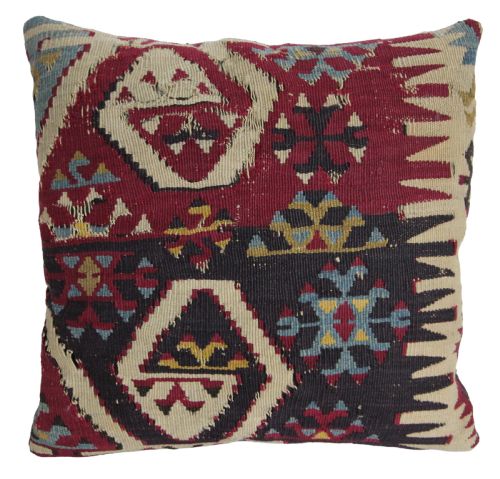


Geometric Anatolian Kilim
Geometric anatolian kilim pieces are flatweave rugs and cushions from Turkish weaving traditions that bring bold tribal patterns into modern rooms.
Geometric Anatolian Kilim
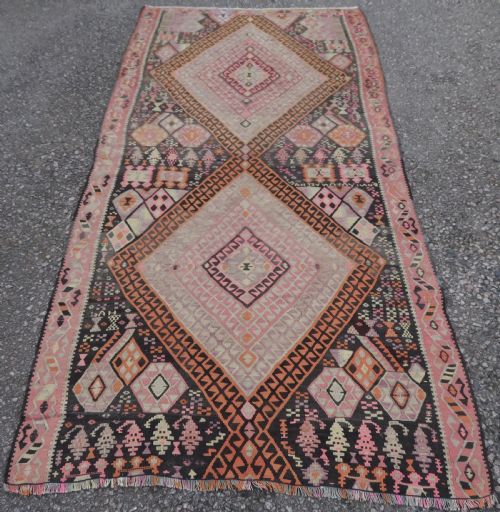
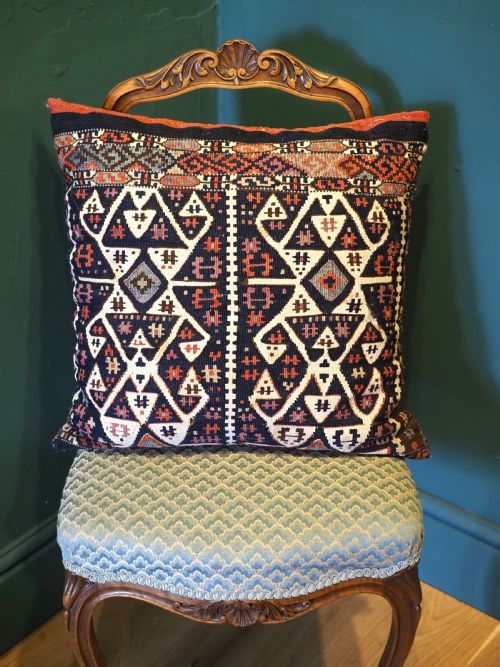
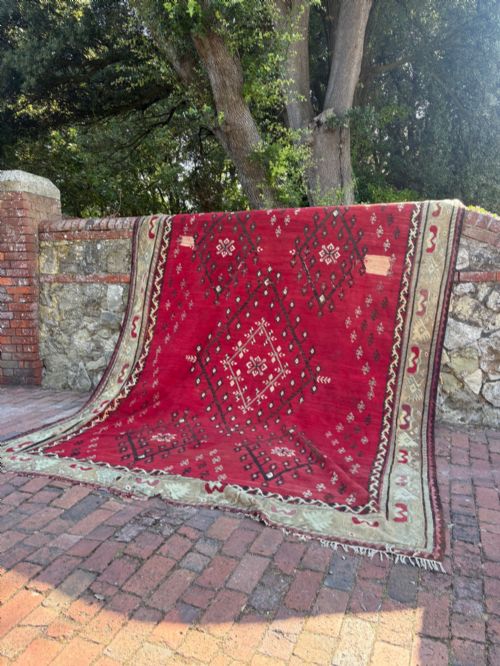
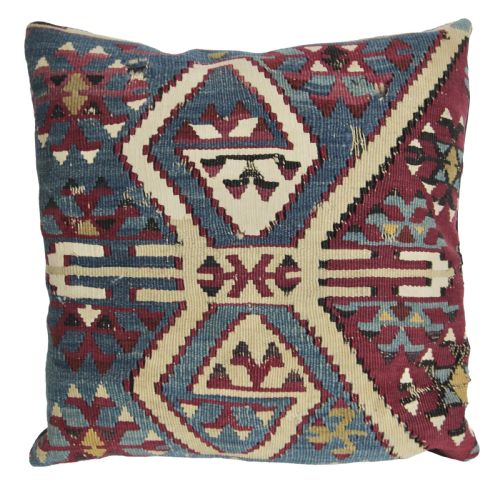
Geometric anatolian kilim items encompass floor coverings and small furnishings originating from various regions of Anatolia. The selection spans large room-sized carpets down to modest cushions fashioned from old bag faces.
Most examples appearing here take the form of flatweave rugs, runners, and throw cushions. These textiles derive from nomadic and village traditions across Turkey, dated across the nineteenth and early twentieth centuries.
How They Were Made
These textiles rely on wool and cotton foundations worked in slit-weave flatweave techniques. Artisans interlocked weft threads tightly across warp threads to create sharp angular motifs without pile.
Weavers constructed larger carpets in two separate panels and joined them down the centre. Dyes derived from local plants and minerals imparted the characteristic palette found across regional types.
Geometric Anatolian Kilim Retail Price Guide 2026
Typical asking prices for geometric anatolian kilim among the pieces listed under this phrase on Sellingantiques today, from the lower quarter to the upper quarter. They describe what is for sale here now, not the wider market.
Regional Anatolian attribution spans Malatya, Konya, Ushak, and Bergama, reflecting distinct local geometric vocabularies.
What Varies in Quality
The sophistication of the tribal design and the handling of the wool determine the visual impact of an individual piece. Finer examples display balanced proportions and crisp transitions between the angular geometric elements.
Material integrity also dictates standing within the category. Pieces retaining strong structural tension in the weave and rich, harmonious colour combinations sit at the higher end of the range.
Karakecili tribe·Reyhanli weavers·Konya workshops·Malatya artisans·Sharkoy weavers
The Geometric Anatolian Kilim Glossary
- Kilim
- A flatweave textile produced without a pile by tightly interweaving weft threads through a warp. This technique creates a lightweight rug with identical patterns visible on both sides.
- Anatolian
- Pertaining to the geographic region of Asia Minor that constitutes modern Turkey. This area encompasses diverse weaving traditions originating from different villages and nomadic groups.
- Warp
- The stationary vertical threads stretched across a loom to form the structural foundation of a textile. Weft threads pass over and under these parallel strands during the weaving process.
- Weft
- The horizontal threads passed through the warp to build the visible pattern and colour of the fabric. In flatweave rugs, these coloured wefts completely conceal the underlying warp.
- Cicim
- A supplementary weft-float embroidery technique used to add raised decorative patterns onto a woven ground. This method creates textured surface designs alongside standard flatweave areas.
Geometric Anatolian Kilim: Frequently Asked Questions
How do I clean a kilim?
Gentle vacuuming without a beater bar removes everyday dust from these flatweaves. Professional textile cleaners handle deeper washing to protect old wool.
Water washing requires care to prevent dye migration. Air drying flat preserves the structure of the piece.
Can I use these on floors?
Floor placement works well for sturdier flatweave carpets in low-traffic areas. A quality underlay prevents slipping and cushions the thin weave against hard surfaces.
Smaller formats suit wall hanging or upholstery use. Cushions provide an easy way to enjoy the textiles without floor wear.
What is a two part rug?
Larger looms in nineteenth-century villages lacked the width needed for expansive carpets. Weavers produced two narrow vertical strips and stitched them together down the centre.
This construction method marks traditional production in specific regions. The joining seam remains an accepted characteristic of antique room-sized formats.
How do I date a kilim?
Natural dye palettes and regional wool characteristics provide initial clues to the age of a textile. Structure, wear patterns, and traditional tribal motifs help narrow the period.
Later pieces often introduce brighter chemical dyes or simplified designs. Comparing structural details against documented examples confirms the likely era.