

Gemstone Target Ring
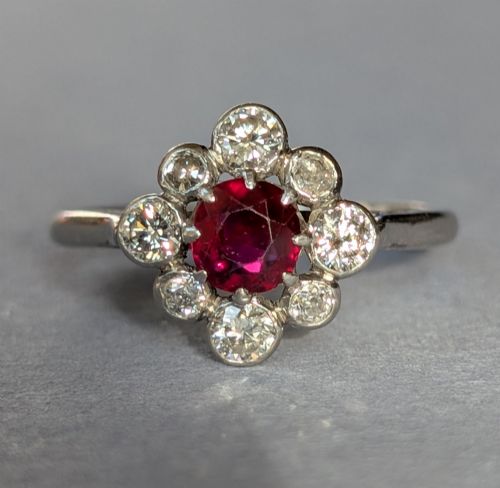
A gemstone target ring centres a central stone within precise concentric rings of contrasting gems, offering geometric brilliance from the early twentieth century.
Gemstone Target Ring
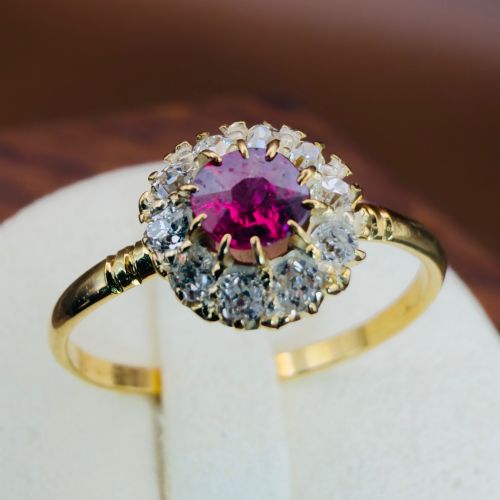
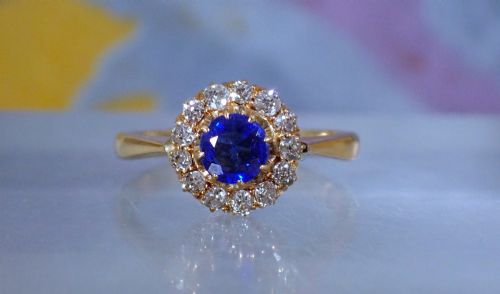
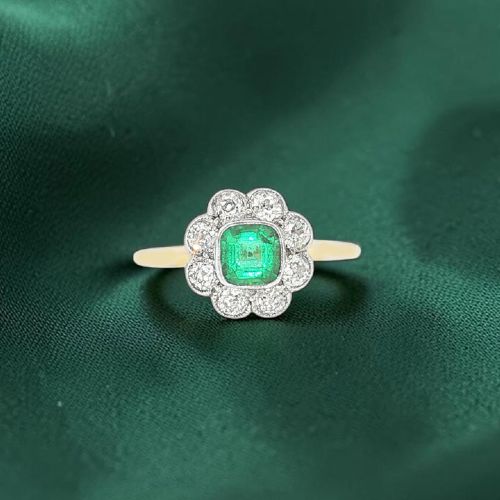
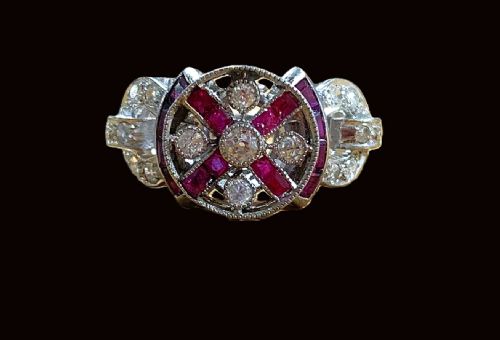
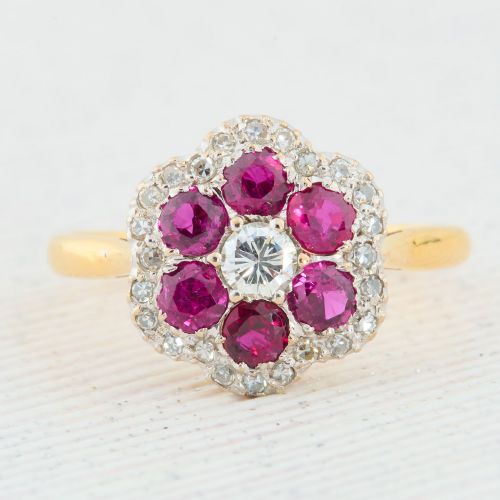
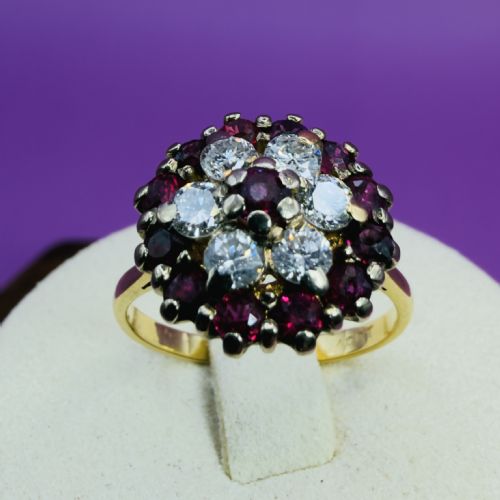
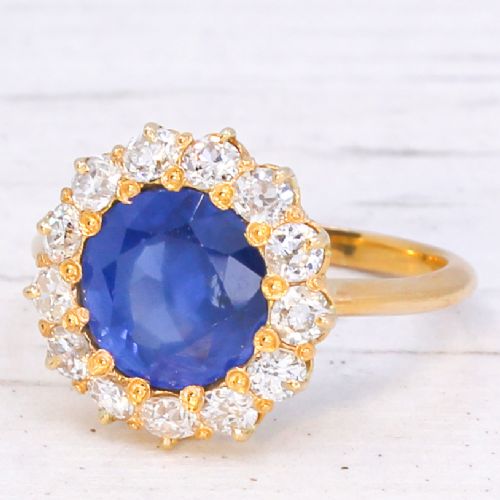
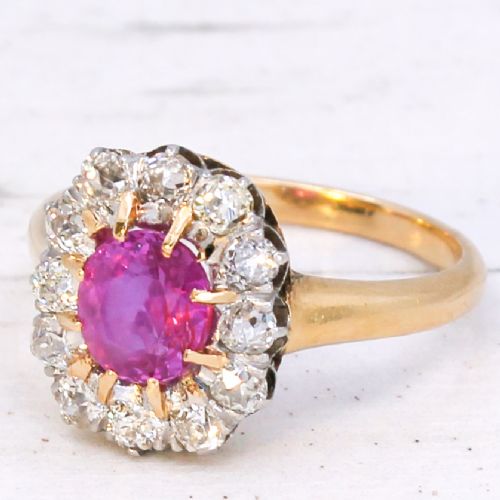
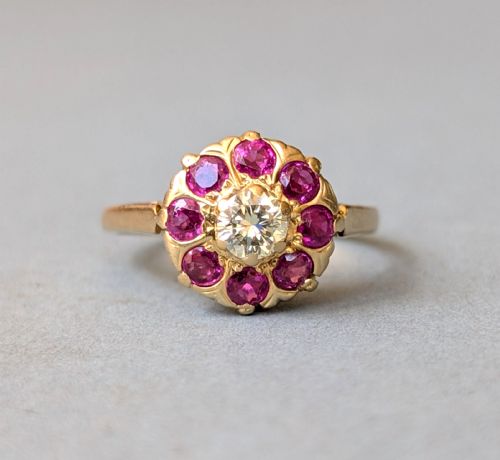
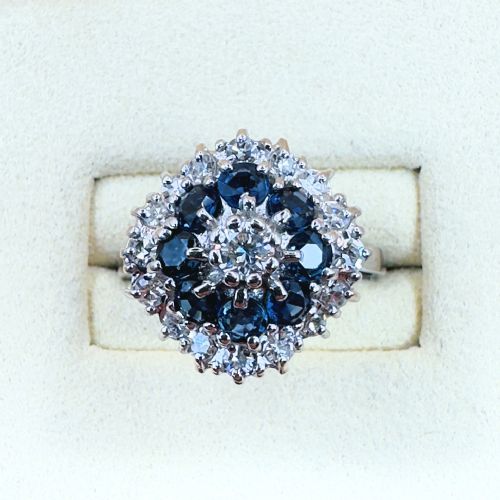
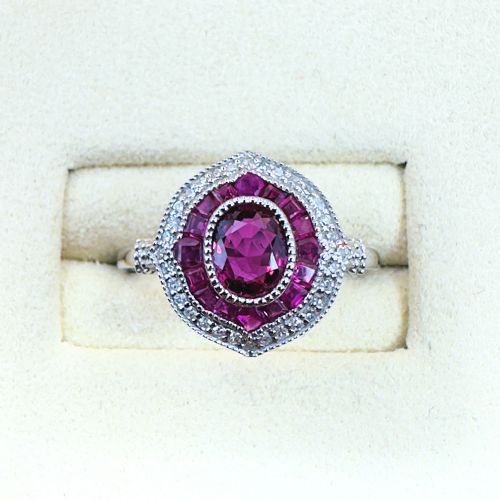
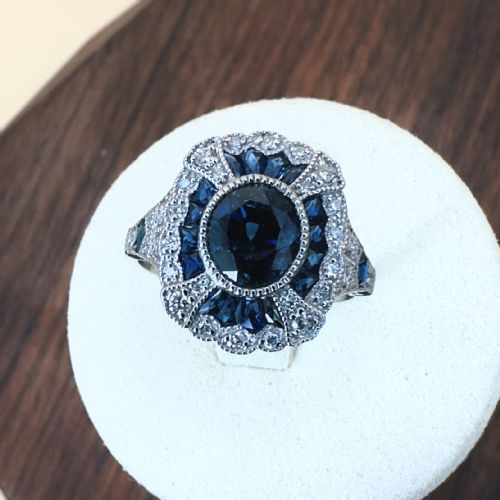
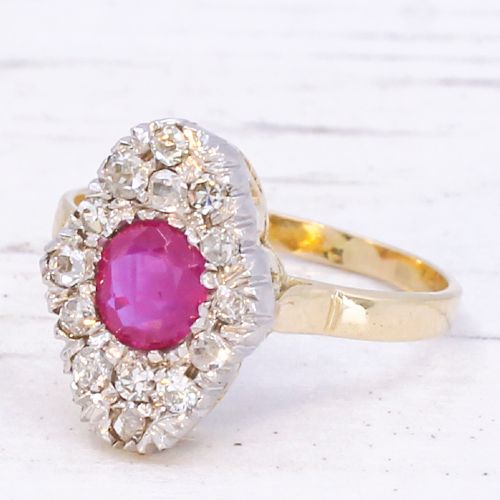
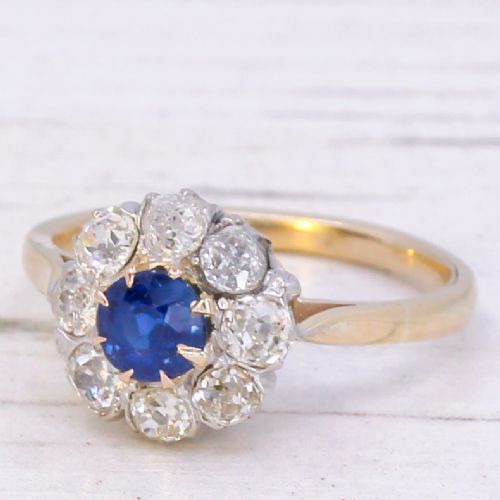
A gemstone target ring focuses upon a prominent centre stone, framed tightly by a uniform circle of smaller gems to create a concentrated geometric pattern. The pieces seen here span periods from the Victorian era through Edwardian and Art Deco designs up to mid-century examples.
Makers working in 18ct yellow gold, 18ct white gold, and platinum mounted emeralds, rubies, sapphires, and diamonds into these concentric formats. The cluster ring form dominates the selection, appearing alongside daisy and halo configurations that share the same circular tiered principle.
How They Were Made
Goldsmiths utilised platinum and 18ct gold to construct robust settings capable of holding multiple small stones securely in formation around a larger centre gem. Old cut diamonds, rubies, and sapphires were shaped and positioned closely to form continuous rings of colour and light.
Millegrain work and precise claw settings secured each tiny stone within the geometric tiers, combining durability with delicate surface texture. Platinum provided the strength needed for intricate Art Deco frameworks, whilst gold supported warmer Edwardian and Victorian cluster designs.
Victorian jewellers occasionally mixed opals and pearls into target layouts, letting shifting fires rival the precision of cut diamonds.
What Varies in Quality
Quality rests upon the symmetry of the concentric tiers and the uniform selection of the calibré or smaller border stones. Precise alignment within a gemstone target ring ensures the concentric circles read as clean, uninterrupted geometric bands.
The choice of centre stone, whether an unheated Burmese sapphire, an emerald, or a diamond, dictates the focal impact of the piece. Superior examples display balanced colour saturation across all stones and meticulous metalwork that conceals unnecessary bulk.
The Gemstone Target Ring Glossary
- Target ring
- A ring featuring a central gemstone enclosed by one or more concentric rings of contrasting smaller stones. This layout creates a bullseye visual effect popular during the Art Deco period.
- Cluster ring
- A ring design where a central stone is surrounded by a cluster of smaller gems. The arrangement maximises overall face-up brilliance.
- Old cut diamond
- A diamond cut by hand before modern machinery standardised facets, typically characterised by a smaller table and a high crown. These stones exhibit a softer, warmer candlelit sparkle.
- Millegrain
- A decorative technique featuring a row of tiny metal beads along the edge of a setting. This detail softens harsh metal lines and frames the stones.
- Unheated sapphire
- A sapphire that has undergone no thermal enhancement to improve its natural colour. Such stones possess intrinsic geological purity valued by collectors.
Gemstone Target Ring: Frequently Asked Questions
What is a gemstone target ring?
A gemstone target ring places a central gemstone within one or more concentric rings of contrasting stones. This geometric arrangement produces a distinctive bullseye pattern.
The style gained prominence during the early twentieth century, particularly within Art Deco jewellery design, utilising diamonds alongside rubies, sapphires, or emeralds.
How do I date a target ring?
Dating relies upon the materials, mounting styles, and cutting techniques used in construction. Platinum settings and sharp geometric layouts point toward the 1920s and 1930s.
Earlier Victorian and Edwardian examples often feature yellow gold bands, softer floral motifs, and old cut diamonds arranged in daisy or halo configurations.
Are these rings suitable for daily wear?
These rings survive from periods spanning the Victorian era to the mid-century, constructed from durable metals like 18ct gold and platinum. Their secure cluster settings protect the girdle of each stone.
Regular checks by a jeweller ensure the claws and millegrain edges remain sound during everyday use.