


Gemstone Pearl Strand Necklace
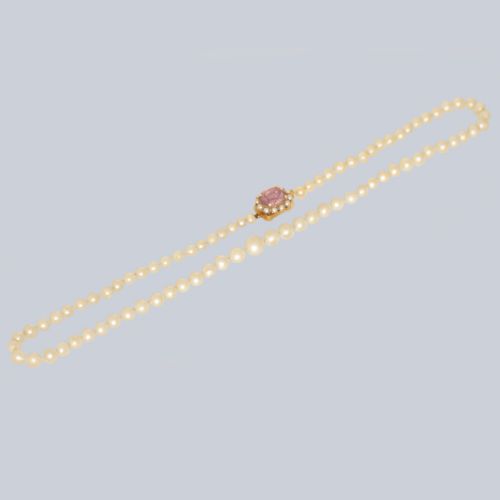
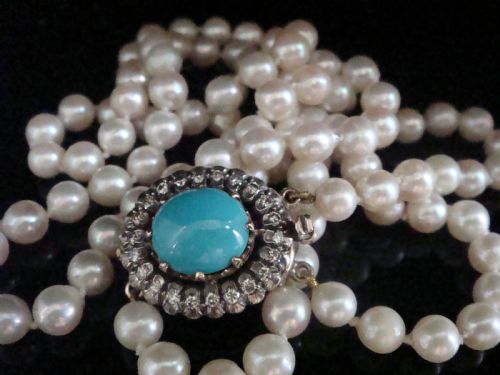
A gemstone pearl strand necklace combines lustrous pearls with precious stones set in gold or platinum clasps.
Gemstone Pearl Strand Necklace
A gemstone pearl strand necklace brings together cultured pearls and coloured gems in single, double, or multi-strand designs. Buyers search for these pieces to wear classic pearl lengths elevated by decorative clasps set with stones like amethyst, tourmaline, and emerald.
The selections available range from Edwardian designs through 1920s French work to 1950s and 1960s mid-century pieces. Single and double strand configurations dominate, often finished with detailed gold or platinum clasps that double as the focal point when worn at the front.
Objects on this page span the nineteenth century to the late twentieth century, showing a strong concentration of mid-century examples. These necklaces vary from simple cultured pearl lengths with gemstone-set clasps to elaborate multi-strand arrangements featuring carved tourmalines and multiple gemstone combinations.
How they were made
Construction relies on stringing cultured pearls alongside precious metal clasps fashioned from nine-carat gold, eighteen-carat gold, or platinum. Goldsmiths integrated diamonds, sapphires, rubies, and amethysts directly into the clasp mechanisms to secure the strands.
Techniques range from traditional knotted silk threading for the pearl strands to precise stone-setting methods like flush and pavé work on the clasps. Certain makers incorporated carved gemstones, such as tourmaline horse heads, into the central closure.
One notable vintage strand secures its pearls with a carved tourmaline horse head.
What varies in quality
The choice of precious metal influences the overall standard, with eighteen-carat gold and platinum settings sitting at the upper end compared to nine-carat gold alternatives. Hallmarks and independent certifications provide additional confirmation of material standards.
Chaumet
The Gemstone Pearl Strand Necklace Glossary
- Cultured pearl
- Pearls formed through human intervention by inserting a nucleus into an oyster or mollusc. These cultured specimens form the primary strand material in twentieth-century examples.
- Clasp
- The fastening mechanism at the back or side of the necklace. On these pieces, the clasp often incorporates diamonds and coloured gemstones to allow wearing the closure facing forward.
- Strand
- A continuous line of threaded pearls making up the body of the necklace. Pieces can feature single, double, or multiple strands working together.
- Platinum
- A dense, durable, and naturally white precious metal used for secure settings in period jewellery. It frequently houses diamonds alongside gold elements.
Gemstone Pearl Strand Necklace: Frequently Asked Questions
How do I wear a gemstone clasp necklace?
These necklaces are designed so the decorative gemstone clasp can be rotated to the front as a pendant feature. Alternatively, wear the clasp at the nape of the neck for a traditional look.
Matching the metal colour of the clasp with other jewellery helps create a cohesive appearance when the clasp is worn visible.
Are multi-strand necklaces heavier to wear?
Double and six-strand necklaces distribute weight across a wider area of the shoulders and collarbone. The addition of gold and gemstone clasps adds a slight counterbalance to the back or side.
Most strands sit comfortably against the skin for extended periods of daily wear.
What gems appear in these clasps?
Clasps feature stones such as diamonds, amethysts, rubies, sapphires, emeralds, turquoise, and tourmalines. These gems are often arranged in floral motifs or geometric Art Deco patterns.
Selected pieces combine multiple gemstone types within a single platinum or gold clasp.
How do I distinguish Edwardian from mid-century pieces?
Edwardian items typically utilise platinum and delicate filigree work with softer gemstone pairings like pearls and turquoise. Mid-century examples from the 1950s and 1960s often showcase bolder goldwork and vibrant stones like amethysts and tourmalines.
Examining hallmarks and overall design motifs helps confirm the manufacturing era.