

Gemstone Pearl Pendant
A gemstone pearl pendant brings together coloured stones and luminous pearls in gold settings designed to catch the light.
Gemstone Pearl Pendant
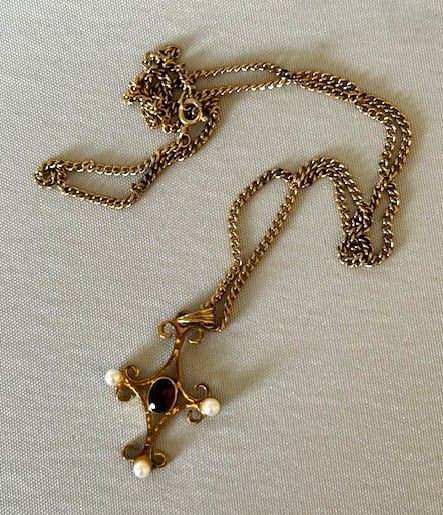
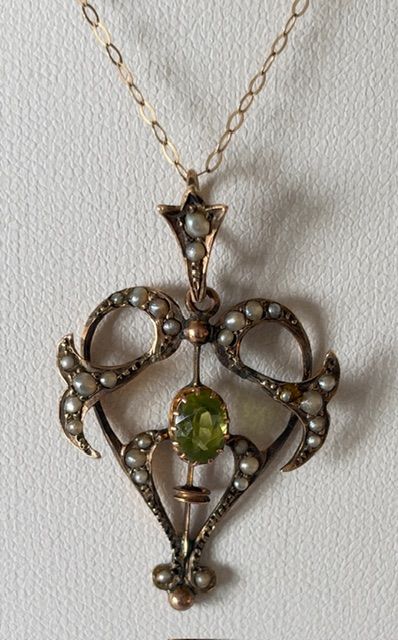
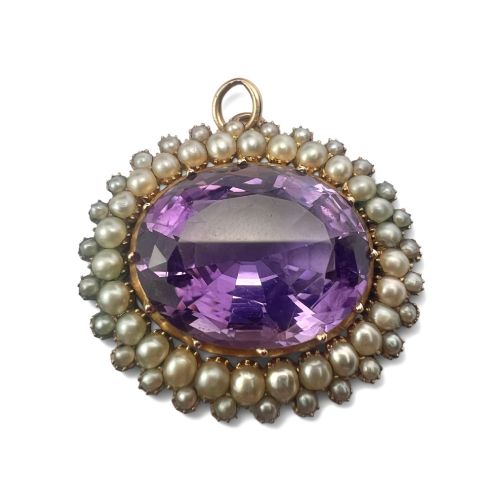
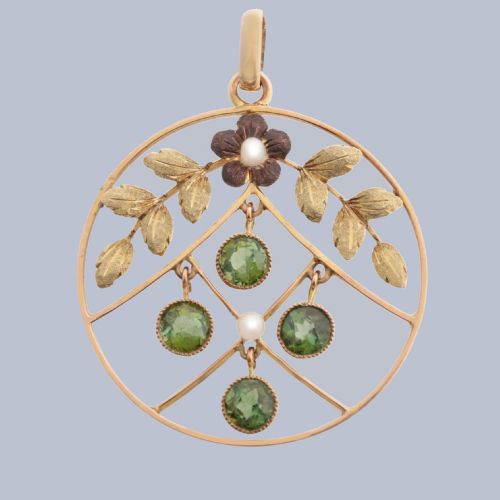
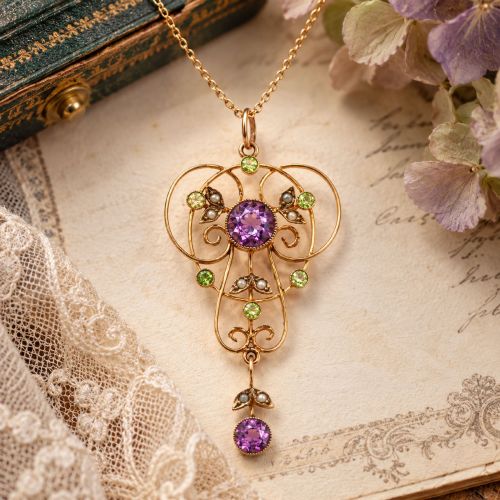
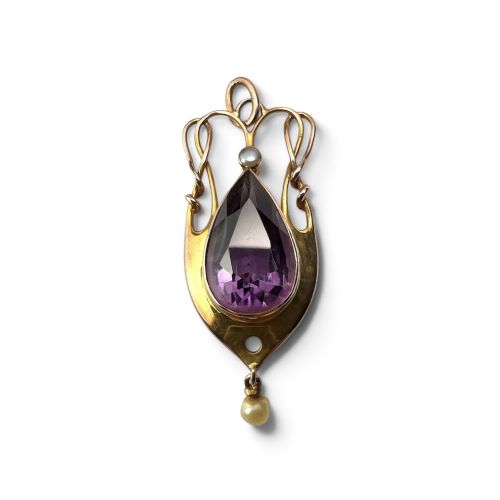
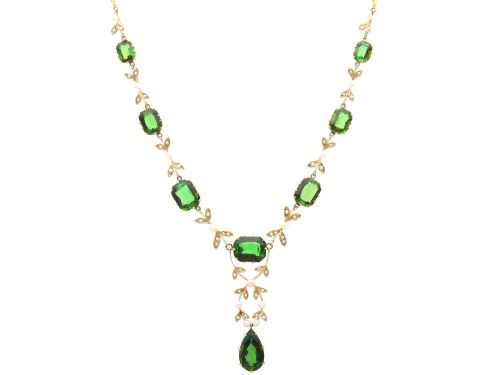
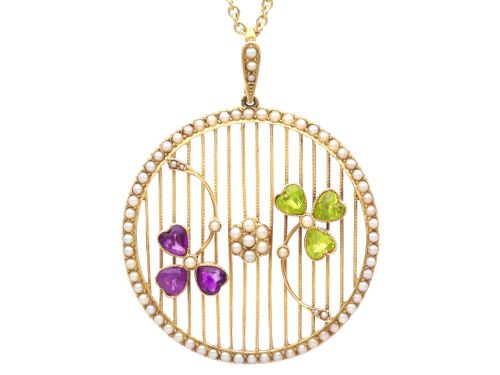
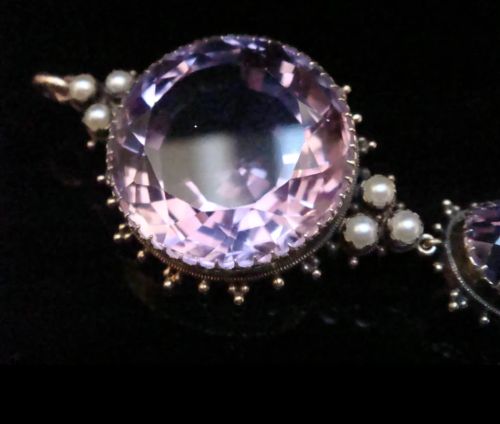
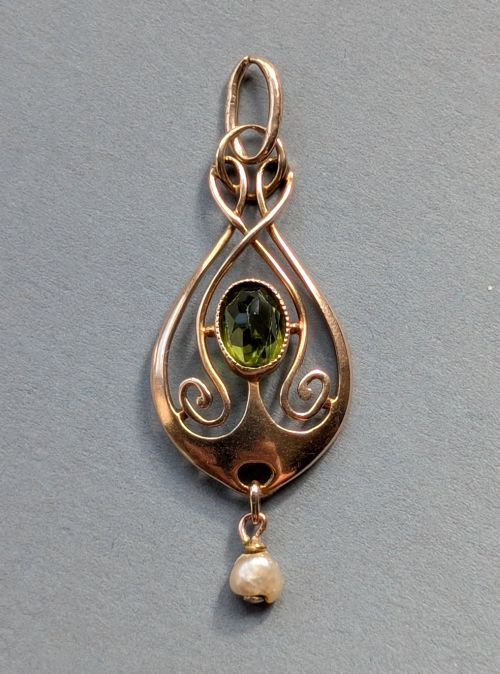
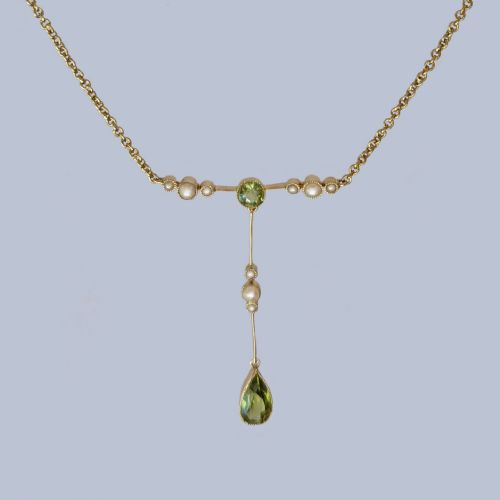
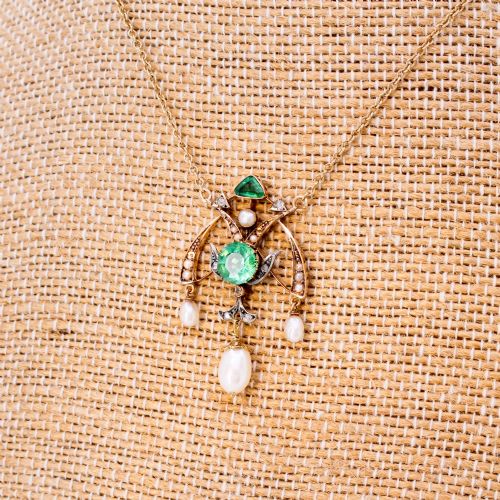
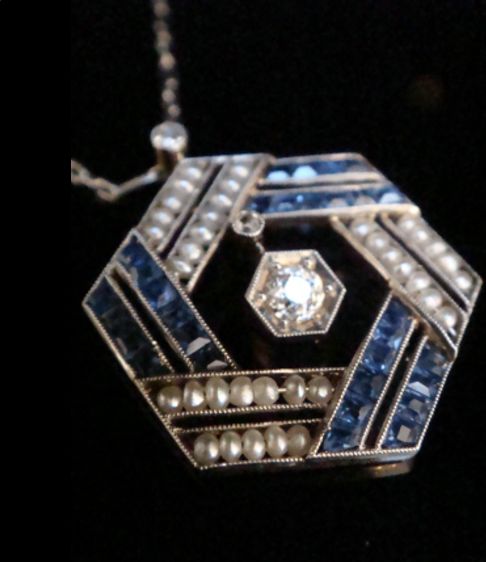
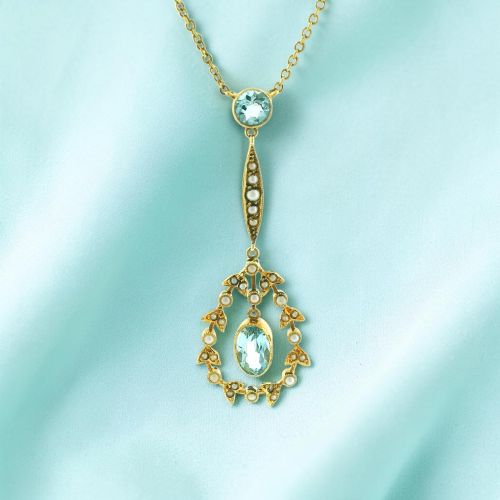
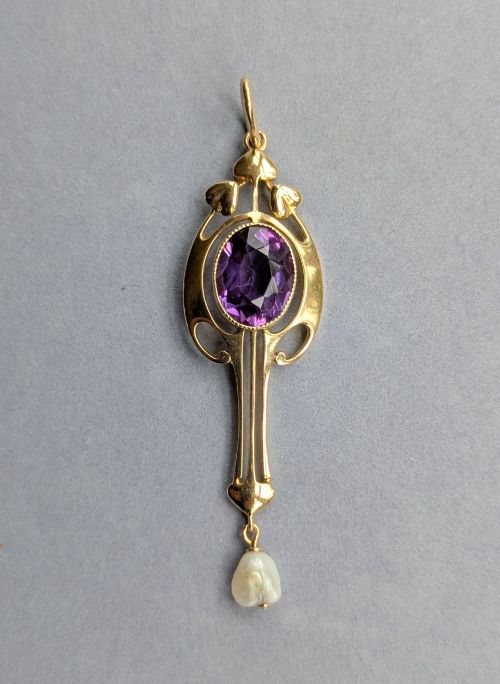
When searching for a gemstone pearl pendant, buyers encounter historic jewels spanning the Victorian, Edwardian and mid-century periods. These pieces combine central coloured gemstones such as amethyst, peridot, tourmaline and aquamarine with delicate seed pearls or natural pearls.
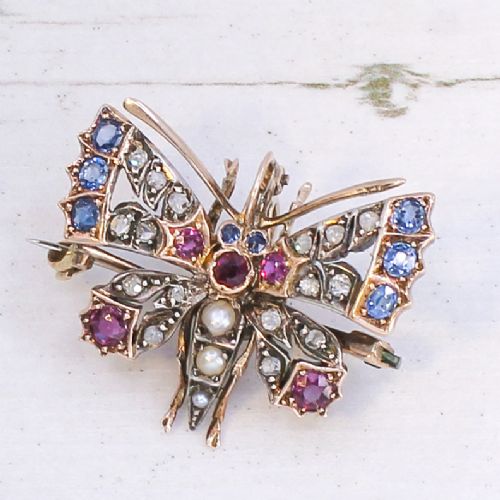
Victorian and later iterations range from simple halo settings to intricate floral and insect motifs. Each piece reflects the prevailing aesthetic of its decade while maintaining the traditional pairing of pearls and coloured minerals.
Materials and Technique
Goldsmiths utilised nine-carat, fifteen-carat and eighteen-carat yellow gold, alongside silver gilt, to construct secure settings for both faceted gemstones and fragile pearls. Seed pearls were meticulously drilled and threaded onto fine wire or silk, whilst larger pearls were half-drilled and secured on pegs with adhesive.
Gemstones such as peridot, amethyst and tourmaline were hand-cut and collet-set or bezel-set by artisans, often employing open-backed mounts to maximise light transmission through the coloured stones. Art Nouveau and Edwardian workshops integrated delicate openwork filigree and granulation alongside cast structural elements.
Gemstone Pearl Pendant Retail Price Guide 2026
Typical asking prices for gemstone pearl pendant among the pieces listed under this phrase on Sellingantiques today, from the lower quarter to the upper quarter. They describe what is for sale here now, not the wider market.
Listings feature yellow gold settings predominantly, spanning nine-carat and fifteen-carat gold standards alongside silver gilt.
Quality Variations
The calibre of a piece rests upon the saturation and clarity of the central gemstone, alongside the matching, lustre and uniform graduation of the pearls. Superior examples display intact original settings where pearls retain their natural orient without discoloration or replacement.
Artisanal execution distinguishes finer items, evident in the crispness of the goldwork, the precision of stone cutting and the integrity of delicate wirework. Maker attribution to notable firms further elevates a piece through documented provenance and superior finishing.
Gourdel Vales and Co·Murrle Bennett·S Blanckensee and Son
The Gemstone Pearl Pendant Glossary
- Seed pearl
- A very small, naturally formed or cultured pearl, often unperforated or finely drilled, used in clusters or fringes to accent larger gemstones in antique jewellery.
- Lavalier
- A pendant featuring a small gemstone or motif suspended from a longer chain, frequently incorporating a central drop that sways with movement.
- Collet-set
- A method of securing a gemstone where a narrow metal band wraps entirely around the girdle of the stone, holding it firmly in place.
- Filigree
- Delicate decorative openwork formed from fine twisted gold or silver threads soldered together in intricate patterns.
Gemstone Pearl Pendant: Frequently Asked Questions
How do I care for my pearl pendant?
Pearls are organic gems sensitive to acids, cosmetics and perfumes, requiring gentle cleaning with a soft, damp cloth after wear. Store them separately from harder gemstones to prevent surface scratching on the delicate nacre.
Keep gold settings bright by avoiding immersion in harsh chemical jewellery dips, especially when pearls are secured with traditional adhesives.
Can this pendant be worn every day?
Historic pendants containing seed pearls require mindful wear due to their delicate construction and traditional mounting methods. Removing the piece before sleeping, swimming or participating in physical activity ensures the longevity of the fine gold chain and settings.
Softer gemstones like peridot also benefit from careful handling to avoid accidental impact against hard surfaces.
How do I distinguish Edwardian from Victorian styles?
Victorian jewellery often displays heavier gold weights, saturated gemstone colours such as deep garnets or amethysts, and formal geometric or sentimental motifs. In contrast, Edwardian pieces favour lighter platinum and yellow gold settings, delicate foliate designs, and pastel stones like aquamarine and peridot.
The introduction of flowing organic lines around nineteen hundred marks the transition into distinct Art Nouveau aesthetics.
Were these pieces originally worn with chains?
Many historic pendants survived with their original matching gold chains, though others were adapted from brooches or offered independently by the maker. Pendants featuring integrated bails or loops were designed to accommodate fine threaded neckchains of the period.
Examining the suspension loop helps determine whether the piece functioned originally as a pendant or a convertible brooch.