


Garden Statues on Plinths
Garden statues on plinths bring classical architecture and sculptural presence directly to outdoor spaces.
Garden Statues on Plinths
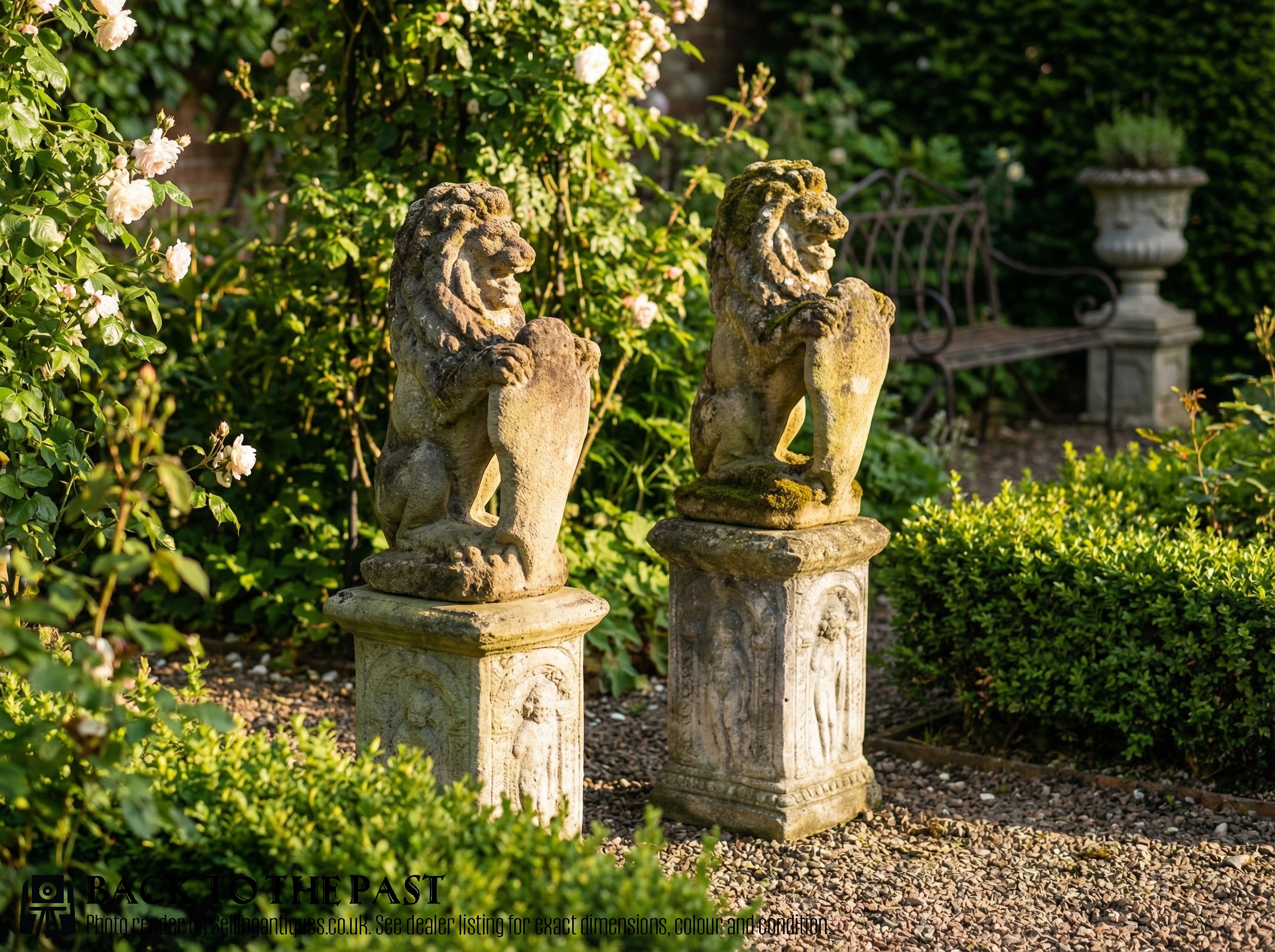
When searching for garden statues on plinths, collectors seek monumental focal points that combine carved or cast figures with raised pedestals. These pieces draw heavily from Neoclassical and Classical Revival aesthetics, placing mythological figures, allegorical sets, and heraldic beasts firmly above ground level.
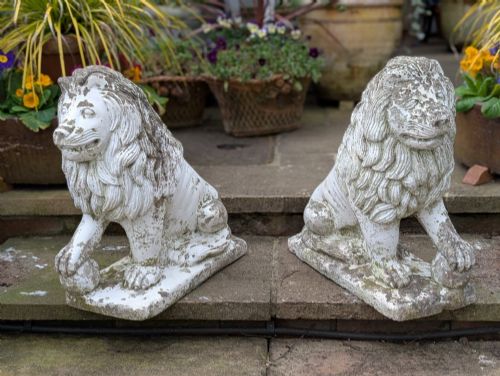
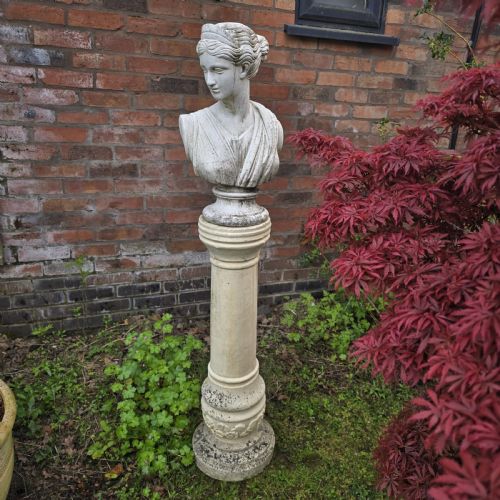
The selections available range from 19th-century French Medici lions and Chinese carved stone lions to mid-century reconstituted stone busts of Athena and David. Large Grecian ladies, pairs of seated lions, and the Four Seasons feature prominently alongside grand tour marbles.
Pedestals and plinths act as necessary architectural support, elevating sculptures such as Venus holding a lamp or busts of historic figures above foliage. These combinations create defined sightlines in formal gardens and courtyards alike.
Materials and Construction
The construction of these garden ornaments relies heavily on durable aggregates, notably reconstituted stone, cast stone, and composite stone. These materials allow artisans to cast complex neoclassical forms with consistent structural integrity.
Recorded periods span from the 19th century through the 1920s, 1930s, and 1950s.
Assessing Quality and Execution
Proportion dictates visual success, particularly on matched pairs of lions or sets representing the Four Seasons. The relationship between the height of the plinth and the mass of the statue above determines the overall balance.
Material density and aggregate composition separate robust garden furniture from fragile decorative items. Well-compacted stone resists frost heave and retains structural stability through seasonal temperature shifts.
The Garden Statues on Plinths Glossary
- Neoclassical
- A revival of classical Roman and Greek artistic styles popular in 19th-century design. It emphasises symmetry, heroic scale, and mythological subject matter.
- Reconstituted stone
- A manufactured material made from crushed natural stone bound with cement and cast in moulds. It mimics the appearance of quarried stone at a larger scale.
- Pedestal
- An architectural base supporting a statue, urn, or bust. These structures elevate the sculpture above ground level to create a distinct focal point.
- Terracotta
- Fired clay used for sculptural and architectural ceramics. It develops a warm reddish-orange hue and requires protection from frost damage.
- Grand tour
- The traditional trip of Europe undertaken by upper-class Europeans in the 19th century. Travellers collected small marbles, bronzes, and antiquities to bring home.
Garden Statues on Plinths: Frequently Asked Questions
How do I protect stone statues in winter?
Most stone and concrete garden ornaments withstand winter weather if they sit on adequate drainage rather than direct soil. Raising plinths on timber battens prevents moisture absorption from freezing ground.
Terracotta and plaster pieces require indoor storage during freezing conditions to prevent cracking and spalling. Wrapping porous stone introduces moisture traps, so open-air winter exposure with clear drainage is often preferable.
Are these statues suitable for indoor display?
Many garden statues, particularly grand tour marbles and smaller plaster busts, transition easily into interior halls and garden rooms. Their architectural weight grounds interior spaces effectively.
Larger reconstituted stone pieces designed for permanent outdoor placement can weigh heavily on domestic flooring. Checking structural load limits is essential before siting heavy cast stone indoors.
How do I date a stone garden ornament?
Dating relies on material composition, weathering patterns, and stylistic execution rather than makers' marks, which rarely appear on garden statuary. Nineteenth-century examples often display deep organic weathering and hand-finished chisel marks.
Mid-century pieces from the 1920s to 1950s frequently utilise early concrete and composite stone mixes with standardised mould seams. Comparing facial details and base construction against known period catalogues helps narrow down the era.
Can matched pairs be separated safely?
Separating matched pairs of lions or allegorical figures diminishes their decorative impact and historical integrity. Garden statues originally cast as pairs share identical weathering patterns and mould characteristics.
Keeping companion pieces together preserves their symmetry and value in formal garden layouts. Arranging them symmetrically flanks entrances and focal pathways effectively.