

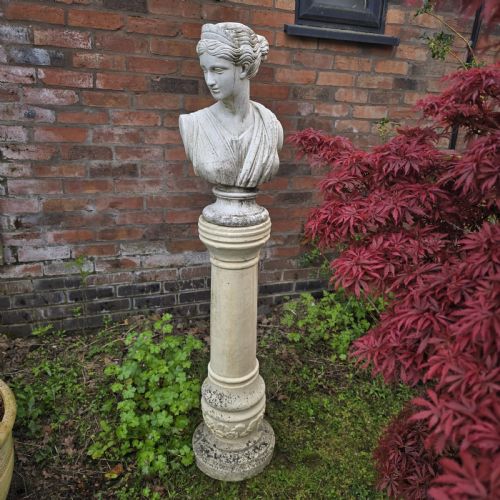


Garden Sculpture on Plinth
A garden sculpture on plinth brings classical presence to a lawn, combining carved figures with stone pedestals for height and authority.
Garden Sculpture on Plinth
When you search for a garden sculpture on plinth, you encounter classical figures, animals, and architectural pieces elevated on stone pedestals. The selection spans the nineteenth century, the Edwardian era, and the mid-twentieth century.
You are most likely to meet reconstituted stone, cast stone, and concrete figures alongside terracotta, marble, and plaster works. Subjects include Apollo Belvedere, Athena, David, Venus, the Four Seasons, and Medici lions.
The forms range from single garden statues and busts to paired seated lions and architectural altars. Neoclassical, Classical Revival, and Victorian styles dominate the grouping.
How they were made
Many pieces utilise cast stone, reconstituted stone, and concrete poured into moulds to capture classical details efficiently. These materials endure outdoor elements while replicating the appearance of quarried stone.
Other works employ hand-carved marble, terracotta, and stone, reflecting traditional sculptural techniques. Paint finishes and natural weathering frequently alter the surface texture over decades of exposure.
Garden Sculpture on Plinth Retail Price Guide 2026
Typical asking prices for garden sculpture on plinth among the pieces listed under this phrase on Sellingantiques today, from the lower quarter to the upper quarter. They describe what is for sale here now, not the wider market.
Periods represented on the page include the nineteenth century, Edwardian era, and nineteen-fifties.
What varies in quality
The choice of material and the stability of the supporting plinth determine durability and visual balance. Finely carved marble and well-poured cast stone command attention through their material weight and presence.
The Garden Sculpture on Plinth Glossary
- Reconstituted stone
- A composite material made from crushed stone and cement binder moulded into architectural forms. It provides a durable alternative to natural quarried stone.
- Plinth
- A heavy base or pedestal that elevates a statue or bust above ground level. It draws the eye upward and anchors the sculpture in an outdoor setting.
- Neoclassical
- An artistic style inspired by the classical art and culture of ancient Greece and Rome. It emphasises restraint, proportion, and classical mythological subjects.
- Grand tour
- A cultural journey undertaken by wealthy young Europeans to study classical antiquities. Small marbles and busts were often acquired during these travels.
Garden Sculpture on Plinth: Frequently Asked Questions
How do I secure a heavy stone plinth outdoors?
Place the plinth on a flat, level concrete pad or compacted gravel base to prevent shifting and subsidence over time. Heavier pieces generally remain stable under their own mass without mechanical fixings.
Ensure proper drainage beneath the base to prevent moisture retention and frost damage during winter months.
Can marble statues stay outside year round?
Marble withstands outdoor conditions well, but extreme frost can cause moisture trapped within micro-fissures to expand and crack the stone. Many collectors site marble under protective structures or move delicate pieces indoors during severe winters.
Regular gentle washing helps prevent organic growth from staining the porous surface.
How do I clean weathered cast stone figures?
Use a soft bristle brush and clean water to remove dirt and surface debris without damaging the outer layer. Avoid harsh pressure washers and chemical cleaners that strip away protective weathering and erode the stone.
Allow the stone to dry naturally after cleaning.
What styles fit a classical garden layout?
Neoclassical and Victorian figures, such as Medici lions and busts of Athena or Apollo, integrate naturally into formal garden designs. These pieces echo traditional European landscape architecture and classical sculpture traditions.
Pairing a statue with a matching stone plinth creates a balanced focal point along a path or at a lawn intersection.