



Garden Lion Sculptures
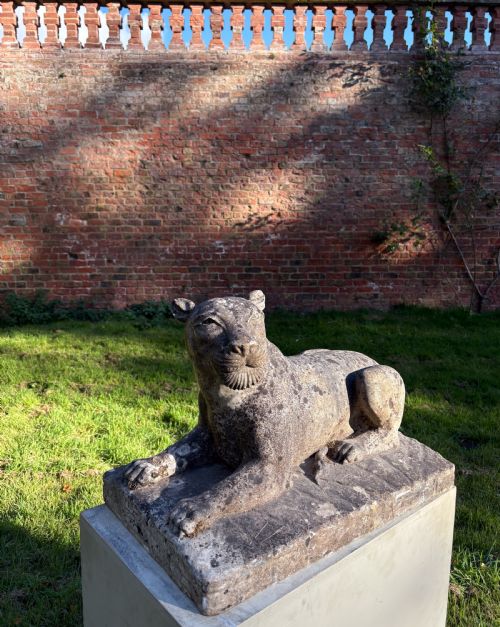
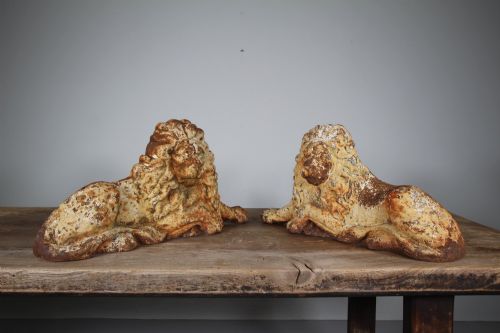
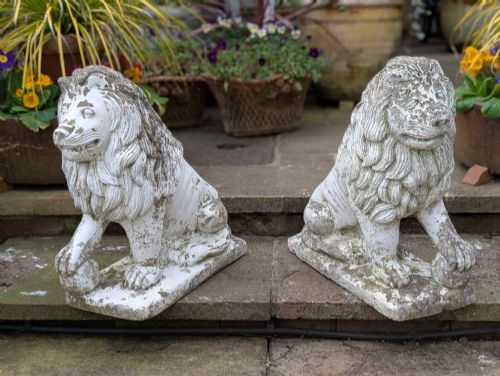
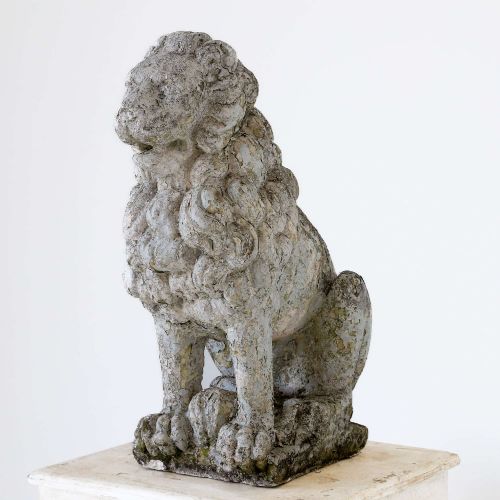
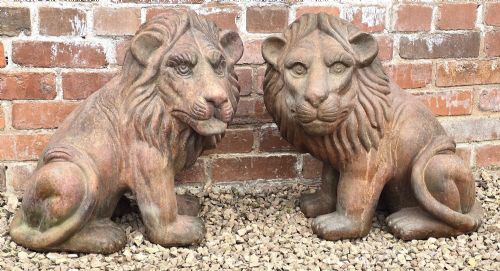
These garden lion sculptures bring classical authority to a terrace, whether carved from solid marble or moulded in weathered terracotta.
Garden Lion Sculptures
Garden lion sculptures range from grand Italianate marble pairs to robust reconstituted stone guardians standing on plinths. When searching for garden lion sculptures, buyers encounter vigorous representations from the seventeenth century onwards, designed to flank gates or anchor lawns.
Most examples found here date from the nineteenth century, including large terracotta pairs and hand-sculpted models of French Medici inspiration. Alongside these substantial beasts sit smaller post finials and figurative works such as stone lions with guardians.
Origins stretch from English country houses to continental workshops, taking forms that encompass seated protectors, standing beasts, and allegorical subjects like Una and the lion. Each piece reflects the enduring desire to project strength and classical taste across formal gardens.
How they were made
Masonry and ceramic traditions dominate these pieces, utilising hand-carved solid marble, durable terracotta, and salt-glazed pottery. Sculptors shaped dense stone and clay before firing or finishing with original old paint.
Later twentieth-century examples employ composite and reconstituted stone cast into moulds to replicate traditional carved textures efficiently. Artisans combined structural reinforcement with surface modelling to withstand outdoor weathering over decades.
Garden Lion Sculptures Retail Price Guide 2026
Typical asking prices for garden lion sculptures among the pieces listed under this phrase on Sellingantiques today, from the lower quarter to the upper quarter. They describe what is for sale here now, not the wider market.
Listings feature materials spanning traditional hand-sculpted marble, terracotta, salt-glazed pottery, and mid-twentieth-century composite stone.
What varies in quality
Anatomy and proportion separate standard garden ornaments from exceptional sculptural works, particularly in the rendering of musculature and facial expression. The crispness of the chisel work on marble or the finesse of the modelling in terracotta dictates the artistic merit.
Patina and surface ageing contribute significantly to the character of these sculptures, where natural weathering or retained early paint surfaces enhance depth. Massive scale and matched pairs command greater presence than single, smaller figures.
Hurlford Kilmarnock
The Garden Lion Sculptures Glossary
- Medici lions
- Replicas of the famous pair of marble lions guarding the Loggia dei Lanzi in Florence. They typically feature one paw resting on a sphere.
- Terracotta
- Fired clay used extensively for sculptural garden ornaments. It acquires a warm, porous surface texture that weathers characteristically outdoors.
- Post finials
- Sculptural ornaments mounted on top of gateposts or pillars. They serve as architectural caps for entranceways.
- Reconstituted stone
- A composite material made from crushed stone and cement binder, moulded into specific shapes. It offers durability similar to natural stone.
- Salt-glazed pottery
- Ceramic ware treated with salt during the kiln firing to produce a durable, vitreous finish. This technique creates a dense surface resistant to frost.
Garden Lion Sculptures: Frequently Asked Questions
How do I place garden lion sculptures?
Pairs of lions work best when flanking entrance gates, terrace steps, or the main approach to a house. They require a solid foundation or dedicated plinth to bear their weight safely.
Position them where they can be viewed from a distance to appreciate their scale and authoritative posture, keeping drainage in mind for stone and terracotta pieces.
Are terracotta lions frost resistant?
Terracotta sculptures need care during freezing weather, particularly older or salt-glazed pieces that absorb moisture. Raising them off the ground on slate or timber prevents ground water absorption.
Covering them or moving unglazed terracotta indoors during severe winter months prevents frost spalling and surface flaking.
How do I date an old stone lion?
Dating relies on tool marks, weathering patterns, and the stylistic convention of the carving. Nineteenth-century examples often display sharper neoclassical detailing or specific regional terracotta clays.
Examining the underside and mortar remnants provides additional clues regarding original placement and age.
What is the difference between marble and reconstituted stone?
Natural marble is carved directly from block stone by a sculptor, showing unique crystalline structures and tool signatures. Reconstituted stone is cast in moulds using aggregate and binders.
Marble yields sharper detail and greater longevity, whereas composite stone offers consistent form at a different structural weight.