


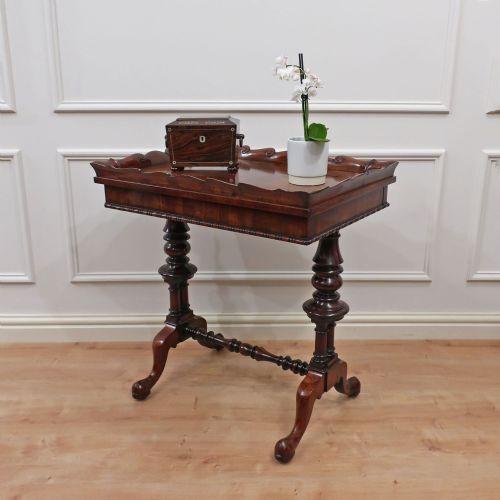
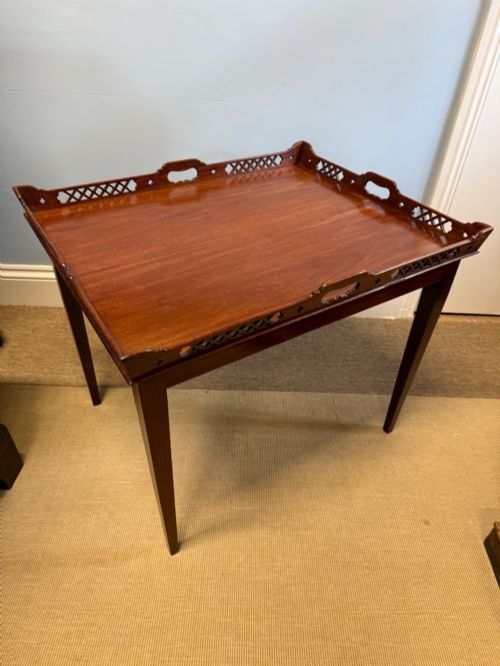
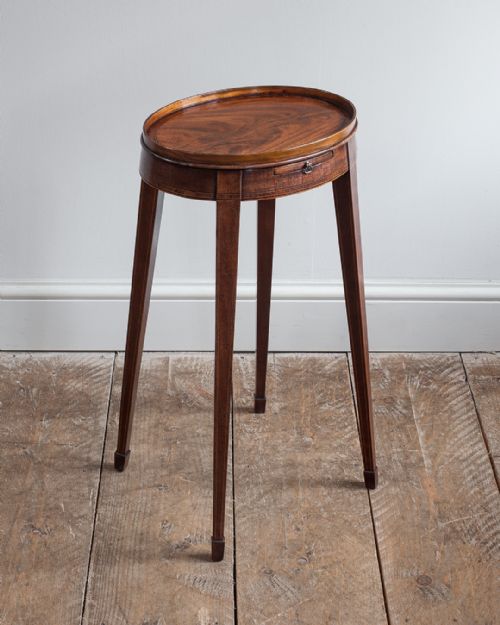


Gallery Top Tea Table
A gallery top tea table is a refined surface edged with a raised rim, designed to secure delicate porcelain during service.
Gallery Top Tea Table
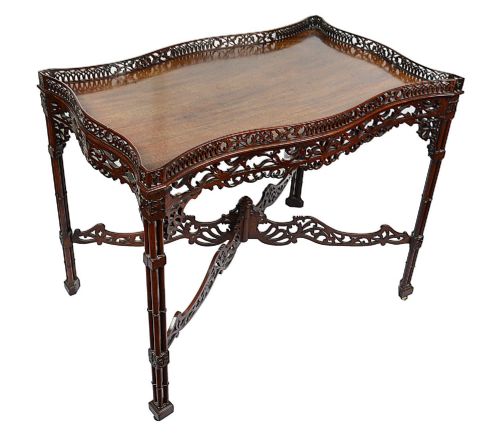
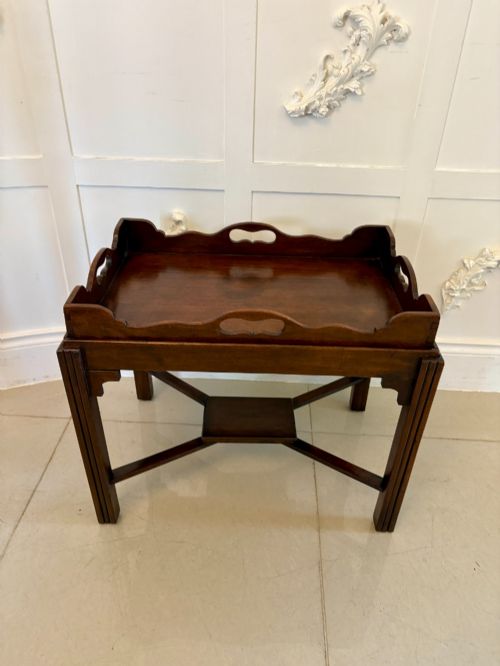
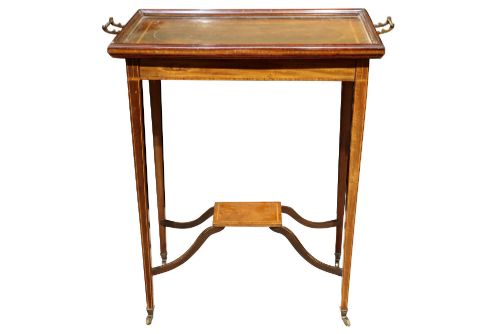
A gallery top tea table serves as an elegant surface with a raised wooden or pierced border designed to keep vessels secure. These pieces appear frequently in mahogany and walnut across the Georgian, Regency and Edwardian periods.
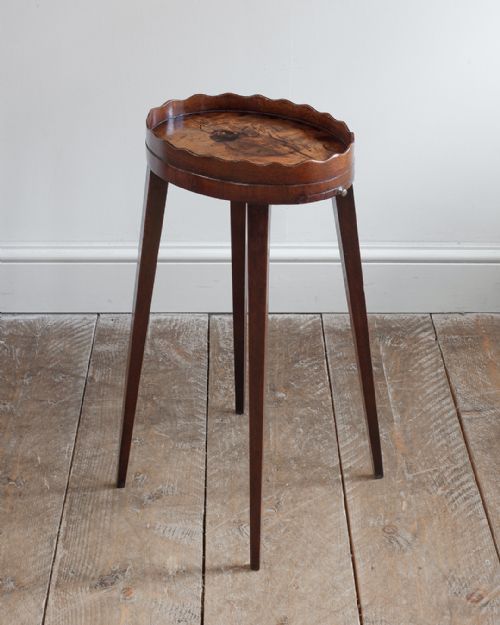
The selection ranges from compact urn and kettle stands to broader occasional and silver tables. Many examples incorporate oval, square or octagonal tops, sometimes supported by birdcage mechanisms or tripod bases.
Buyers will encounter formal 18th Century designs alongside later revivals from the Victorian and Edwardian eras. Each variation reflects the prevailing domestic habits of its period, from afternoon tea service to display.
Materials and construction methods
Cabinet makers relied heavily on solid and veneered mahogany, frequently enhanced by burr walnut, satinwood and intricate wood inlay. These dense timbers provided the stability needed for slender tripod legs and delicate raised borders.
Surrounds were fashioned with solid shaped rims or fine pierced fretwork galleries secured to the table perimeter. Turning, carving and birdcage box joints allowed tops to tilt and rotate on their central pillars.
Gallery Top Tea Table Retail Price Guide 2026
Typical asking prices for gallery top tea table among the pieces listed under this phrase on Sellingantiques today, from the lower quarter to the upper quarter. They describe what is for sale here now, not the wider market.
Formats range from tripod kettle stands to rectangular silver tables and occasional coffee tables.
Assessing craftsmanship and proportion
Quality rests in the crispness of the pierced fretwork gallery and the harmony of the timber grain across the top. Superior examples display precise joinery where the raised rim meets the primary surface.
The sophistication of the turning on the central pillar and the elegance of the leg spread dictate the visual balance of the piece. Period execution shows depth in the carving and careful selection of figured veneers.
Gillows
The Gallery Top Tea Table Glossary
- Gallery
- A raised miniature balustrade or pierced wooden border running around the perimeter of a tabletop. It prevents items from sliding off the surface during use.
- Birdcage
- A timber framework beneath the tabletop that allows the surface to both rotate and tilt. This mechanism is typically found on 18th Century tripod tables.
- Kettle stand
- A small, tall table specifically scaled to hold a heavy water vessel close to the tea host. They often feature square or octagonal tops.
- Silver table
- A formal serving table with a raised edge designed for displaying silver tea services. These are frequently associated with Georgian and later revival periods.
- Snap top
- A tabletop mounted on a hinge mechanism that folds flat against the pedestal when not in use. This allowed tables to be stored against walls in period interiors.
Gallery Top Tea Table: Frequently Asked Questions
What is a gallery top tea table used for?
These tables were originally created to hold porcelain teapots, cups and silver vessels during social gatherings. The raised rim protected valuable ceramics from slipping off the surface.
Today, they function well as decorative occasional surfaces in reception rooms. Their compact proportions make them suitable for holding lamps or small decorative objects.
How do I identify a Georgian gallery top table?
Georgian pieces typically exhibit dense, patinated mahogany timber with hand-carved tripod bases and traditional joinery. The galleries are often fret-cut from solid wood rather than applied with modern adhesives.
Examining the underside reveals tool marks and construction methods consistent with 18th Century workshop practices. Later revivals from the Edwardian period often feature lighter framing and machine-cut elements.
What is the difference between a tea table and an urn stand?
Urn and kettle stands are generally smaller and taller than standard tea tables, designed specifically to support a single heavy water vessel. Their tops are frequently square, octagonal or oval to fit compact spaces.
Tea tables provide a broader surface area intended for arranging an entire tea service. They often include birdcage mechanisms or drop-leaves depending on the period.
Can I use a antique tea table everyday?
These pieces are structurally robust enough for normal daily use as display or occasional surfaces. Placing coasters beneath hot cups or liquids protects the historic polish and timber.
Avoiding direct sunlight and maintaining stable room humidity preserves the veneers and solid wood construction. Gentle dusting with a dry cloth keeps the surface maintained.