


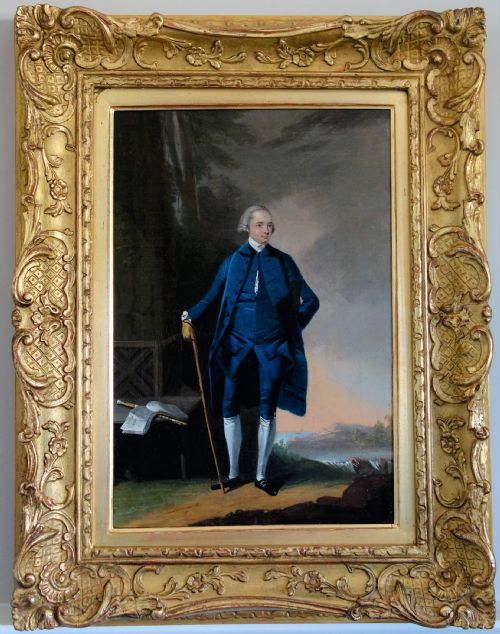


Full Length Oil Portrait
These full length oil portrait pieces capture subjects from grand monarchs to military officers on canvas, offering immediate presence to any room.
Full Length Oil Portrait
A full length oil portrait presents a complete figure from head to toe, capturing posture, attire, and surroundings within a single canvas. When searching for a full length oil portrait, buyers encounter works spanning from the eighteenth century through the Victorian era up to the twentieth century.
The subjects range from Tudor kings and military hussars to elegant ladies and young boys with toys. These canvases often adopt historical manners, such as seventeenth-century Dutch styles or Elizabethan and Tudor revivals.
Most examples arrive framed in wood or giltwood, preserving the grand scale required to depict a person in their entirety. The compositions vary from intimate depictions of musicians to commanding portrayals of historical figures.
Materials and construction
Artists painted these works primarily using oil paint applied to stretched canvas or occasionally vinyl canvas. The combination of oil medium and woven support allowed painters to build deep layers of colour and fine detail over time.
Frames fashioned from wood and giltwood completed the construction, providing structural rigidity and ornamental presence. Gilding applied to the wooden moulding enhanced the visual weight and status of the artwork.
Assessing quality in portraiture
Quality rests in the handling of the subject's expression, posture, and clothing textures by the artist's hand. Superior works demonstrate precise command over light and shadow, giving the figure genuine depth and realistic volume against the background.
The sophistication of the surrounding details, such as the weave of a fabric or the carving on a giltwood frame, separates standard decorative pieces from accomplished fine art paintings. Provenance and attribution to specific followers or circles of known painters also elevate a work's standing.
Cornelis Van Der Voort·Thomas Gainsborough·Philip Mercier·Edward Alcock·William Salter·John Singer Sargent·Daniel Mytens
The Full Length Oil Portrait Glossary
- Oil paint
- A slow-drying paint made by combining pigments with a drying oil, typically linseed oil. This medium allows artists to blend tones smoothly and achieve rich luminosity.
- Canvas
- A heavy woven fabric used as a surface for oil painting, stretched tightly over a wooden frame. It provides a flexible yet durable support for large compositions.
- Giltwood
- Wood that has been coated with a thin layer of gold leaf or gold paint. Frames made of this material surround many traditional paintings.
- Manner
- A descriptive term indicating that an artwork is created in the style of a particular artist or period without being a direct copy. It reflects the influence of established artistic traditions.
- Attributed to
- A term used when experts consider a work likely to be by a specific artist, though definitive proof is lacking. This assessment relies on stylistic analysis and comparative study.
Full Length Oil Portrait: Frequently Asked Questions
What is a full length oil portrait?
A full length oil portrait is a painting that depicts a human subject from head to foot, executed in oil paints on canvas. These works emphasise posture, costume, and setting to convey the status and personality of the individual.
Such pieces range from historical depictions of Tudor monarchs to nineteenth-century military officers and elegant ladies. They provide a commanding visual presence due to their large physical scale.
How should I hang a large portrait?
Large portraits require sturdy wall fixings that can support both the weight of the canvas and its substantial wooden or giltwood frame. Placing the piece at eye level ensures the subject's gaze engages properly with the room.
Avoid hanging oil paintings in direct sunlight or areas with high humidity to protect the paint surface and canvas tension. Proper placement preserves the integrity of the materials over decades.
How do I identify the period of a portrait?
Period identification relies primarily on the style of clothing, hair, and accessories worn by the subject. Fashion changes provide clear chronological markers for dating the painting.
Additionally, the stretcher frames, canvas preparation, and framing styles offer physical clues about the era of creation. Signatures, dates, or historical inscriptions on the canvas reverse also help establish the timeline.
What does after an artist mean?
The term after an artist indicates that the painting is a later copy or a deliberate homage to an original work by that specific master. Artists often painted these versions to study technique or to satisfy demand for popular compositions.
These pieces reflect the enduring legacy and influence of the primary painter across subsequent generations. They carry artistic interest in their own right through their execution and style.