



Fruit Bowl Oil Painting
A fruit bowl oil painting brings colour and form into a room, capturing the rich textures of fruit and ceramics on canvas.
Fruit Bowl Oil Painting
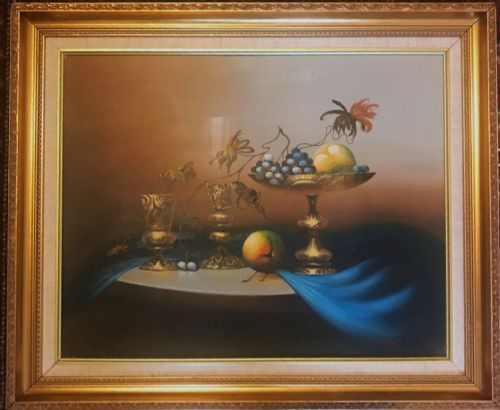
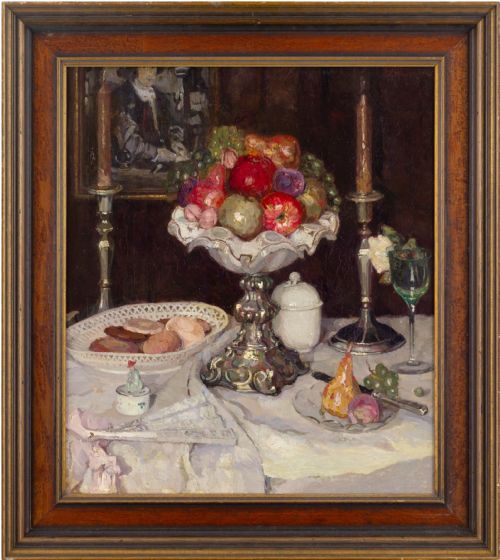
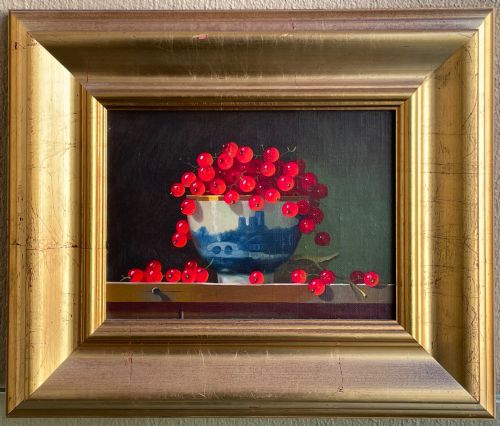
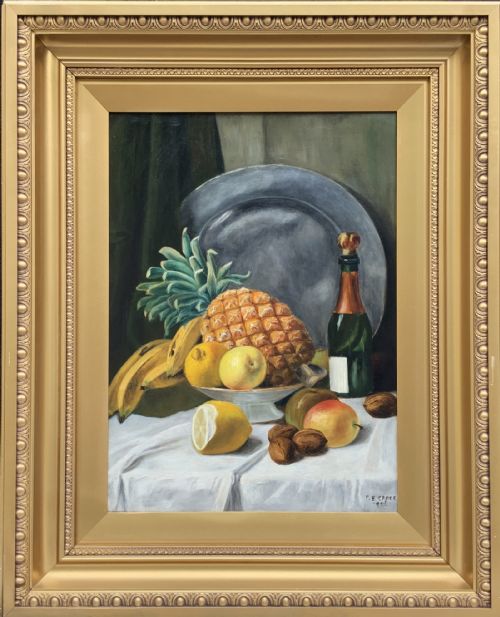
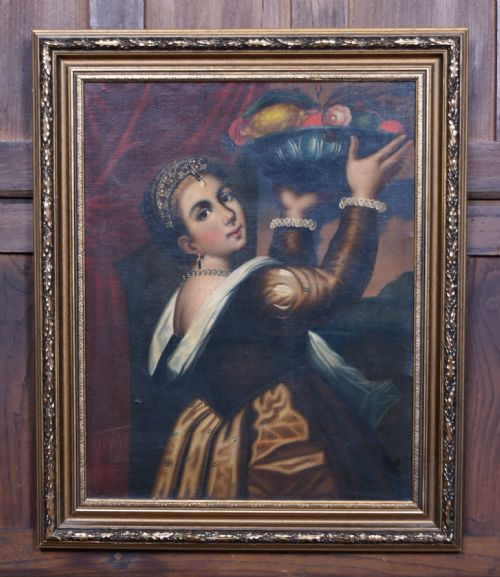
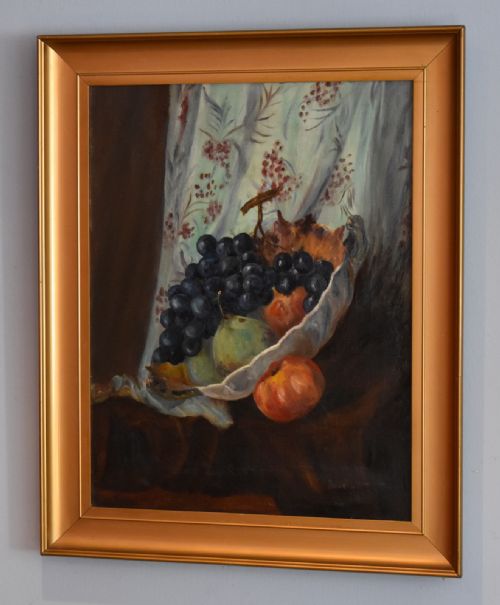
When you search for a fruit bowl oil painting, you encounter works that range from Edwardian compositions to mid-century studies. These pieces typically depict arrangements of fruit, sometimes accompanied by jugs, biscuits, or candlesticks, set on canvas or wood.
The selections available here span several decades and styles, including classical realism, post-impressionism, and Dutch master style. Most works on this page showcase traditional realism or contemporary realism, focusing on the interplay of light and shadow across everyday objects.
Originating from various European schools, these oil paintings utilise rich palettes to render subjects like apples, grapes, and red berries. Collectors often find works dated from the nineteenth century through to the mid-twentieth century.
How they were made
Artists painted these works primarily using oil paint on canvas or wooden supports, building up layers to create depth and texture. The viscous nature of oil medium allowed painters to blend hues smoothly and capture the glossy skin of fruit or the matte finish of ceramics.
Many of these works are housed in frames finished with gilt, gold leaf, or gilded wood. The application of gold leaf on wood surrounds enhances the visual warmth of the oil paintings and reflects the period aesthetic of the framing.
Listings feature canvases spanning the nineteenth century to the 1960s, employing oil paint on canvas and wood.
What varies in quality
The distinction between standard and superior works lies in the handling of light, brushwork confidence, and the compositional arrangement of the fruit and vessels. A stronger piece demonstrates a careful balance of tones that gives volume to each piece of fruit and crispness to surrounding objects like blue and white jugs.
Framing also influences the overall presentation, with period gilt wood frames adding historical context that complements the canvas. The depth of the oil layers and the subtlety of the colour palette separate routine decorative works from more accomplished artistic studies.
Jozsef Molnar·Else Preußner·Ian Parker·Bela Balogh·J.C.de Bruin·Auguste Braekevelt
The Fruit Bowl Oil Painting Glossary
- Oil paint
- A slow-drying paint made by mixing pigments with oils, such as linseed oil. This medium allows artists to blend colours seamlessly and create rich textures.
- Canvas
- A closely woven fabric used as a surface for oil painting. It is typically stretched over a wooden frame before the artist begins working.
- Gilt wood
- Wood decorated with gold leaf or gold paint. This technique was frequently utilised for antique picture frames to complement the artwork within.
- Still life
- A painting featuring inanimate subject matter, typically commonplace objects such as fruit, flowers, or tableware. It has been a staple genre in European art for centuries.
- Dutch master style
- An artistic approach emulating the dramatic lighting and detailed realism of seventeenth-century Dutch painters. Works in this style often feature dark backgrounds contrasted with brightly lit fruit and vessels.
Fruit Bowl Oil Painting: Frequently Asked Questions
What periods do these paintings come from?
The works span from the nineteenth century through the Edwardian era and into the mid-twentieth century, including decades like the 1930s and 1950s.
Different decades brought distinct approaches, moving from traditional realism towards mid-century realism and post-impressionist styles.
What materials were used?
Artists painted primarily with oil paint on stretched canvas or wood panels, utilising rich pigments to capture textures.
Many pieces are mounted in frames made of gilt wood or finished with gold leaf to enhance the presentation.
How should I hang an oil painting?
Choose a wall away from direct sunlight and excessive moisture to protect both the canvas and the gilt wood frame.
Ensure the hanging fixings are secure, as oil paintings with wooden frames can carry significant weight.
How do I identify the painting style?
Examine the brushwork and lighting to determine if the piece leans towards classical realism, Dutch master style, or contemporary realism.
Subject matter can also offer clues, as traditional arrangements often include blue and white jugs alongside fruit.