


Floral Fruit Still Life
These floral fruit still life paintings bring together rich arrangements of blossoms and harvest produce across centuries of canvas and paper.
Floral Fruit Still Life
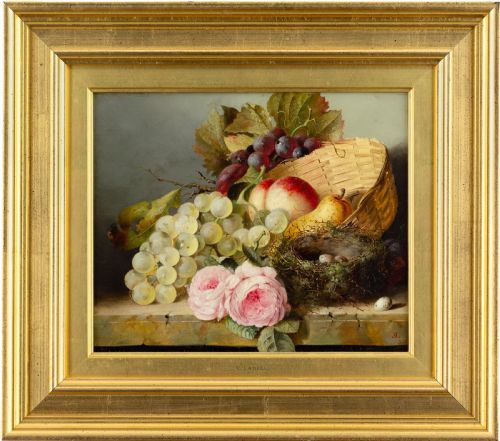
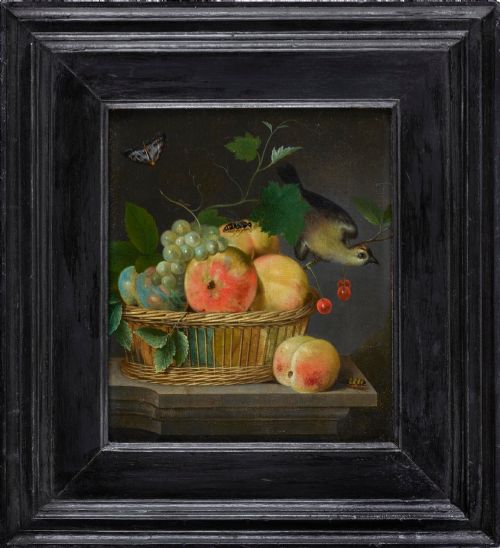
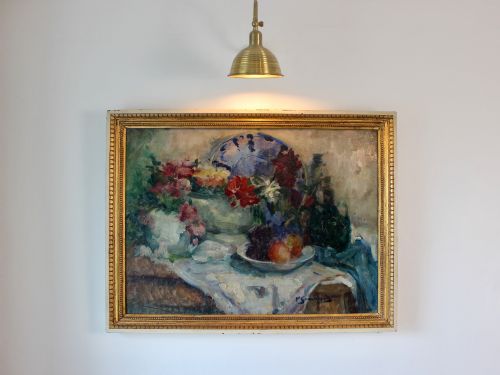
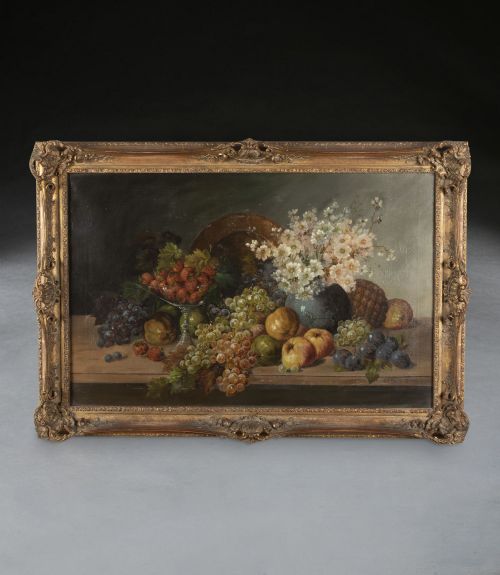
A floral fruit still life brings together detailed compositions of fresh blooms and seasonal produce, rendered in oil paint or watercolour. These works capture arrangements of roses, peaches, grapes, and baskets upon wooden surfaces.
The selections span from seventeenth-century Flemish baroque pieces to mid-century modern interpretations. Victorian examples frequently present vibrant peach and grape arrangements alongside detailed roses.
Works appear in formats ranging from oil on canvas to framed wartime watercolours by English artists like James Tower. Collectors encounter oil paintings, fine art wall pieces, and hand-painted pair compositions.
How They Were Made
Artists built these compositions primarily using oil paint on canvas or paper supports, often framed in wood and gilt. Watercolour techniques appear in mid-century wartime works executed on paper.
Painters applied pigment to build depth in floral petals, wicker baskets, and fruit surfaces, frequently utilising canvas as the primary foundation for heavy oil layers.
Several baskets hide small birds nesting among the peaches and grapes.
What Varies in Quality
The distribution of light across fruit skins and petal edges distinguishes skilled composition from rigid execution. Depth within wicker baskets and foliage shows the hand of a master painter.
Framing and material integrity, such as the preservation of oil on canvas or watercolour on paper, influence the visual impact of each piece.
Edward Ladell·Gaspar Peeter Verbruggen·Victor Simonin·James Tower·Bela Balogh·Oliver Clare
The Floral Fruit Still Life Glossary
- Oil on Canvas
- Pigment mixed with drying oil applied to stretched fabric. This method allows for rich blending and textured brushwork.
- Watercolour
- Paint made with water-soluble pigments used on paper. It provides a translucent quality seen in mid-century works.
- Gilt
- Gold leaf or gold paint applied to framing. This finish adds reflective warmth around the central canvas.
- Baroque
- An artistic style characterised by drama and rich detail. Flemish examples in this tradition show complex arrangements of produce.
Floral Fruit Still Life: Frequently Asked Questions
What periods do these paintings come from?
The works span from seventeenth-century baroque pieces to mid-century modern compositions. Victorian and Edwardian examples appear alongside wartime watercolours from the nineteen-forties.
Earlier pieces often reflect Flemish or Dutch traditions, while later works showcase English and continental modernism.
What materials are typically used?
Artists worked primarily with oil paint on canvas or watercolour on paper. Frames are constructed from wood, frequently featuring gilt finishes.
Support materials range from delicate paper sheets to heavy stretched canvases designed for large oil compositions.
How should I display these works?
Keep paintings away from direct sunlight to protect oil pigments and watercolours on paper. Proper wall placement preserves the integrity of the canvas and wood frame.
Pair compositions look balanced when hung together symmetrically in traditional or modern interiors.
How do I identify a Victorian piece?
Victorian examples frequently depict specific floral motifs like pink, yellow, and black roses paired with peaches and grapes. The brushwork aligns with nineteenth-century naturalism.
Subjects often include wicker baskets and bird nests alongside the traditional harvest produce.