
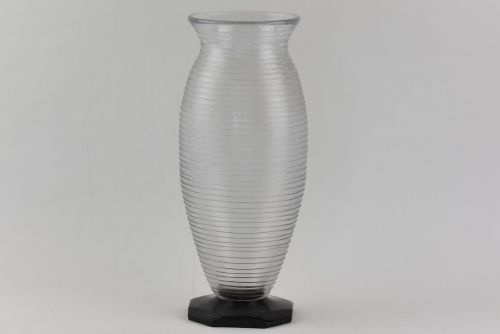
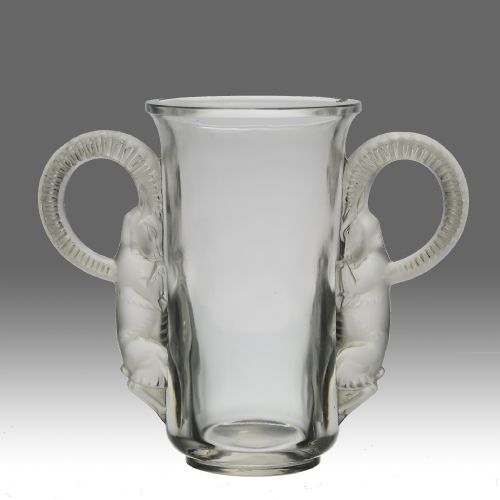


Frosted Glass Urn Vase
These frosted glass urn vases combine classical form with twentieth-century moulding, offering tactile surfaces that diffuse light across any room.
Frosted Glass Urn Vase
A frosted glass urn vase takes the classical vessel shape of the nineteenth and early twentieth centuries and renders it in textured, light-diffusing material. Buyers seeking this form encounter pieces spanning from Victorian blue satin glass through to robust Art Deco creations.
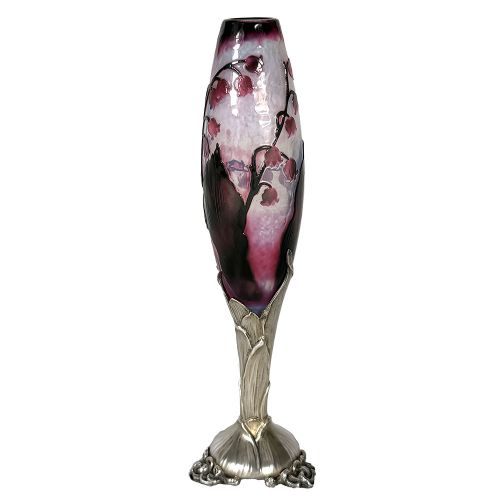
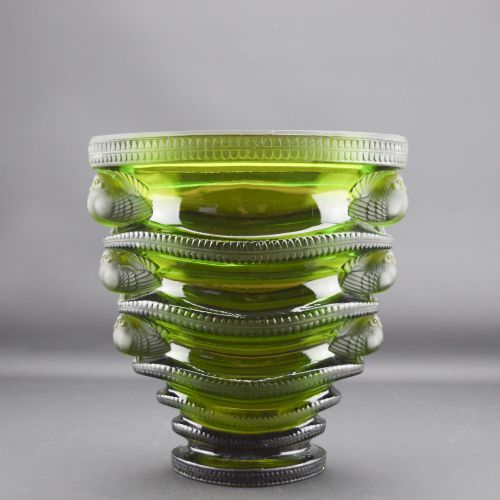
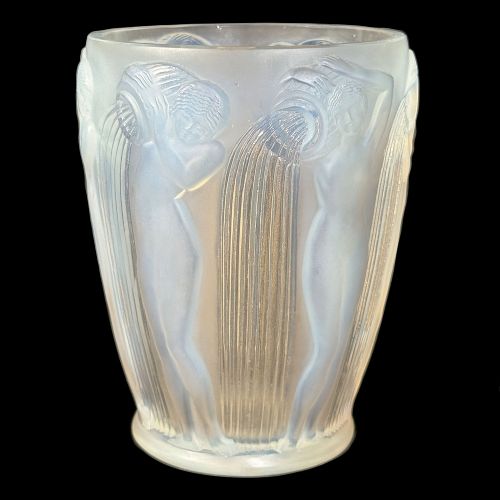
The selection ranges from tall pedestal shapes to heavy moulded bodies decorated with botanical and geometric motifs. Most examples date from the interwar period and the height of the Art Nouveau movement, reflecting major shifts in decorative arts.
Makers utilised various finishing techniques to create the characteristic matte or satin appearance, ranging from chemical treatment to surface pressing. These objects serve both as ornamental centerpieces and functional vessels for display.
Materials and Techniques
Makers relied on blown, moulded, and cameo glass techniques to build depth into the body of each vessel. Acid-etching and surface frosting scatter incoming light, transforming glossy transparency into a soft, tactile finish.
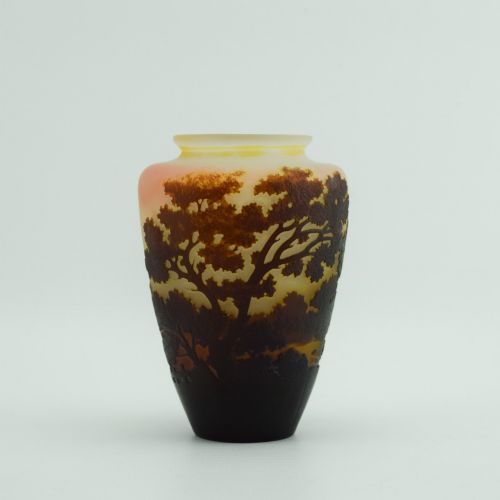
Overlay methods allowed artisans to fuse contrasting layers of glass before cutting away the outer stratum to reveal intricate relief designs. Opalescent and satin variants achieved their characteristic glow through specific chemical additions during the melting process.
Listings span from Victorian blue satin examples made around eighteen-eighty to Art Deco opalescent pieces produced near nineteen-thirty.
Judging Quality and Execution
Quality rests in the crispness of the relief work and the subtlety of the surface texture. Superior pieces display deep, well-defined motifs where the frosted areas contrast cleanly with polished highlights.
Weight and balance indicate the care taken during production, particularly in larger moulded and blown forms. Artisanal finishing by notable houses ensures sharper detail in the final cameo or etched design.
Rene Lalique·Galle·Daum·Thomas Webb and Sons·Richardson
The Frosted Glass Urn Vase Glossary
- Cameo glass
- Glass vessels created by fusing two or more distinct layers of colour and carving away the outer layer to form raised patterns. This demanding technique requires precise hand-cutting.
- Opalescent glass
- Glass that milky-blue appearance, shifting in tone depending on the angle of transmitted light. It contains specific mineral additives that scatter light rays.
- Acid-etched glass
- Glass treated with hydrofluoric acid to eat away the surface and create a matte or frosted texture. This method allows for controlled, uniform decorative patterns.
- Satin glass
- Glass with a velvety, frosted surface achieved through acid treatment or vapour exposure. It diffuses light gently across the rounded body of a vase.
- Moulded glass
- Glass shaped by pressing molten material into a metal or wooden form to replicate detailed patterns. This technique enabled the mass production of complex artistic vessels.
Frosted Glass Urn Vase: Frequently Asked Questions
How do I clean a frosted glass urn vase?
Wash the interior gently with lukewarm water and mild soap, avoiding harsh brushes that might scratch the matte exterior surface.
Dry the piece immediately with a lint-free cloth to prevent water spots from settling into the textured finish.
Are these vases suitable for holding water and fresh flowers?
Many solid glass vessels hold water safely, though older pieces with delicate interior residues require careful handling.
Consider placing a small internal liner inside antique vases to protect the fragile glass from prolonged moisture exposure.
How do I distinguish Art Nouveau from Art Deco pieces?
Art Nouveau items feature asymmetrical, fluid lines inspired by natural organic forms such as flowers, vines, and aquatic scenes.
Art Deco works rely on rigid symmetry, crisp geometric patterns, and stylised representations of foliage.
What causes the milky glow in opalescent glass?
The milky blue effect results from the suspension of tiny particles within the glass matrix during the cooling process.
When light strikes these micro-particles, shorter blue wavelengths scatter outward while warmer tones pass straight through.