




Front Door Hardware Knocker
A front door hardware knocker sets the character of an entrance, offering tactile weight and historic design before a guest steps inside.
Front Door Hardware Knocker
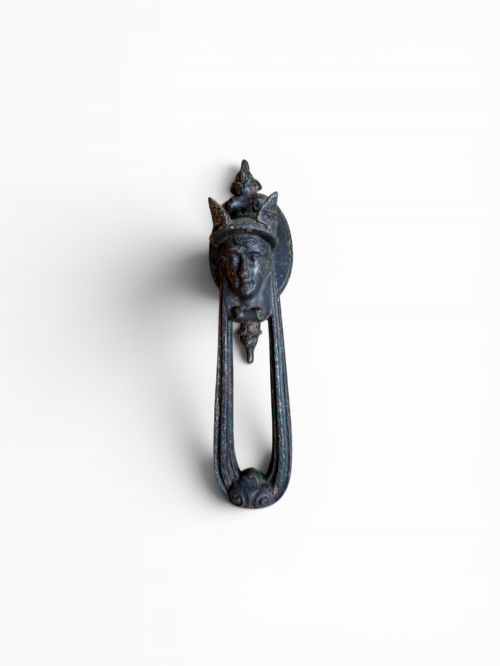
A front door hardware knocker is an architectural fitting designed to announce visitors through sound and visual presence. These pieces range from restrained Georgian patterns to elaborate Victorian Gothic and maritime motifs.
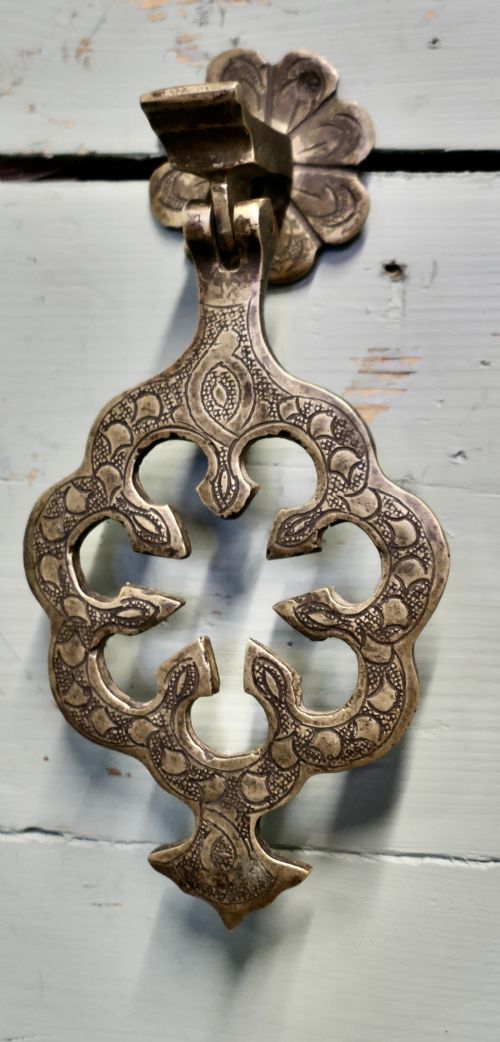
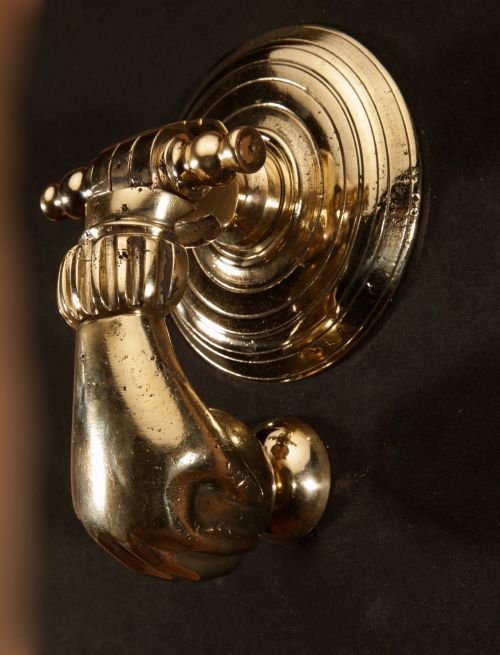
The version most commonly met on this page is the brass Victorian design, often taking the form of animal figures, marine creatures, or classical masks. Architectural hardware here spans utilitarian door knockers combined with letterboxes alongside purely decorative striking pieces.
How they were made
Foundry work dominates these pieces, utilising cast brass, bronze, and cast iron poured into moulds to create substantial relief work. Heavier examples employ a thick gauge of metal to withstand daily use over centuries.
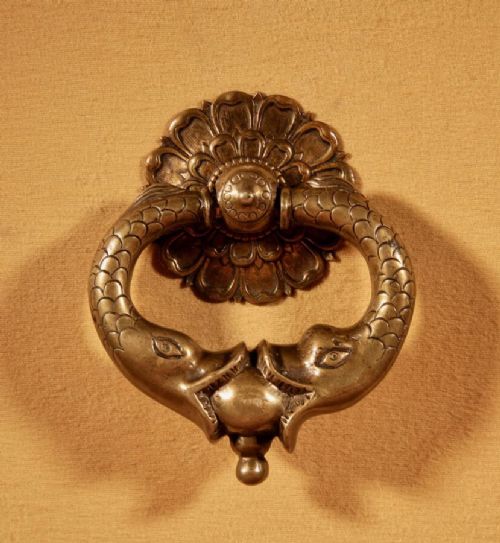
An imp holding a lantern shares cabinet space with sea serpents and Maltese dolphins ready to greet visitors.
What varies in quality
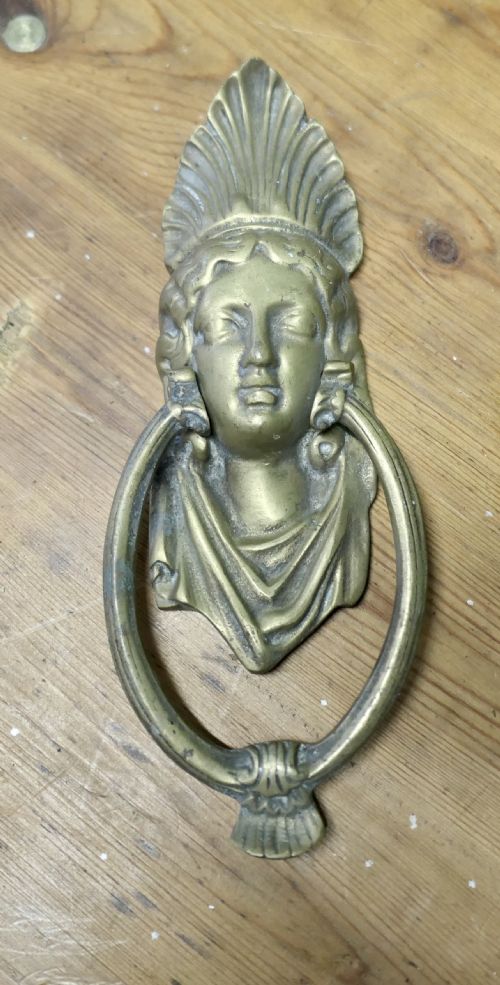
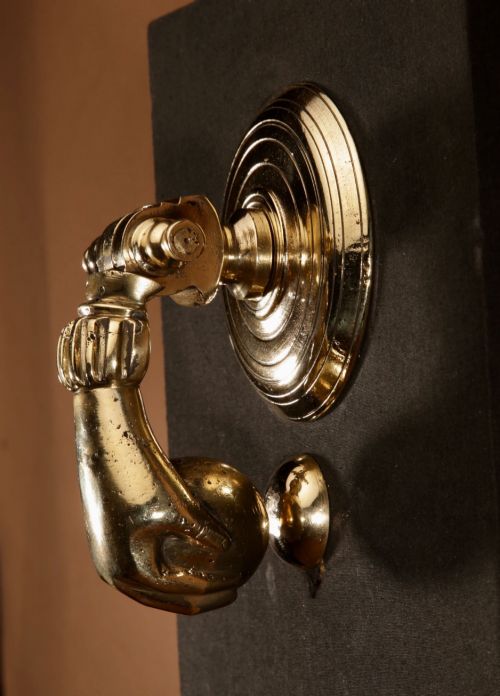
The crispness of the casting determines how well facial expressions and fine details read across the metal surface. Crisp definition in figures like caryatids, lions, or hands separates superior foundry output from softer commercial production.
Substance and completeness dictate the standing of a piece, with heavy gauge metals and original striking plates holding greater architectural integrity. Finer examples retain their matching backplates and functional fixings rather than suffering from later replacements.
Kenrick & Sons
The Front Door Hardware Knocker Glossary
- Caryatid
- A sculpted female figure serving as an architectural support. In door knockers, this classical form often frames the pivot point of the striking arm.
- Doctors Knocker
- A specific vertical drop-bar design traditionally fitted to medical practitioners' doors. It allows the knocker bar to lift and strike clearly without an attached backplate.
- Gothic
- A style reviving medieval architectural motifs such as pointed arches and heavy twisted ironwork. Victorian examples bring this ecclesiastical language to domestic entrances.
- Maritime
- Design motifs drawn from the sea, including anchors, sea serpents, and dolphins. These reflect naval heritage and coastal trade connections.
- Striking plate
- The metal plate mounted on the door face where the knocker hammer lands. It protects the timber from repeated impacts.
Front Door Hardware Knocker: Frequently Asked Questions
How do I choose the right size front door hardware knocker?
Scale depends entirely on the proportions of your entrance door and the timber panel where the piece sits. A heavy fourteen-inch casting requires a substantial Georgian or Victorian door to carry its visual weight.
Smaller domestic doorways suit compact brass or iron designs that avoid overwhelming narrow panels or decorative mouldings.
How were different metals used across historical periods?
Cast iron appears frequently in earlier nineteenth-century pieces, offering a dark, utilitarian strength suited to industrial and gothic revivals. Bronze and brass dominate decorative productions due to their resistance to corrosion and warm reflective surfaces.
Foundries selected metals based on the required detail of the casting, using softer brass for intricate figures like caryatids and marine dolphins.
Can I install an antique door knocker on an external door?
Most of these pieces were engineered precisely for external weather exposure and heavy daily use on period entrances. Solid brass, bronze, and cast iron handle outdoor conditions well when secured with appropriate fixings.
Consider whether the piece includes an original striking plate to protect your door timber from ongoing impact.
How do I date a front door hardware knocker?
Dating relies on stylistic clues, casting techniques, and material composition matched against historical design periods. Georgian and Regency pieces favour neoclassical restraint, whereas Victorian examples embrace figurative exuberance like lion masks and imps.
The weight of the metal and the sharpness of the surface relief often indicate whether a piece belongs to the nineteenth century or a later revival.