


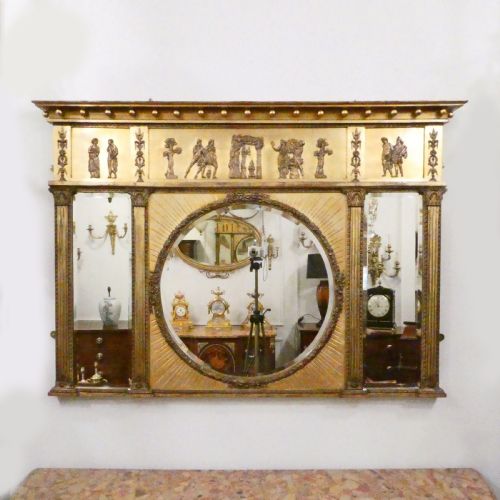


Frieze Overmantel Mirror
A frieze overmantel mirror brings architectural focus to a chimney breast, combining classical motifs with expansive glass.
Frieze Overmantel Mirror
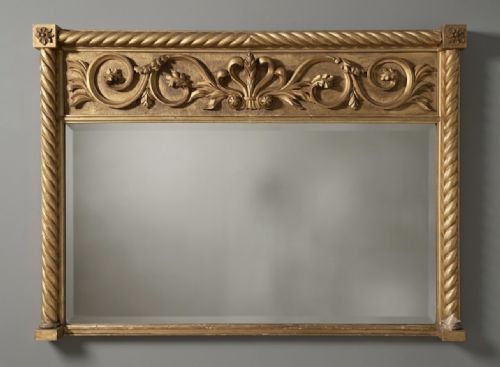
A frieze overmantel mirror is designed to sit directly above a fireplace, anchoring the room with horizontal proportion and decorative relief work along the upper border. When searching for a frieze overmantel mirror, buyers encounter numerous examples spanning the nineteenth century, including Regency and Victorian interpretations.
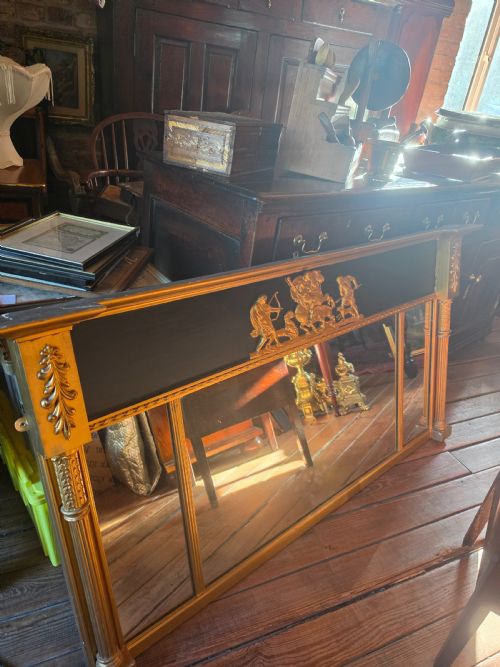
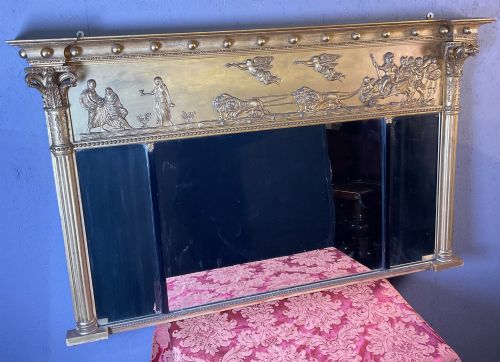
The most common forms on this page include triple plate or triptych configurations alongside single glass plates housed in giltwood frames. Many incorporate classical motifs such as laurel wreaths, griffins, and acanthus leaf friezes within their upper sections.
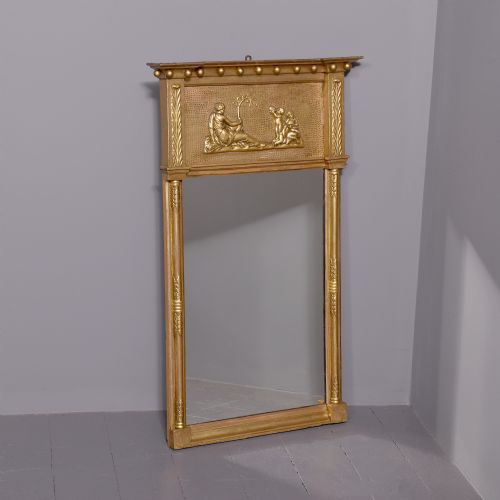
Originating predominantly from British and French workshops, these pieces range from country house proportions down to smaller pier mirror formats. Regency and Victorian styles dominate the selection, frequently exhibiting neoclassical influences.
How they were made
Makers constructed the primary frames using wood, gesso, and giltwood, applying layers of gold leaf or paint to achieve a gilded finish. Composition ornaments were often moulded and applied to wooden foundations to create crisp relief details along the frieze.
Mirror glass was set into the rebates behind wooden or gesso mouldings, sometimes divided into multiple plates in triptych formats. Carved elements like acanthus leaves and classical figures were executed by hand before gilding.
Frieze Overmantel Mirror Retail Price Guide 2026
Typical asking prices for frieze overmantel mirror among the pieces listed under this phrase on Sellingantiques today, from the lower quarter to the upper quarter. They describe what is for sale here now, not the wider market.
What varies in quality
The sophistication of the carved or moulded frieze separates standard production from exceptional work, particularly where classical motifs and relief figures are rendered with depth and precision. The quality of the gilding, whether water gilded or finished with composition ornament, dictates the visual richness of the surface.
Original mirror glass with period silvering commands greater interest than later replacements, while structural integrity of the heavy wooden frame ensures the piece can safely support its own weight over a mantelpiece.
The Frieze Overmantel Mirror Glossary
- Frieze
- The decorative horizontal band situated across the upper portion of the mirror frame, often ornamented with classical reliefs.
- Gesso
- A plaster-like mixture applied to wood frames to provide a smooth surface for gilding and low-relief carving.
- Giltwood
- Timber that has been coated with gold leaf or metallic powder, standard for formal nineteenth-century interior mirrors.
- Triptych
- A mirror plate divided into three distinct vertical sections, frequently utilised in wider Regency overmantel designs.
- Pier mirror
- A tall, narrow looking glass traditionally placed on the wall space between windows, sharing stylistic traits with overmantels.
Frieze Overmantel Mirror: Frequently Asked Questions
Where should a frieze overmantel mirror hang?
These mirrors are traditionally positioned centrally above a fireplace mantelpiece to reflect light and anchor the room's proportions.
They also function effectively on principal walls as pier or console mirrors when given sufficient ceiling height.
How do I identify a Regency overmantel?
Regency pieces typically display strict classical restraint, incorporating motifs like acanthus leaves, laurel wreaths, and gilded columns.
They frequently employ water gilding and architectural friezes that reflect early nineteenth-century neoclassical taste.
Are these mirrors heavy to hang?
Because they utilise solid wood frames, gesso, and thick glass plates, these overmantels possess considerable weight.
Proper wall fixings anchored directly into structural masonry or heavy studwork are essential for secure installation.