




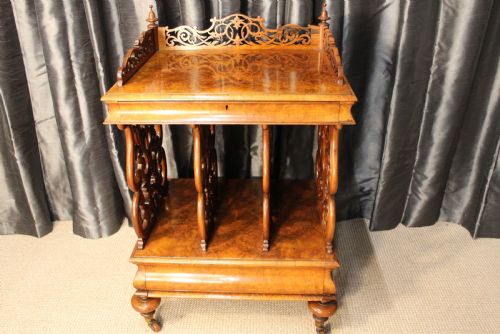


Fretwork Walnut Cabinet
These fretwork walnut cabinet examples range from music canterburys to corner shelving units, offering rich timber figuring and intricate pierced woodwork for period interiors.
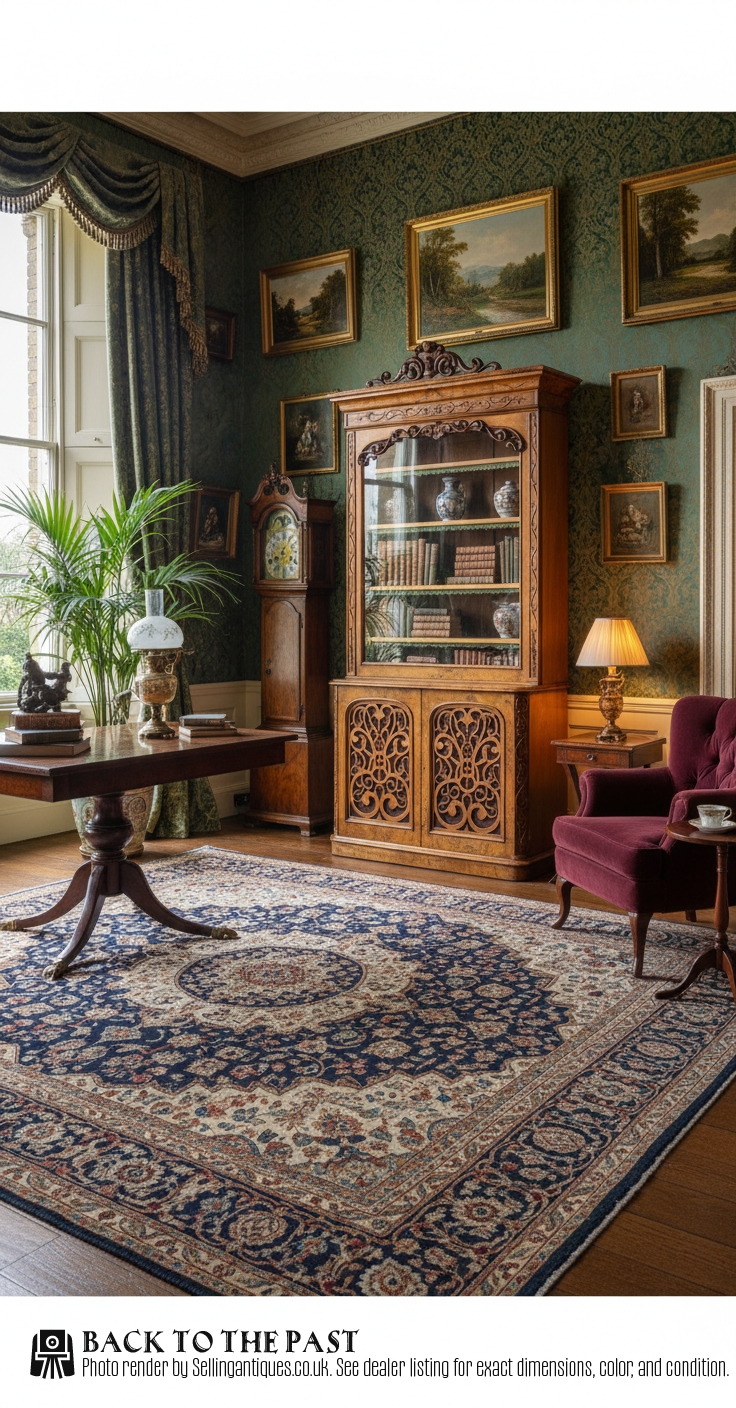
Fretwork Walnut Cabinet
A fretwork walnut cabinet brings together the dark, rich tones of Victorian timber and the delicate geometry of pierced woodwork. When searching for this form, buyers encounter a variety of nineteenth-century furniture types including corner shelves, tiered whatnots, bookcases, and music canterburys.
The selections available here showcase the breadth of domestic display and storage furniture produced during the mid-to-late nineteenth century. Canterburys and occasional tables sit alongside freestanding display shelving and compact writing desks.
Originating predominantly from the Victorian period, these items reflect the era's taste for highly figured woods and functional elegance. Pieces span several decades from the mid-nineteenth century onwards, demonstrating steady craftsmanship in walnut and burr walnut.
How they were made
Makers utilised solid walnut and decorative burr walnut veneers to construct these cabinets, often selecting timber with intense natural grain patterns. Secondary materials such as brass, glass, mirror, ceramic, leather, and metal appear in hardware, backing, and structural details.
Construction techniques combined traditional joinery with decorative fretwork piercing to create open shelving, lattice partitions, and tiered display stands. Turned supports, including hollow barley twist columns, added structural complexity to multi-tier whatnots.
Fretwork Walnut Cabinet Retail Price Guide 2026
Typical asking prices for fretwork walnut cabinet among the pieces listed under this phrase on Sellingantiques today, from the lower quarter to the upper quarter. They describe what is for sale here now, not the wider market.
Hollow barley twist columns twist upward without a solid core, proving that Victorian turners enjoyed showing off.
What varies in quality
Quality in these pieces rests upon the selection of timber and the precision of the pierced woodwork. Burr walnut veneer displays varied depth and movement across the surface, marking the distinction between standard production and superior cabinet work.
The crispness of the fretwork and the integration of secondary materials such as brass fittings or mirrored panels dictate the refinement of the piece. Proportions remain balanced across finer examples, ensuring structural integrity alongside decorative detail.
The Fretwork Walnut Cabinet Glossary
- Canterbury
- A low stand traditionally used for holding sheet music or loose periodicals, featuring vertical partitions. Many examples include a small drawer beneath the compartment space.
- Burr walnut
- A specialised timber cut from the abnormal growth or burl of a walnut tree, yielding complex, swirling grain patterns. It was frequently used as a decorative veneer on prominent surfaces.
- Whatnot
- A piece of open shelving designed for displaying ornaments, books, or small objects across multiple tiers. These units often feature turned columns and fretwork galleries.
- Fretwork
- Ornamental perforated woodwork created by cutting intricate patterns through a thin board. It provides a light, decorative screen effect on cabinet doors and gallery rails.
Fretwork Walnut Cabinet: Frequently Asked Questions
What is a music canterbury?
A music canterbury is a specialised compartmented stand designed to store sheet music, folios, and periodicals close to an instrument. The form typically incorporates vertical wooden divisions and often sits on castors for mobility.
Nineteenth-century examples frequently combine this storage function with a drawer below or a small table top surface above, bridging utility and display.
How do I identify Victorian walnut furniture?
Victorian walnut pieces from the nineteenth century are characterised by deep chocolate and honey tones, often enhanced by the distinct swirling grain of burr veneers. Examining the construction reveals period joinery methods and hardware.
Stylistic cues include turned supports, barley twist columns, and pierced fretwork galleries that typify mid-century domestic design.
Where were corner whatnots placed?
Corner whatnots and shelving units were designed to utilise unused room angles, providing vertical display space for ceramics, books, and decorative objects. Their triangular footprints allowed them to fit snugly into nineteenth-century parlours and drawing rooms.
These pieces combined structural stability with open fretwork framing to maximise light and visibility around displayed items.
What is burr walnut veneer?
Burr walnut veneer is thin slices of timber taken from the gnarled outgrowth of a walnut tree, displaying dense, swirling cluster patterns. Cabinet makers applied these decorative sheets over solid secondary woods to create striking focal surfaces on tabletops and cabinet fronts.
The quality of the veneer often indicates the overall ambition and refinement of the piece.