





Fretwork Magazine Table
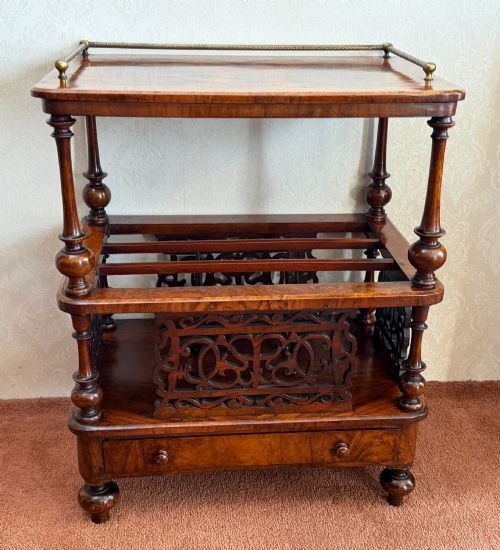
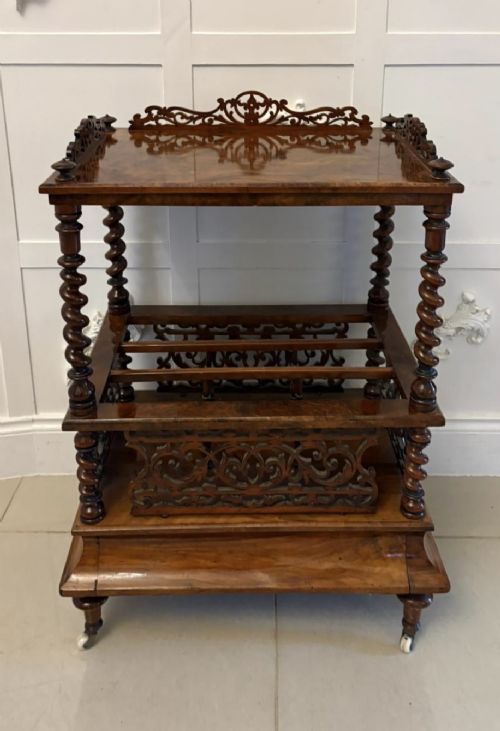
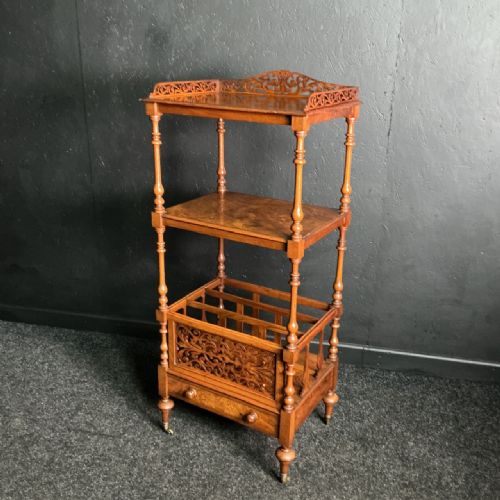
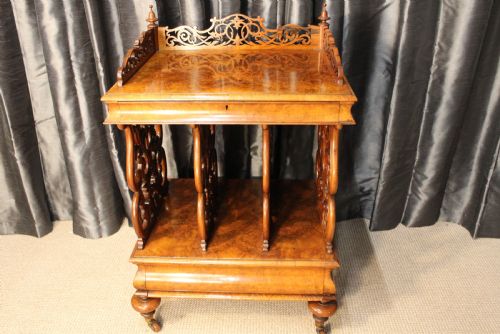
A fretwork magazine table is a Victorian hybrid furnishing designed to hold periodicals while serving as an occasional surface.
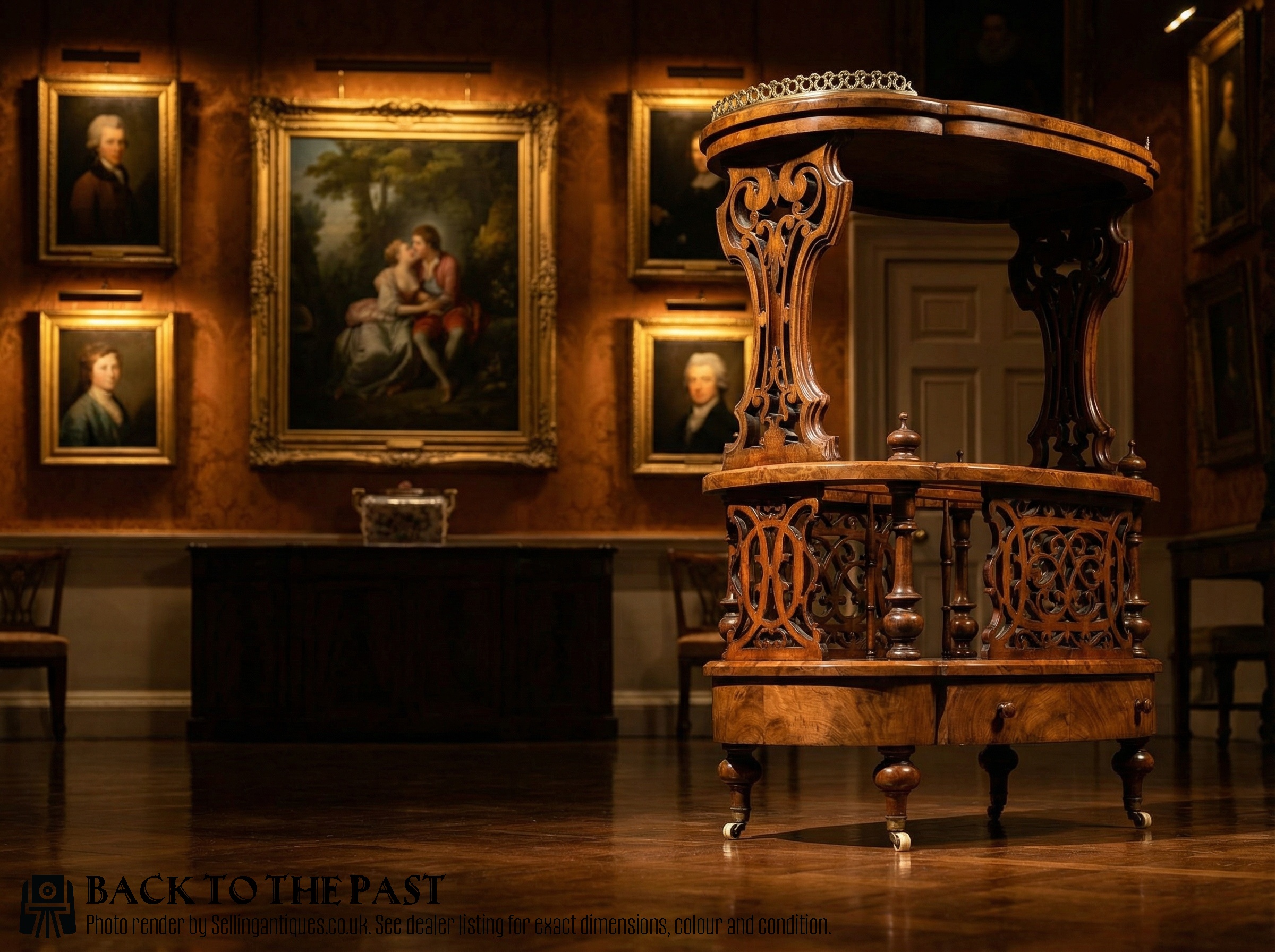
Fretwork Magazine Table
When you search for a fretwork magazine table, you encounter Victorian occasional pieces that function as canterburys, whatnots, and music canterburys. These items date from the 1860s, 1870s, and 1880s, combining compartmentalised storage for papers with a flat top for lamps or ornaments.
The versions you are most likely to meet on this page are constructed from burr walnut and rosewood, frequently incorporating inlaid details and multi-tier shelving. They bridge the gap between practical storage and decorative display in the nineteenth-century interior.
What varies in quality
The distinction between standard examples and superior pieces rests upon the choice of timber veneer and the precision of the inlay work. Highly figured burr walnut and intricate boxwood stringing elevate an occasional table from a simple utility item to a refined focal point.
Structural complexity also dictates worth, as multi-tiered whatnots and combined music canterburys demand greater joinery skill than basic single-shelf racks. The integration of secondary materials like porcelain elements further separates elaborate workshop output from utilitarian production.
Fretwork Magazine Table Retail Price Guide 2026
Typical asking prices for fretwork magazine table among the pieces listed under this phrase on Sellingantiques today, from the lower quarter to the upper quarter. They describe what is for sale here now, not the wider market.
Materials across the selection include burr walnut, rosewood, satinwood, brass, boxwood, and ceramic elements.
The Fretwork Magazine Table Glossary
- Canterbury
- A low multi-tiered stand originally designed for holding sheet music, folios, or periodicals, featuring vertical partitions. This form evolved during the Victorian period into combined magazine racks and lamp tables.
- Burr walnut
- A highly prized timber obtained from the wart-like growths on walnut trees, showing swirling, intricate grain patterns. Cabinetmakers utilised these decorative veneers on the top surfaces and panels of fine tables.
- Whatnot
- An open set of multiple shelves used for displaying ornaments, books, or small objects in nineteenth-century interiors. These pieces often incorporated canterbury bases for additional functional storage.
- Stringing
- A narrow strip of contrasting wood inlaid into the surface of a piece to create decorative borders and geometric patterns. Boxwood was frequently utilised for this purpose against darker grounds like walnut.
Fretwork Magazine Table: Frequently Asked Questions
What is a fretwork magazine table?
It is a Victorian multi-functional piece of furniture designed to hold periodicals and act as an occasional table.
These items combine open storage compartments with flat surfaces suitable for lamps or decorative objects.
How were these tables used?
Victorians placed them in parlours and drawing rooms to keep newspapers, sheet music, and magazines neatly organised.
The top surface simultaneously held small lamps, books, or decorative porcelain items during daily social use.
Which woods are most common?
Burr walnut and rosewood appear frequently across the available nineteenth-century examples.
Cabinetmakers also utilised satinwood and boxwood to provide contrasting inlay and stringing details.
How do I date a piece?
Examination of the timber, construction methods, and stylistic cues helps place an item within the Victorian era.
The specific combination of canterbury dividers, fretwork, and inlay typically points to the decades between eighteen-sixty and eighteen-eighty.