
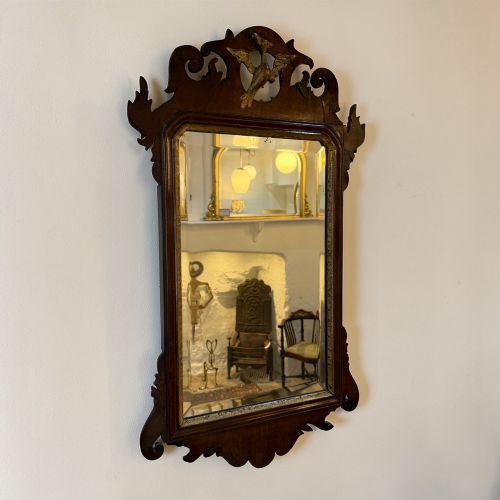
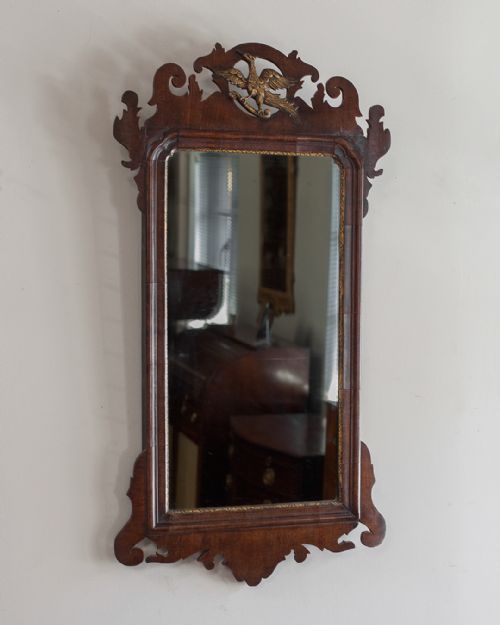
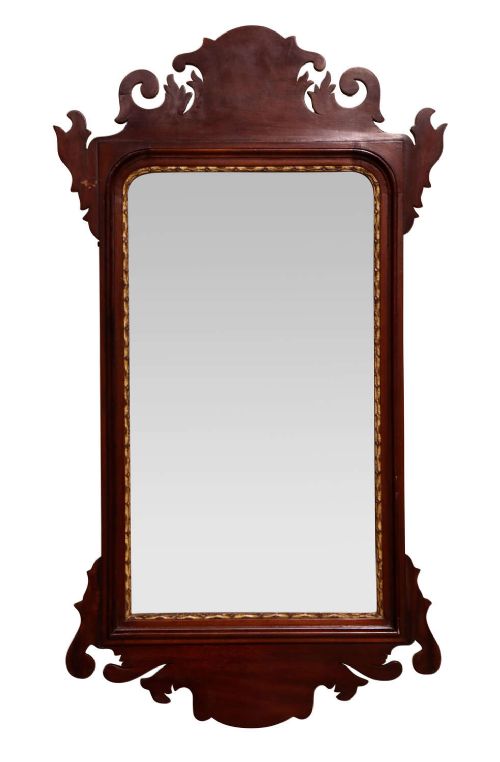
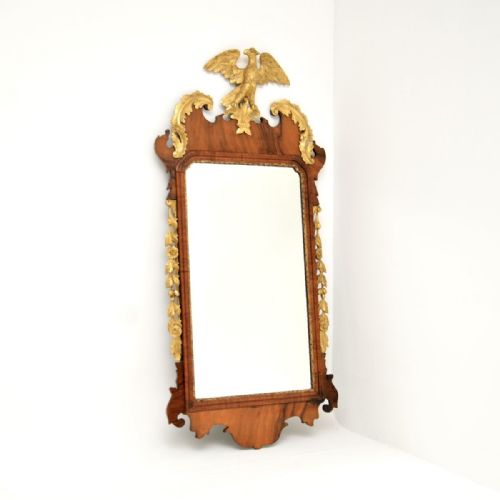


Fretwork Crest Mirror
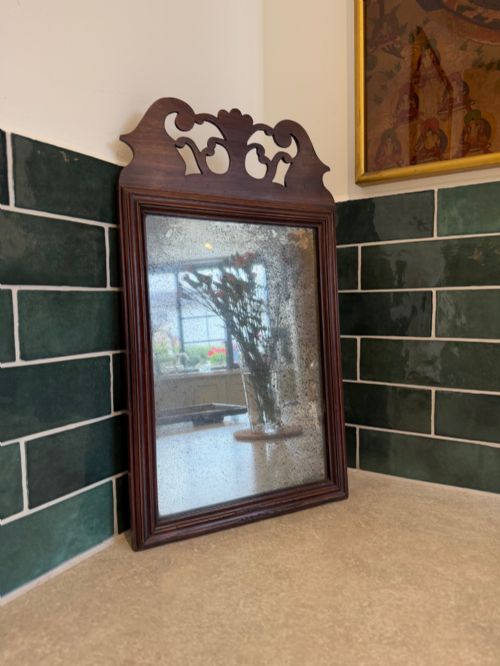
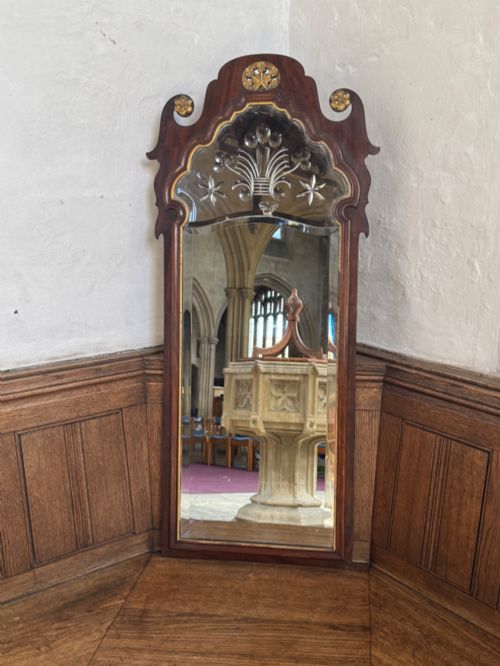
A fretwork crest mirror brings sculptural timberwork and pierced silhouettes to a wall, offering the dynamic grain and bright gilt highlights collectors prize.
Fretwork Crest Mirror
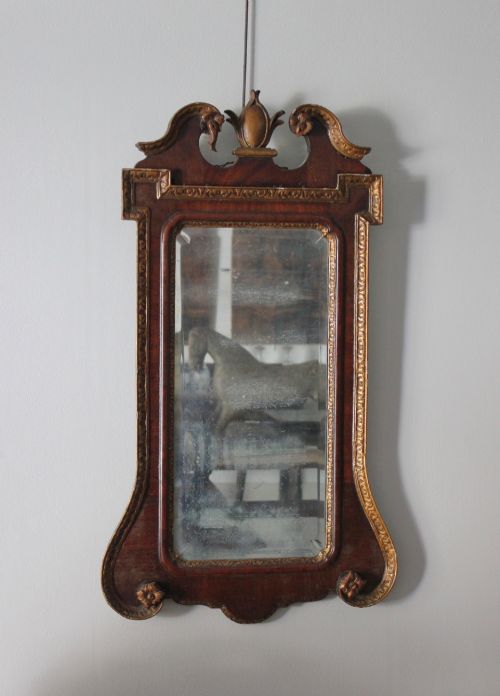
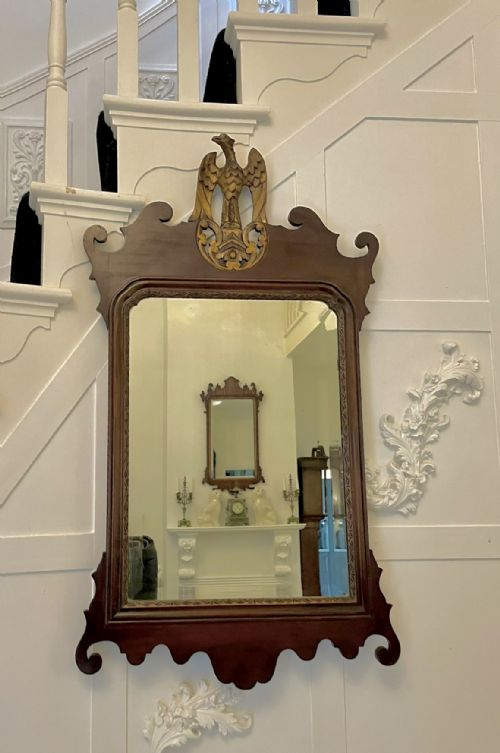
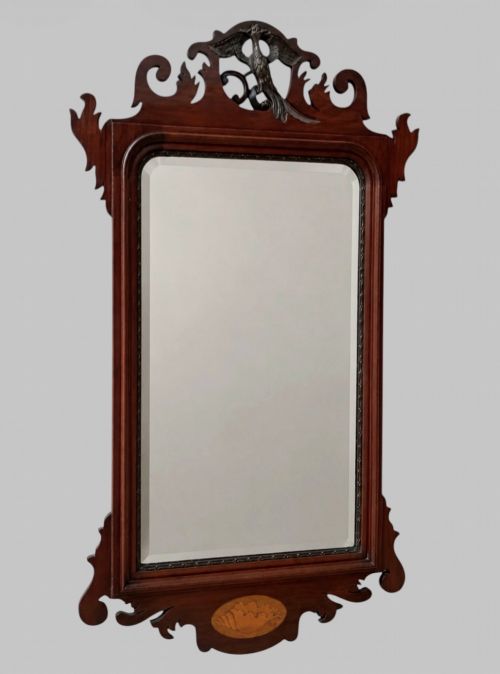
A fretwork crest mirror is a wall-hanging glass panel framed by pierced woodwork, most frequently encountered in mahogany, walnut, and parcel gilt finishes. These pieces span the eighteenth century and subsequent revival periods, drawing on Georgian and Chippendale aesthetics.
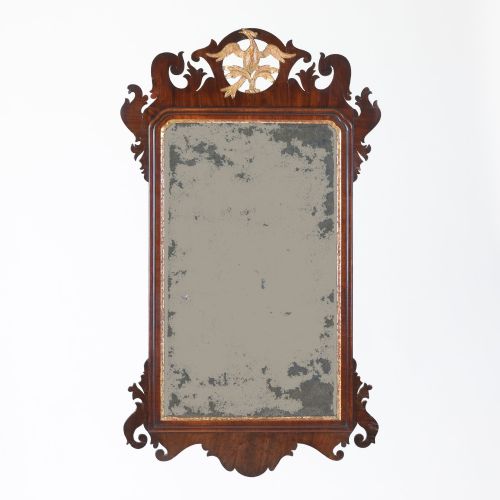
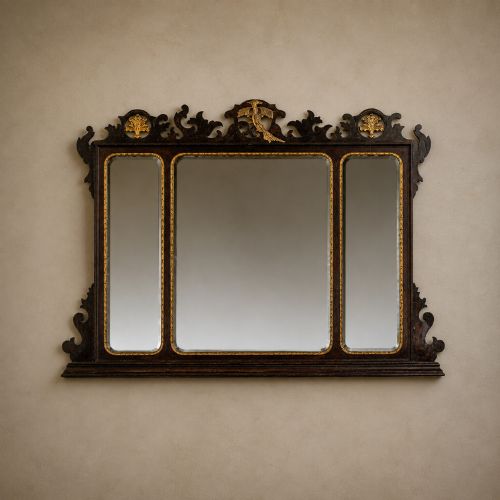
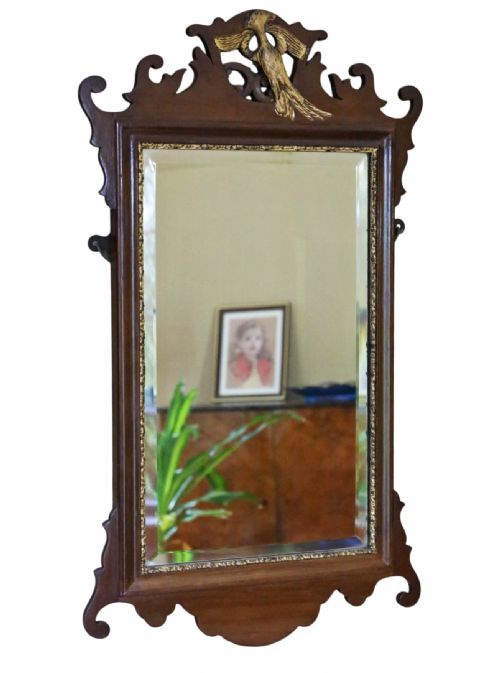
The silhouettes on this page range from modest domestic examples to large triptych overmantels. Walnut and mahogany dominate the timber choices, often enhanced with carved bird crests and gilded accents.
Materials and construction
Cabinetmakers constructed these frames using dense hardwoods like mahogany and walnut, frequently applying thin veneers or parcel gilt decoration to highlight carved details. The distinctive pierced crests were cut from timber using specialised saws before being assembled around Vauxhall or bevel-edged mirror glass.
Gold leaf and gilding were applied to specific carved elements, such as the prominent ho-ho bird cresting, to create contrast against the dark polished wood of the frame.
Many a stern Georgian parlor was secretly presided over by a slightly goofy wooden phoenix staring down from the crest.
Judging quality in carved wall mirrors
Quality rests in the precision of the fret-cut piercing and the depth of the carved crest, where sharp, clean lines indicate a skilled hand. The choice of timber also dictates standard, with figured burr walnut or rich mahogany elevating the visual weight of the frame.
Original untouched surfaces and early mirror glass with natural silvering retention separate exceptional survivals from later revivals and heavily restored examples.
The Fretwork Crest Mirror Glossary
- Fretwork
- Openwork timber ornamentation produced by piercing wood with a fine saw. This technique creates intricate geometric or scroll patterns along the crest of the mirror.
- Parcel Gilt
- Partial gilding applied to specific carved wooden areas of a piece. It highlights decorative motifs like leaves, birds, or edge mouldings against a dark wood background.
- Ho-Ho Bird
- A mythical Chinese-inspired phoenix often depicted perched at the top of eighteenth-century mirror crestings. It became a hallmark of the Chippendale style.
- Vauxhall Plate
- An early mirror glass distinguished by a heavy bevelling along the outer edge. These plates are typically thinner and show subtle distortions characteristic of older manufacturing methods.
- Pier Mirror
- A tall mirror designed to hang on the wall space between two windows. They often feature elaborate fret-cut crests to draw the eye upward.
Fretwork Crest Mirror: Frequently Asked Questions
How do I date a fretwork mirror?
Dating relies on timber selection, construction methods, and the style of the fret-cut crest. Eighteenth-century examples typically show hand-cut joinery and period-specific secondary woods, whereas revival pieces from the Victorian and Edwardian eras employ machine precision and later hardware.
Examining the backboards and the silvering on the glass provides additional clues. Older plates often exhibit specific bevelling and oxidation patterns not found in twentieth-century reproductions.
What is a ho-ho bird crest?
The ho-ho bird is a stylized phoenix figure carved into the uppermost wooden crest of eighteenth-century and revival mirrors. It reflects the mid-Georgian fascination with Chinese decorative motifs.
These carved birds are usually positioned centrally atop the pierced scrollwork, serving as the focal point of the frame's silhouette.
Where should I hang these mirrors?
These mirrors suit spaces where their reflective glass can bounce light and their pierced wooden frames can be viewed without obstruction. Traditional placements include above a fireplace mantel or on a narrow wall between windows.
Due to their weight and projecting crests, they require secure wall fixings anchored directly into masonry or studs rather than plaster alone.
What wood types are most common?
Mahogany and walnut form the foundation of most pieces in this category, often complemented by giltwood highlights. Walnut dominates the earlier eighteenth-century examples, while mahogany persists through both the Georgian period and the later Chippendale revivals.
Some Edwardian and later variations also incorporate yew wood or bleached finishes to alter the tone of the frame.