




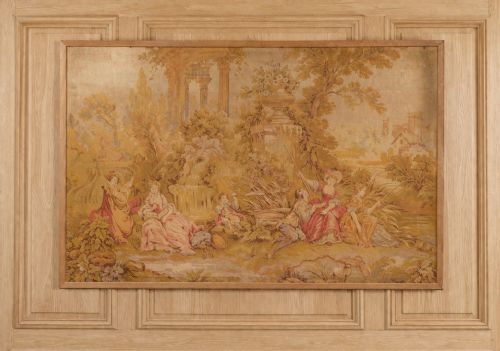
French Woven Wall Tapestry
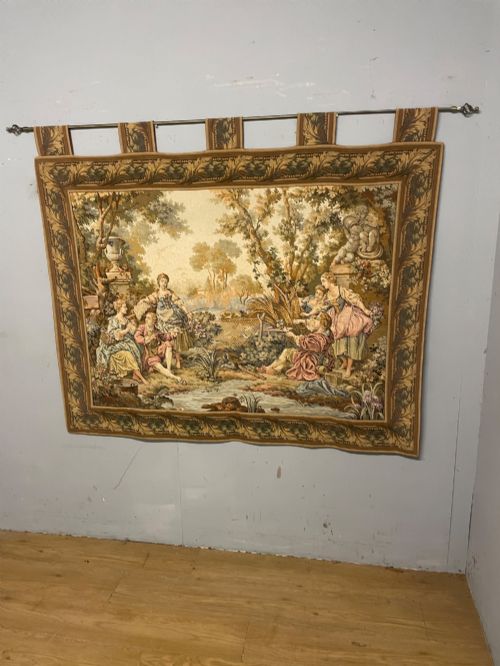
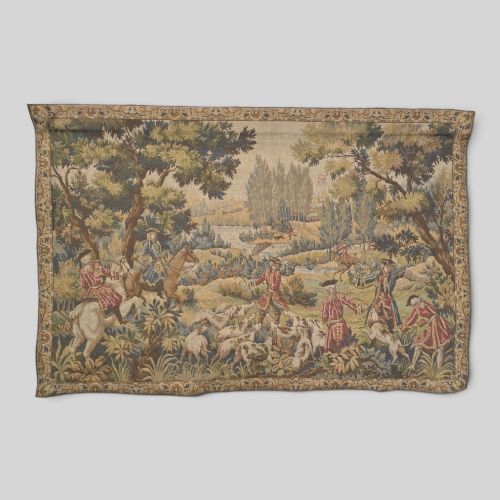
A French woven wall tapestry brings centuries of textile artistry and stately pastoral scenes directly into a room.
French Woven Wall Tapestry
A french woven wall tapestry is a large textile panel designed to hang on interior surfaces, drawing on historical forms that span from the medieval period through to the nineteenth century.
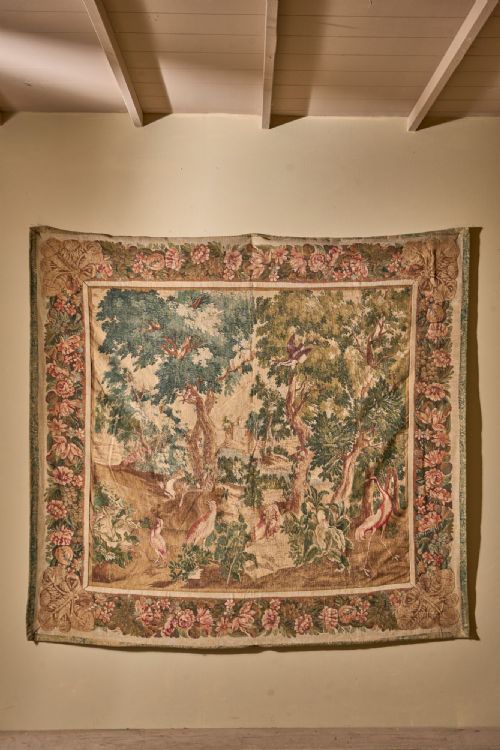
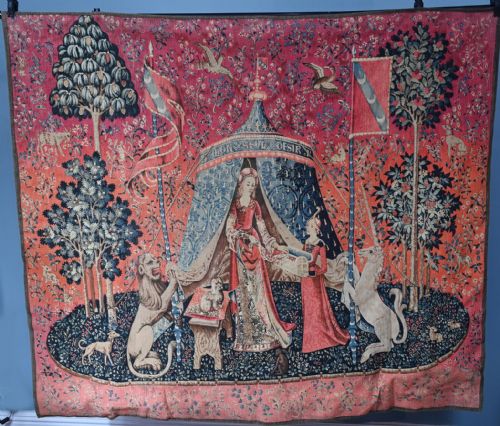
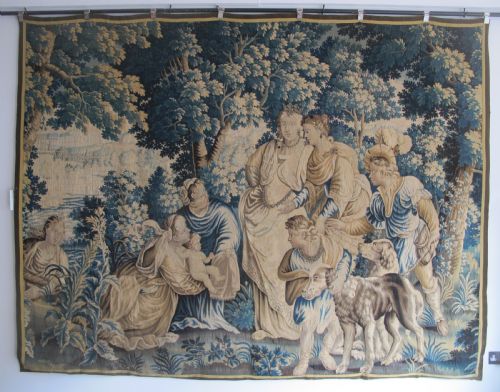
Buyers will encounter various formats on this page, ranging from grand pastoral and verdure landscapes to specific panels like the Aubusson entre-fenêtre and mille-fleurs wall coverings.
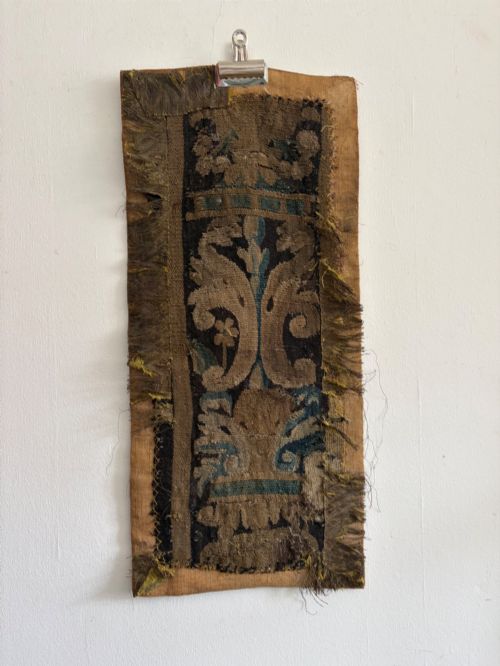
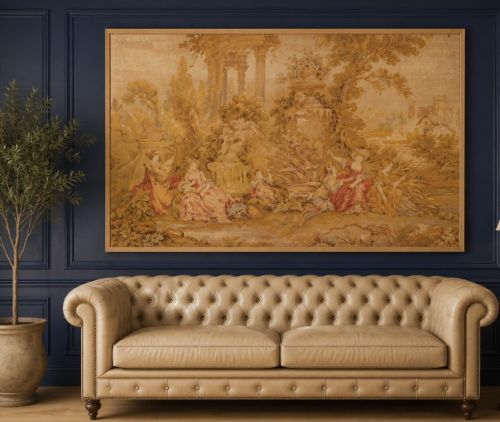
The selections include large framed panels, border fragments mounted to linen, and expansive wall hangings originating from French chateaux and European workshops.
How these textiles were constructed
These works rely on traditional textile techniques utilising natural fibres such as wool, silk, cotton, and linen to build dense, detailed woven imagery.
Selected pieces are presented within timber frames, brass mounts, or walnut structures, while other textile fragments are professionally mounted directly to linen for preservation and hanging.
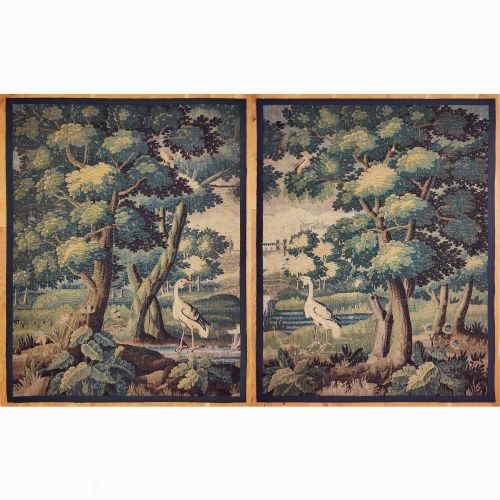
Keep an eye out for hidden birds perched quietly among the dense foliage of seventeenth-century verdure leaves.
What distinguishes the quality of these tapestries
Quality rests upon the fineness of the weave, the complexity of the narrative or verdure design, and the historical integrity of the textile panel.
The distinction between a standard nineteenth-century wall hanging and a finer seventeenth or eighteenth-century Aubusson piece lies in the depth of the colour palette and the intricacy of the botanical or figural detail.
The French Woven Wall Tapestry Glossary
- Verdure tapestry
- A wall hanging featuring a predominant design of lush foliage, trees, and often birds or animals. These landscape scenes were especially popular in seventeenth and eighteenth-century European workshops.
- Aubusson
- A textile originating from the town of Aubusson in France, renowned for woven wall hangings and carpets produced since the fifteenth century. These pieces often depict pastoral or architectural compositions.
- Entre-fenêtre
- A tall, narrow tapestry panel specifically designed to hang on the wall space between two windows. They make efficient use of vertical interior dimensions.
- Mille-fleurs
- A style of medieval and Renaissance tapestry background filled with a myriad of small, distinct flowers and plants. The translation literally means a thousand flowers.
- Needlework tapestry
- A textile piece created through hand-stitching on a ground fabric rather than purely on a loom. These large-proportioned panels offer rich surface textures.
French Woven Wall Tapestry: Frequently Asked Questions
How do I hang a large tapestry safely?
Large textile panels require even weight distribution across the upper edge. Many collectors use a concealed timber batten or specialised sleeve system stitched to the reverse.
Heavier framed pieces rely on robust wall fixings secured directly into structural studs or masonry to support the weight of the timber and textile.
What is a verdure tapestry?
A verdure tapestry depicts a landscape focused heavily on foliage, trees, and natural greenery rather than human figures or historical narratives.
These forest scenes often include hidden birds or animals amongst dense leaves and were a staple of seventeenth and eighteenth-century French weaving.
Where were Aubusson tapestries made?
Aubusson tapestries were produced in the creep of towns and workshops centred around Aubusson and Creuse in France. The region developed a distinct tradition of weaving elaborate wall panels and carpets.
These works are celebrated for their sophisticated verdure and pastoral designs spanning multiple centuries.
How do I care for antique woven wall art?
Protect antique textiles from direct sunlight to prevent the fading of natural wool and silk dyes. Gentle vacuuming through a protective mesh screen helps remove dust accumulation.
Avoid hanging large wall pieces in damp environments to protect the organic fibres and any associated wooden or brass framing elements.