


French Wooden Dining Chairs
These french wooden dining chairs bring enduring continental character to a room, offering practical seating shaped by centuries of regional design.
French Wooden Dining Chairs
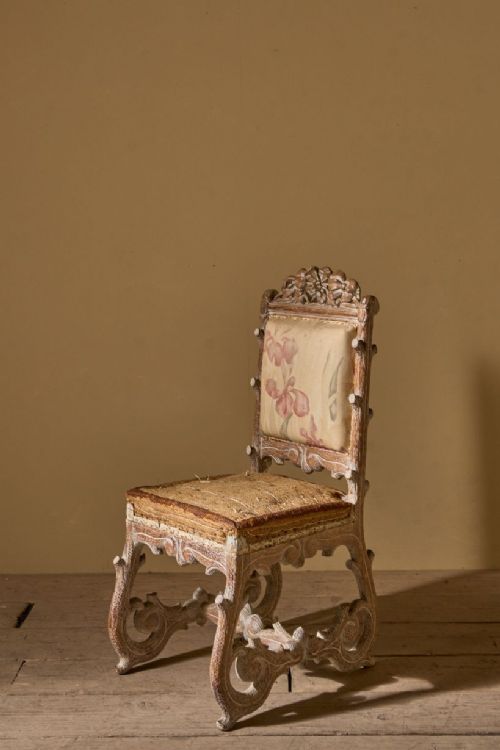
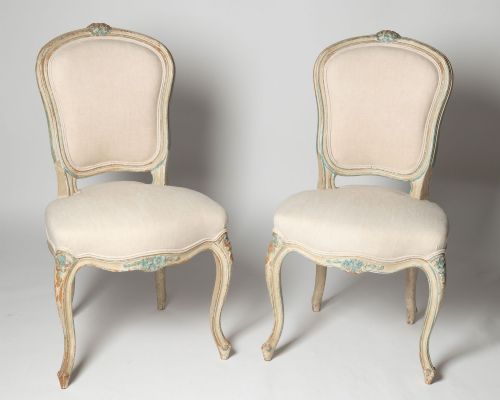
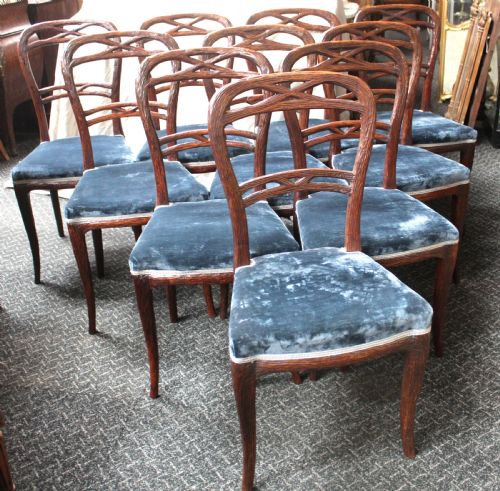
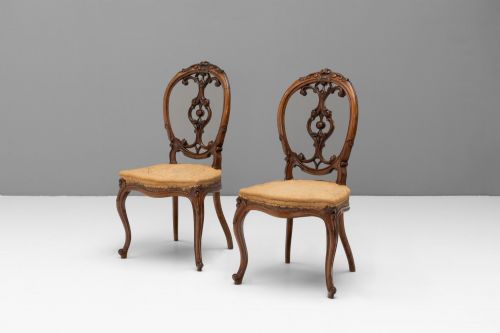
When you search for french wooden dining chairs, you encounter seating ranging from rustic country ladder backs to formal revival salon suites. The items appearing here span the nineteenth and early twentieth centuries, featuring regional country pieces alongside polished walnut and painted frames.
You are most likely to meet sets of side chairs and carvers finished in walnut, oak, beech, or painted timber. These seating options emerge from periods including Victorian revivals and the early decades of the twentieth century, carrying the stylistic influence of Louis XV and Louis XVI designs.
How they were made
The construction of these seats relies on native hardwoods such as walnut, oak, beech, and mahogany, shaped through traditional joinery and hand carving. Frames often receive decorative painted finishes, faux bois effects, or simulated bamboo turning.
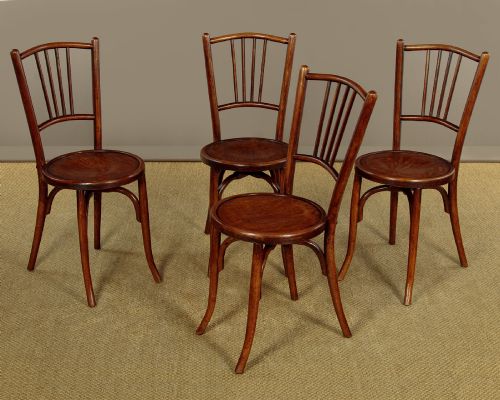
Upholstered elements employ fabric, velvet, and textile coverings, while other variants incorporate woven cane or rush seating. Bending techniques also appear in bentwood bistro forms constructed around the turn of the twentieth century.
Available seating styles span Louis XV and Louis XVI revivals, French provincial country forms, and bentwood bistro designs.
What varies in quality
The standard of carving and the selection of timber dictate the distinction between simpler country furniture and formal salon seating. Crisp hand carving on walnut or oak frames separates finer workshops from standard production.
The integrity of the original construction, the survival of early painted or polished surfaces, and the condition of woven cane or rush panels determine the overall character of each seat.
Codina·Morison & Co of Edinburgh·Louis Majorelle
The French Wooden Dining Chairs Glossary
- Side chair
- A chair without arms, designed primarily for use at a dining table or around a room. These form the majority of seating sets found in nineteenth-century dining arrangements.
- Ladder back
- A chair back featuring horizontal wooden slats resembling the rungs of a ladder. This construction appears frequently in oak kitchen and dining seating.
- Caning
- A woven pattern using thin strips of rattan plant material to form seat panels or back inserts. It provides a lightweight and flexible support surface.
- Bentwood
- Wood softened through steaming and bent into curved structural components. This technique defines the construction of nineteenth and early twentieth-century bistro seating.
French Wooden Dining Chairs: Frequently Asked Questions
How do I date these chairs?
Dating relies on stylistic clues, construction methods, and material choices recorded across the nineteenth and early twentieth centuries. Revival periods often emulate earlier reigns while retaining the hardware and timber traits of their actual manufacture date.
Examining the underside of the frame and the joinery helps clarify the period of production. Comparing the specific wood types and decorative motifs against documented regional examples provides further confirmation.
Can I mix different chair sets?
Mixing different sets is common when assembling larger seating arrangements around a dining table. Matching items by wood tone, such as walnut or oak, helps create a cohesive look.
Consider the seat height and back proportions to ensure comfort and visual balance when combining distinct chairs. Country and provincial styles often blend well together due to their shared vernacular roots.
Are rush and cane seats durable?
Rush and cane seats offer resilient support when maintained properly in normal indoor environments. Natural plant fibres flex with weight and provide breathable seating.
Avoid placing these chairs in excessively dry or damp rooms to preserve the flexibility of the woven materials. Gentle cleaning keeps the organic strands from becoming brittle over time.
How do I care for painted wooden frames?
Painted wooden frames require gentle dusting with a soft, dry cloth to protect the surface finish. Avoid harsh chemical cleaners that can strip historic paint layers.
Keeping the chairs away from direct sunlight prevents the painted or faux bois decoration from fading. Wax polishes should only be applied if the specific finish type permits.