



Vintage French Oak Seating
These vintage french oak seating pieces bring sturdy provincial character and traditional craftsmanship directly into a room.
Vintage French Oak Seating
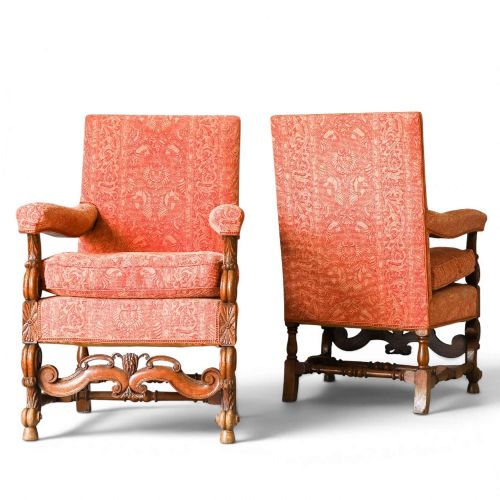
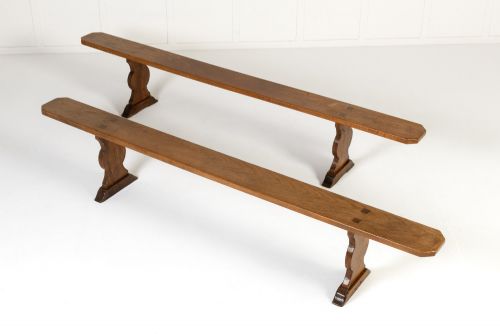
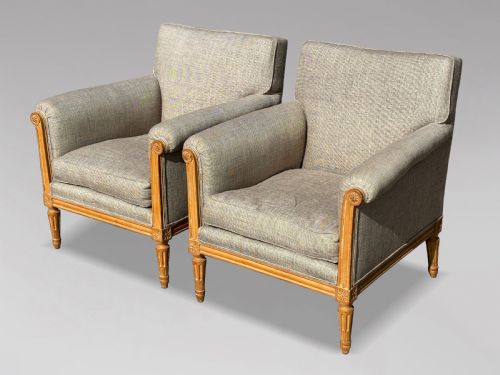
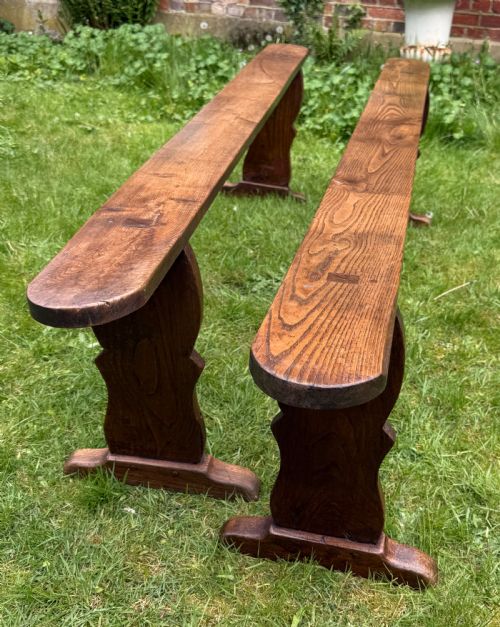
Vintage french oak seating covers a robust range of dining chairs, armchairs, benches, and daybeds originating from nineteenth-century and early twentieth-century France. Buyers searching for vintage french oak seating typically encounter rustic farmhouse designs, ladder backs with rush seats, and elaborate revival styles.
Common forms include pairs of hall benches, carved bergère chairs with cane inserts, and sets of dining chairs suitable for traditional interiors. Walnut and chestnut occasionally appear alongside the dominant oak framework.
Materials and construction
Makers utilised solid timber frames, predominantly oak, combined with woven natural materials such as rush and cane for seats and backs. Joinery relied on traditional pegged or mortise and tenon construction to ensure lasting structural integrity under daily use.
Surface treatments range from natural waxed finishes to bleached wood surfaces that lighten the dense grain of the timber. Upholstered variants incorporate traditional stuffing methods finished with woven fabric or leather.
Current listings feature pieces spanning the nineteenth century up to nineteen twenty, utilising oak, rush, cane, and walnut across provincial and revival styles.
Assessing quality
Quality rests upon the crispness of hand-carved decorative details and the structural tightness of the original frame joints. Examples with intact, tight rush or cane webbing demonstrate superior preservation compared to those requiring complete re-weaving.
Proportion and balance distinguish finer workshop output from utilitarian regional output, particularly within revival styles. The depth of the timber grain and the uniformity of bleaching also separate standard provincial items from exceptional commissions.
The Vintage French Oak Seating Glossary
- Bergère
- An enclosed upholstered armchair with wooden framing and cane sides or back. This French form originated in the eighteenth century and saw revivals throughout the nineteenth century.
- Rush
- A marsh plant material twisted into cords and woven to form flexible, durable seats. It appears frequently on traditional ladder back dining chairs.
- Fauteuil
- An open-armed upholstered armchair featuring exposed wooden arms and legs. The style reflects formal French interior design traditions.
- Bleached oak
- Timber treated to lighten its natural dark tone, creating a softer finish popular in provincial and farmhouse furniture.
- Ladder back
- A chair back featuring multiple horizontal wooden slats between the upright posts. This traditional form supports comfortable upright seating.
Vintage French Oak Seating: Frequently Asked Questions
How do I clean rush seats?
Dust regularly with a soft brush and avoid excess moisture that can weaken the natural plant fibres.
Keep the room at a stable humidity to prevent the rush from drying out or becoming brittle over time.
Can I use these chairs daily?
Most pieces are built from sturdy hardwoods like oak and designed for practical everyday seating.
Check that the joints remain tight and the woven or upholstered seats are secure before heavy use.
How do I identify a revival style?
Revival pieces emulate historical periods like Louis XV or Louis XVI through characteristic carving motifs and curved legs.
Nineteenth-century workshops frequently reinterpreted these classical designs for contemporary homes.
What is the difference between cane and rush?
Cane uses thin strips of rattan woven into an open patterned mesh for chair backs and seats.
Rush uses twisted marsh grasses to create a solid, tightly braided seating surface.