

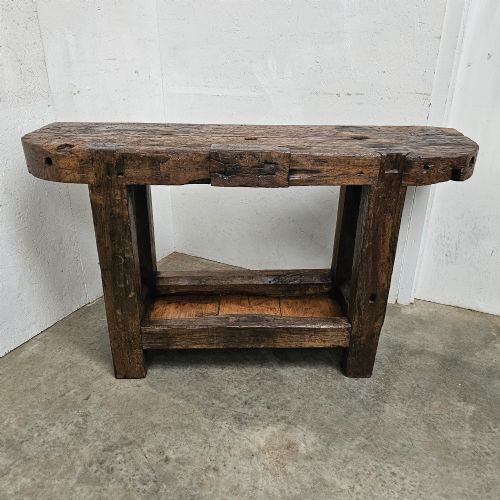

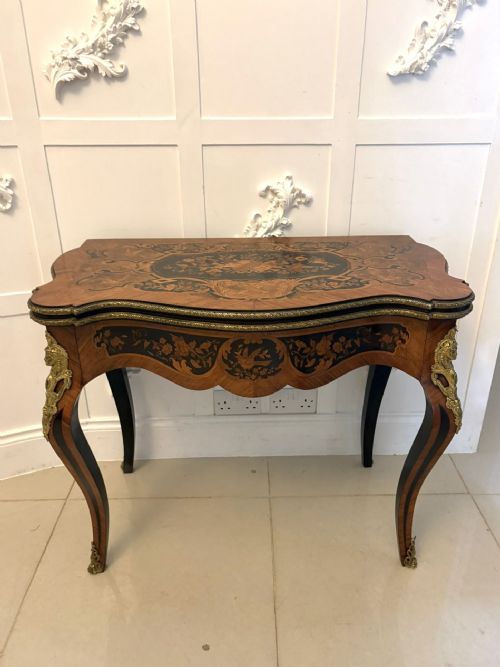
French Wooden Console Table
A french wooden console table brings enduring provincial charm and practical surface space to a hallway, sitting room or dining area.

French Wooden Console Table
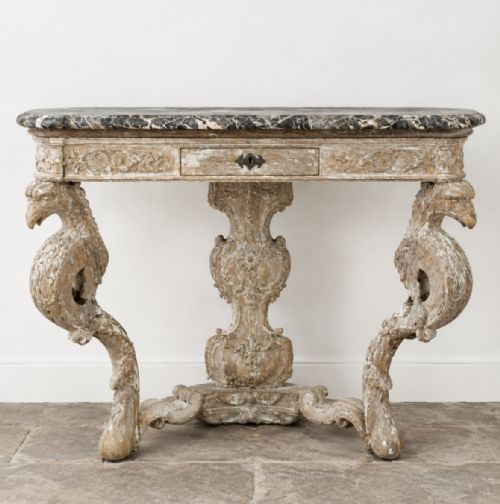
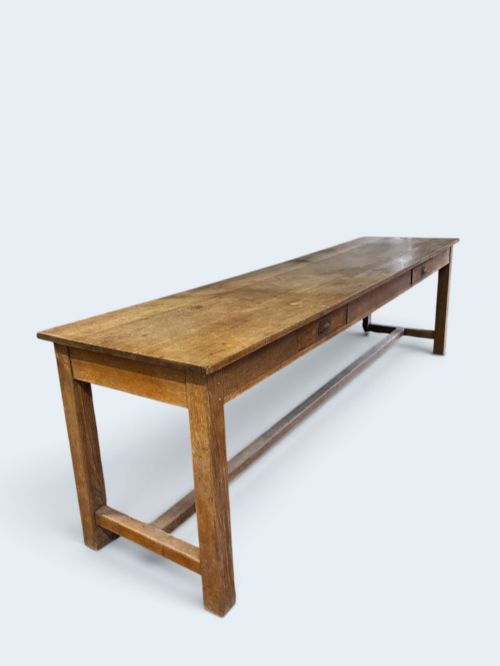
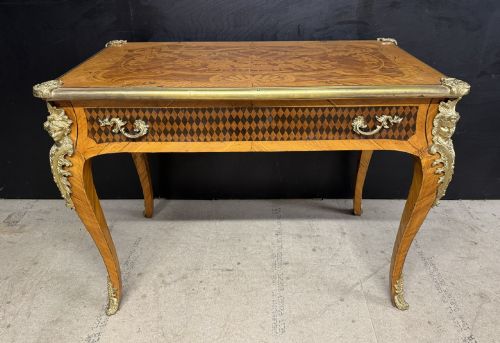
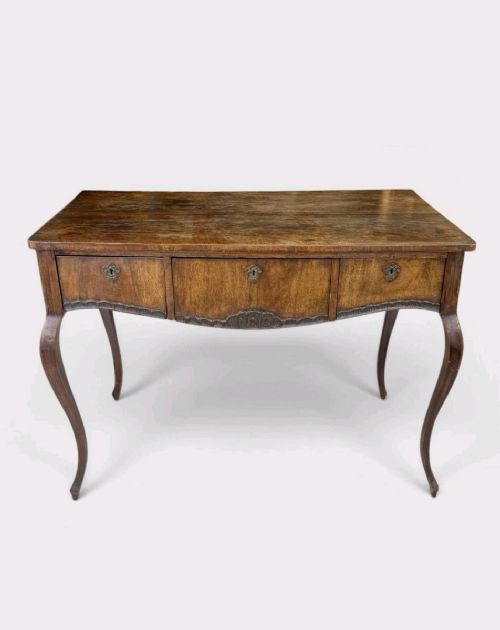
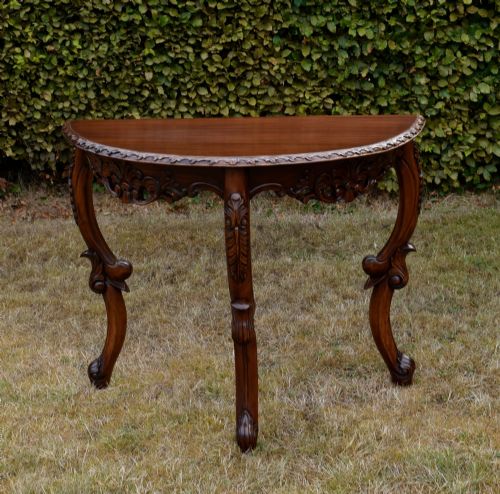
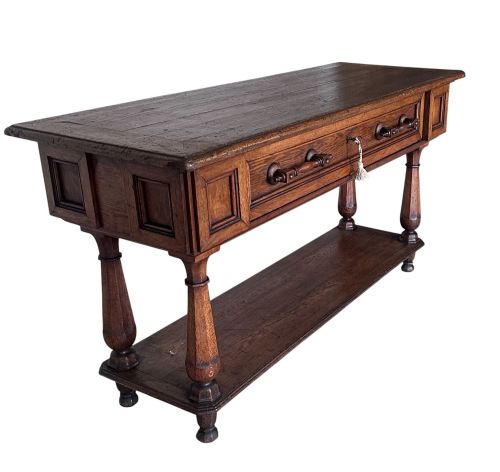
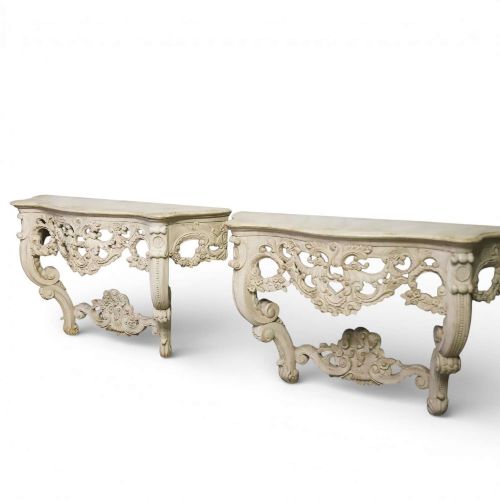
A french wooden console table is a versatile surface historically designed to sit against a wall in domestic interiors, grand houses and provincial farmhouses. When exploring this selection, buyers encounter pieces serving multiple domestic functions, including dedicated serving tables, drapers tables, writing desks and simple wall-mounted consoles. The forms range from restrained provincial designs to elaborate Louis XV style pieces bearing intricate ormolu mounts and marquetry.
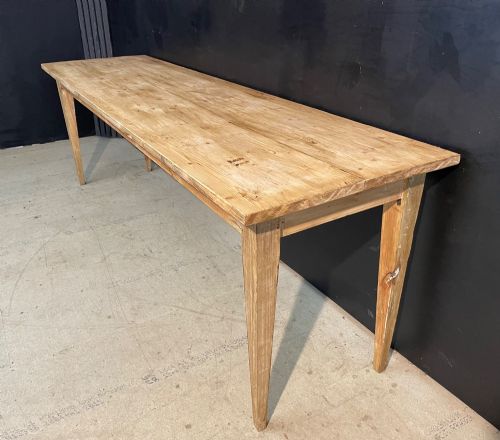
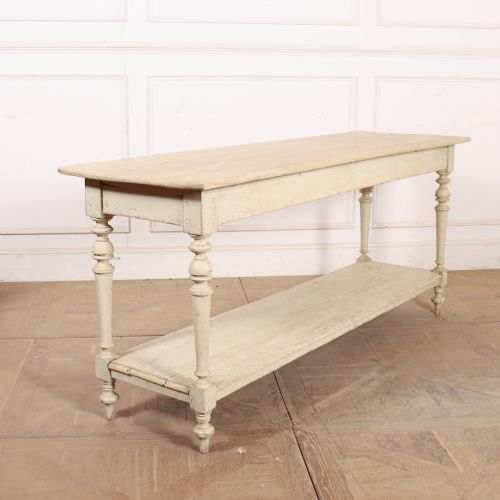
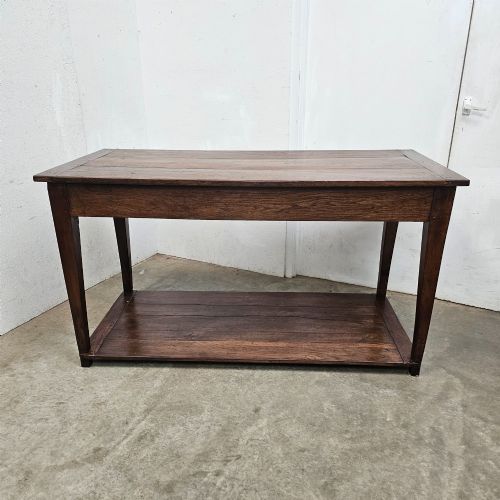
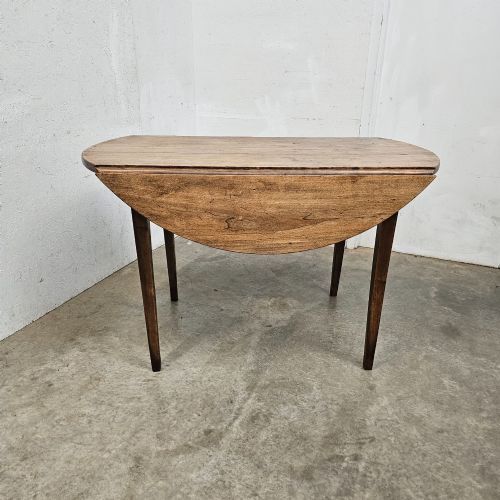
The pieces appearing on this page span several distinct eras, with the nineteenth century and eighteenth century providing the majority of survivors alongside early twentieth century interpretations. Common structural formats include demi-lune shapes, long multi-drawer farmhouse servers, two-tier work tables and compact side tables. Woods such as oak, pine, cherrywood and fruitwood dominate the offerings, often complemented by marble tops or painted finishes.
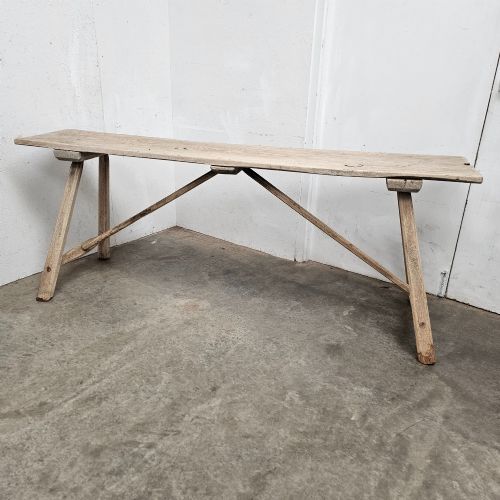
Regional variations reflect the diverse origins of these tables, shifting between rustic country utility and refined urban elegance. Buyers frequently select these tables for their narrow proportions, which suit tighter spaces like hallways or behind sofas while retaining substantial character. Each piece carries the marks of its working past, whether through scrubbed pine tops or polished burr birch veneers.
Materials and Construction
Makers utilised a variety of native and imported timbers, relying heavily on solid oak, pine, cherrywood and fruitwood for domestic utility pieces, while employing kingwood and burr birch for finer marquetry examples. Structural joinery typically involved traditional hand-cut methods suited to daily wear in kitchens, workshops and formal rooms. Surfaces received different treatments according to purpose, ranging from natural scrubbed finishes and simple paint layers to high-skill marquetry and parcel gilt detailing.
Decorative elements often included hand-carved details, ormolu mounts and inset marble slabs designed to handle hot dishes or damp items in serving and potting contexts. Brass hardware, integrated drawers and drop-leaf mechanisms added practical utility to work tables and writing desks. The combination of sturdy wooden framing and considered surface embellishment ensured these tables survived centuries of active use.
Current listings feature pieces spanning the eighteenth, nineteenth and early twentieth centuries, constructed from oak, pine, cherrywood and marble.
Evaluating Craftsmanship and Character
Quality in these tables is determined by the integrity of the timber selection and the precision of the joinery rather than the absence of wear. Finer examples display meticulous marquetry, sophisticated veneer work, and high-grade ormolu mounts that reflect the prevailing stylistic trends of their period, such as Louis XV or Empire Revival. Simpler provincial tables achieve distinction through honest proportions, pleasing patination on scrubbed pine or oak, and original painted finishes.
The relationship between structural elements reveals the standard of workshop production, from everyday artisans crafting robust workbenches to specialist cabinetmakers executing refined demi-lune consoles. Alterations over time influence how closely a piece matches its original period context, though honest historic repairs often enhance the narrative of a working piece. Ultimately, the successful balance of proportion, material authenticity and enduring stability separates standard utility tables from exceptional decorative pieces.
The French Wooden Console Table Glossary
- Demi-lune
- Half-moon shape. These tables fit flush against a wall and often function as elegant hallway or pier tables.
- Marquetry
- Inlay technique using thin veneers of various woods to create decorative patterns and pictures on furniture surfaces.
- Ormolu
- Gilded bronze ornamentation applied to furniture. This technique gained popularity on refined French decorative pieces during the eighteenth and nineteenth centuries.
- Pot-shelf
- An open lower tier on a serving or kitchen table. Historically used for storing pots, pans and large culinary items.
- Drapers table
- A long, sturdy table originally utilised in textile merchant shops for folding cloth. They feature generous proportions and often multiple drawers.
French Wooden Console Table: Frequently Asked Questions
How were console tables used historically?
Console tables originally served as decorative side supports placed against walls in formal reception rooms and hallways. Over time, similar structural forms were adopted for practical tasks in kitchens, dairies and workshops.
In domestic settings, they often held decorative ornaments, lighting or serving dishes during large gatherings. Today, their narrow depth makes them ideal surface solutions for modern hallways and narrow living spaces.
What is the difference between provincial and formal styles?
Provincial tables emphasise utility and rustic charm, utilising local timbers like pine, fruitwood and oak with straightforward construction. They often feature scrubbed tops, painted finishes or simple drawer configurations suited to country life.
Formal styles incorporate sophisticated elements such as marquetry veneers, exotic woods, ormolu mounts and carved Louis XV influences. These pieces reflect urban workshop standards designed for wealthy salons and parlours.
Can these tables be used in modern kitchens?
Many surviving pieces originate from kitchens, drapers shops and work environments, making them naturally suited for contemporary culinary spaces. Scrubbed pine and oak surfaces handle daily activities comfortably while adding historic character.
Buyers frequently select these sturdy tables to serve as kitchen islands, sideboards or preparation spaces. Their robust timber construction ensures they remain functional for modern domestic demands.
How do I care for an antique wooden table?
Maintain wooden surfaces by dusting regularly with a soft, dry cloth and avoiding excessive moisture or direct heat sources. Natural waxes help nourish older timbers like oak and pine without building up heavy chemical residues.
Protect marble and wood surfaces from spills and hot items using appropriate coasters or mats. Preserving the existing patination ensures the piece retains its historic appearance over time.