





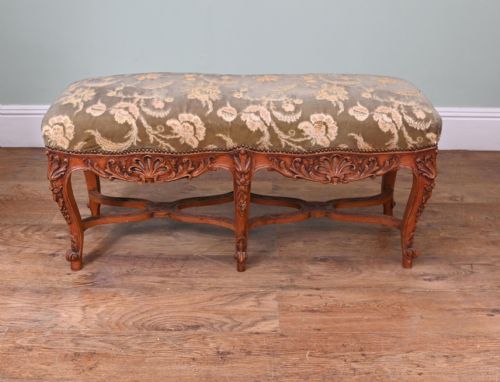
French Window Stool
A french window stool provides low seating beside glass or at the foot of a bed, combining continental carved timber with upholstered comfort.
French Window Stool
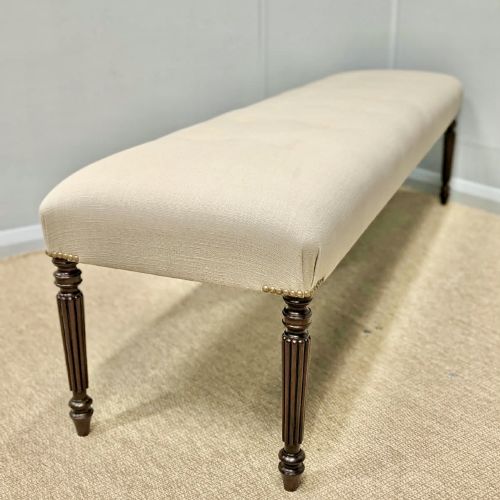
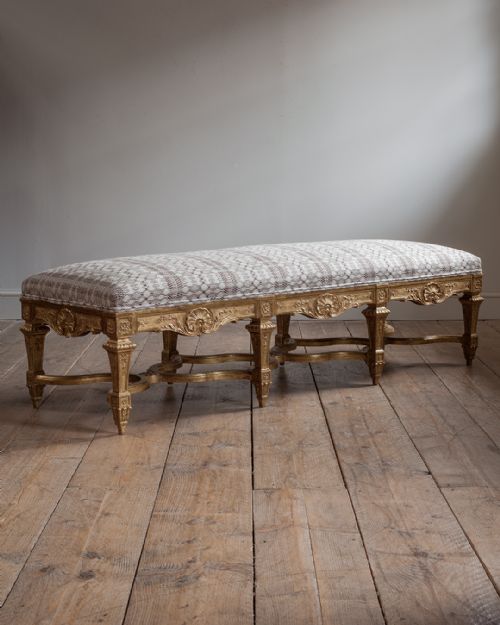
A french window stool sits low to the floor, designed specifically to fit beneath low sills or serve as a long bench for resting. These pieces span the nineteenth and early twentieth centuries, drawing on traditional continental forms such as the window seat and the long duet stool.
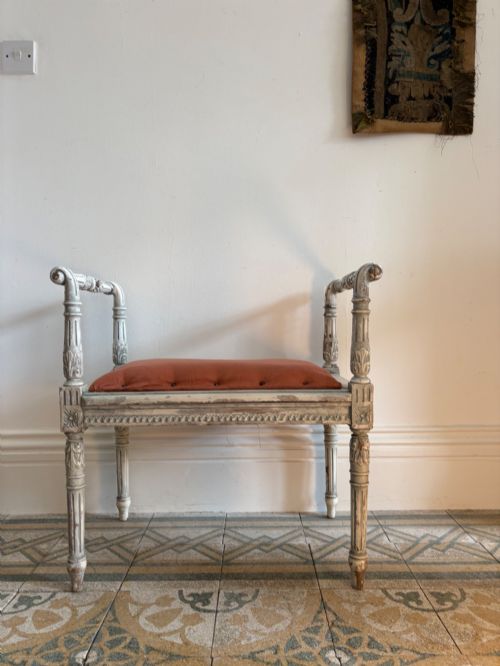
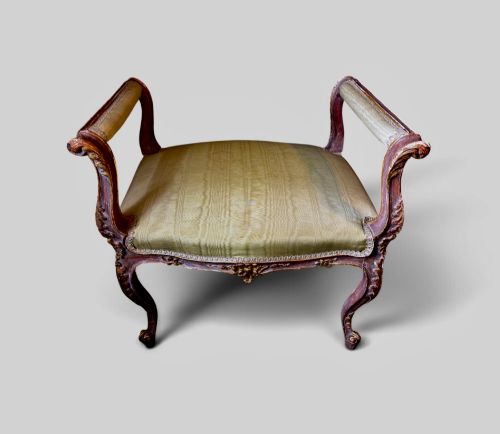
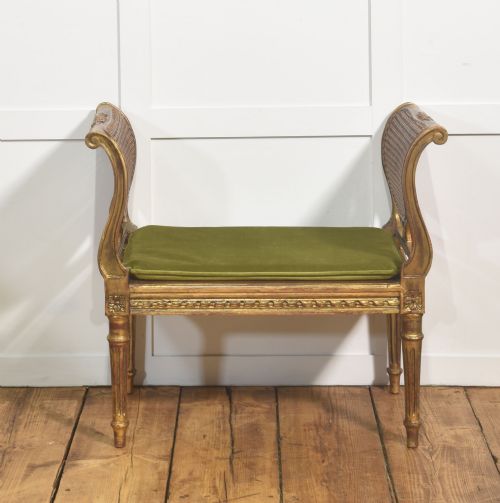
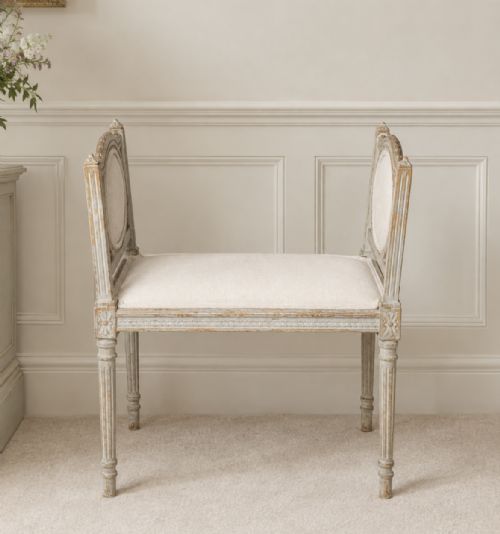
The varieties seen here include walnut, giltwood, and painted wood frames, often referencing classical vocabularies like Louis XVI, Rococo, and Gustavian styles. Many examples feature elongated proportions to accommodate more than one sitter or to stretch comfortably along a panelled wall.
Makers drew heavily on historical French design repertoires, producing both grand gilt pieces and simpler painted or carved beech and oak versions. The typical form balances structural timber frames with upholstered pads, silk seats, tapestry covers, or woven cane panels.
How they were made
Makers constructed the primary frames of these stools using seasoned hardwoods such as walnut, oak, beech, and mahogany, often applying a layer of giltwood, gold leaf, or pale paint over the carved timber. Joinery relied on traditional pinned mortise and tenon joints to ensure stability under frequent seating use.
Upholstered surfaces utilise materials like silk, velvet, tapestry, and cane, secured over webbing or padded foundations within the wooden rails. Metal elements such as brass fittings occasionally appear to accent the primary woodwork or structural X-frames.
French Window Stool Retail Price Guide 2026
Typical asking prices for french window stool among the pieces listed under this phrase on Sellingantiques today, from the lower quarter to the upper quarter. They describe what is for sale here now, not the wider market.
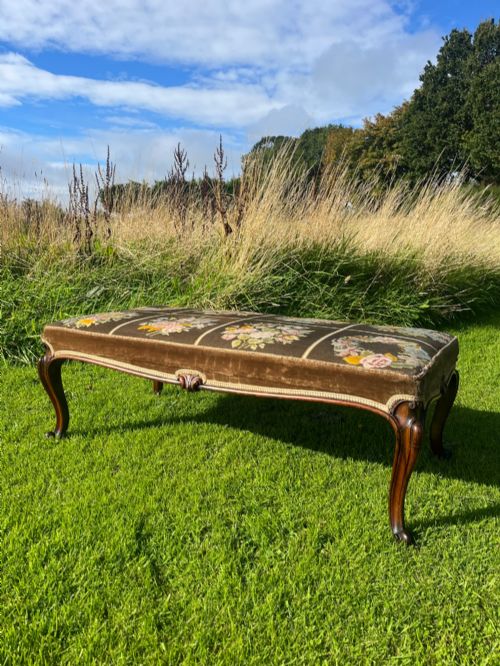
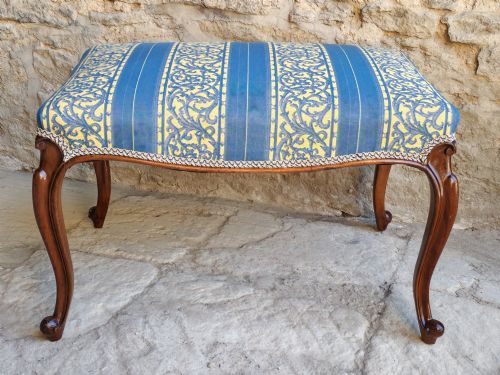
One cheerful nineteenth-century stool arrives complete with its original tapestry seat, ready to catch the afternoon sun by the glass.
What varies in quality
The refinement of the hand carving dictates much of the distinction between standard production and superior craftsmanship. Crisp undercut details in the foliage, cabriole legs, and moulded rails reveal the hand of a skilled artisan rather than routine workshop output.
The integrity and selection of the primary timbers, alongside the richness of the original gilding or period paint finishes, separate the finer examples. Substantial structural proportions and well-balanced long forms ensure the piece maintains both visual presence and physical stability.
The French Window Stool Glossary
- Window seat
- An elongated stool or low bench designed to fit into the architectural recess of a window bay.
- Giltwood
- Timber that has been coated with a thin layer of gold leaf or gilt preparation, common on decorative nineteenth-century seating.
- Cane
- Woven rattan or plant material utilised to form permeable, lightweight seat panels within a wooden frame.
- Cabriole leg
- A furniture leg featuring a double curve, bulging outward at the knee and tapering inward toward the foot, typical of period revival designs.
- Curule stool
- An ancient Roman chair or stool form featuring intersecting curved legs that create an X-frame shape.
French Window Stool: Frequently Asked Questions
Where do you put a window stool?
These low seats fit naturally beneath low window ledges, long hallways, or positioned at the foot of a master bed.
They also serve well as occasional coffee tables when topped with a flat tray or placed in pairs flanking a fireplace.
How do I identify a Louis XVI style stool?
Look for straight, fluted legs, symmetrical neoclassical geometry, and carved ribbon or floral motifs on the frame.
Unlike curved Rococo pieces, these stools favour restrained rectilinear or oval silhouettes inspired by classical antiquity.
What is a duet stool?
A duet stool is an elongated seating form originally intended for two people to sit together, often used at a piano or dressing table.
On this page, they appear as long upholstered benches providing generous surface area.
Can these stools be used for daily seating?
Most of these pieces are structurally sound for regular sitting, provided the wooden joints and internal webbing remain stable.
Delicate gilt surfaces and antique silk or tapestry upholstery benefit from gentle daily use to preserve their historic materials.