

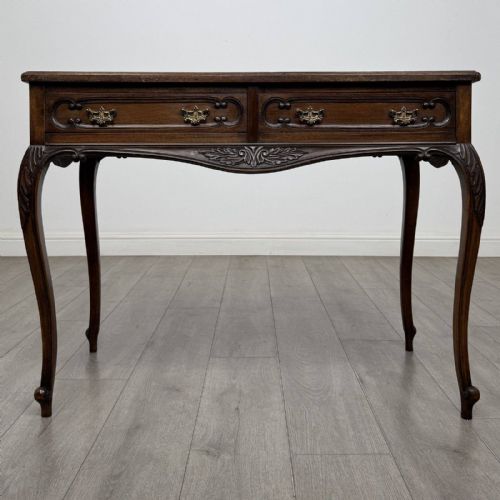
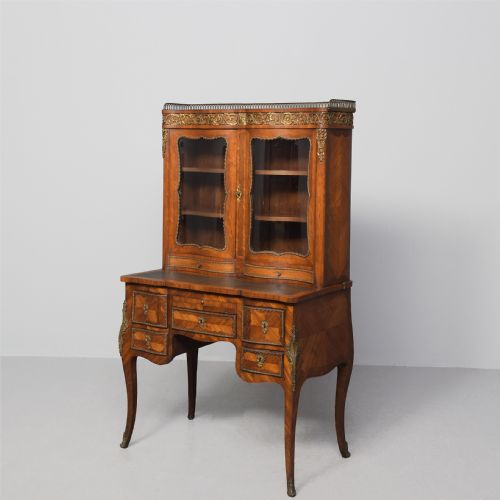
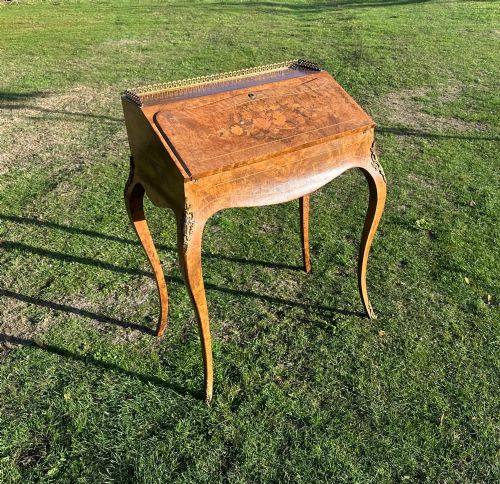
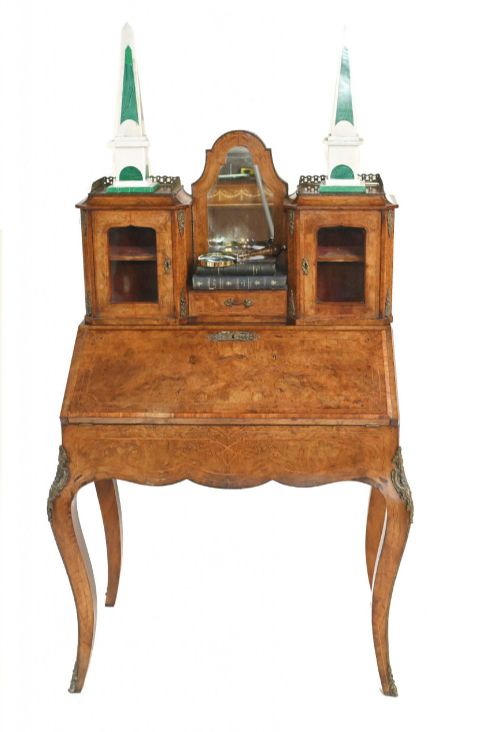
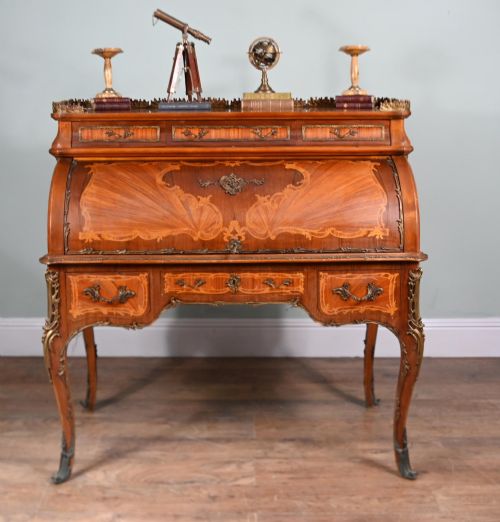
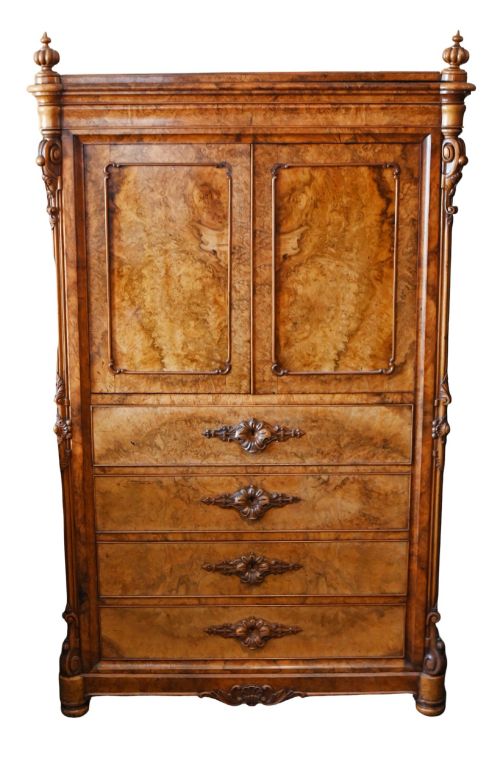
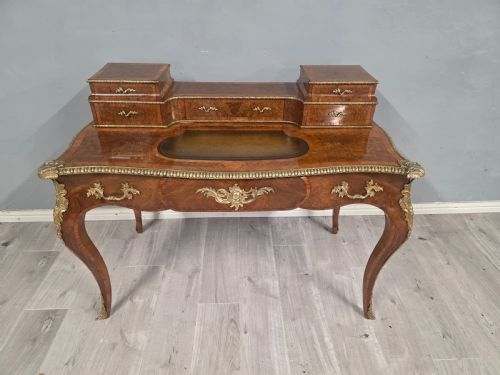
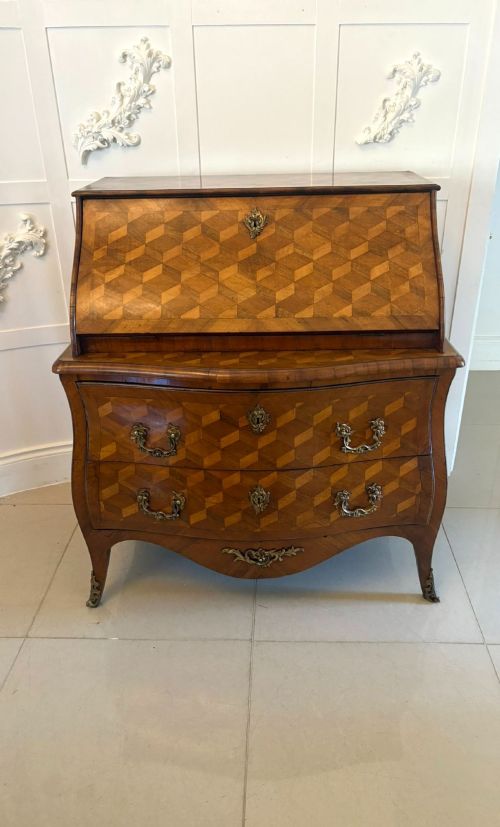
French Walnut Writing Bureau
A french walnut writing bureau brings warmth and refined practicality to a room through fitted compartments, drop fronts and rich timber grain.
French Walnut Writing Bureau
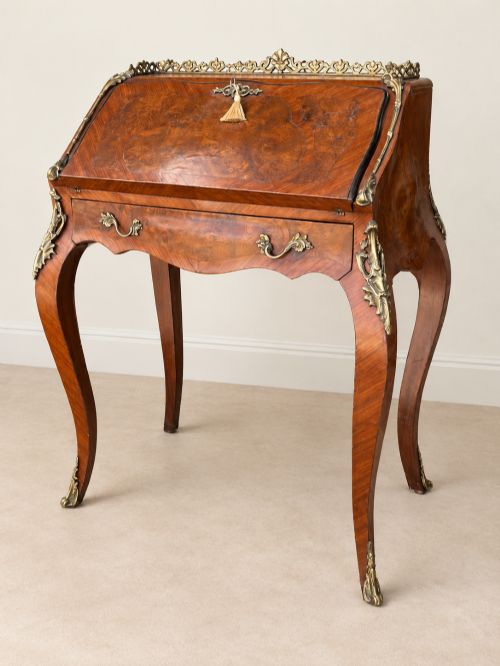
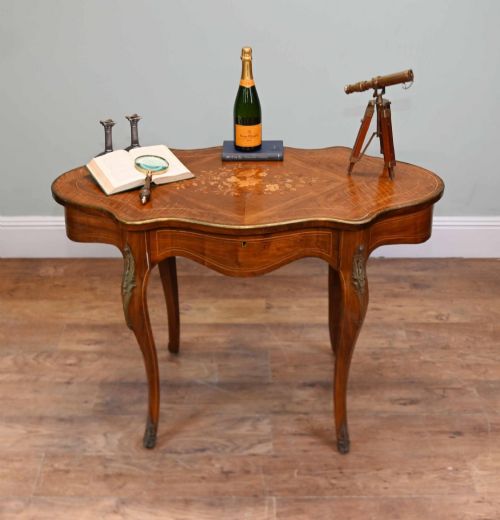
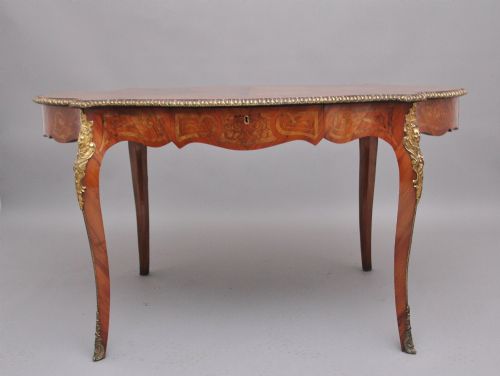
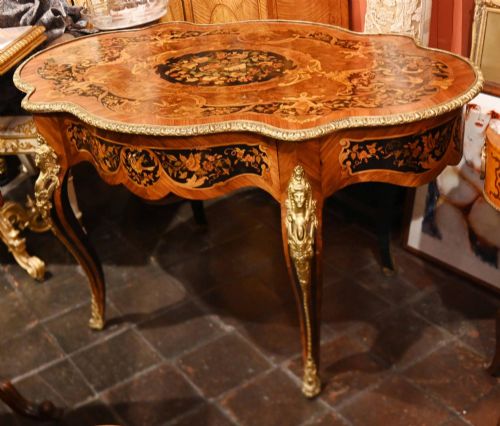
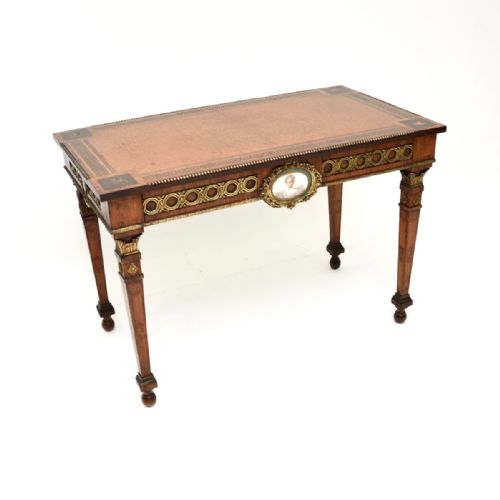
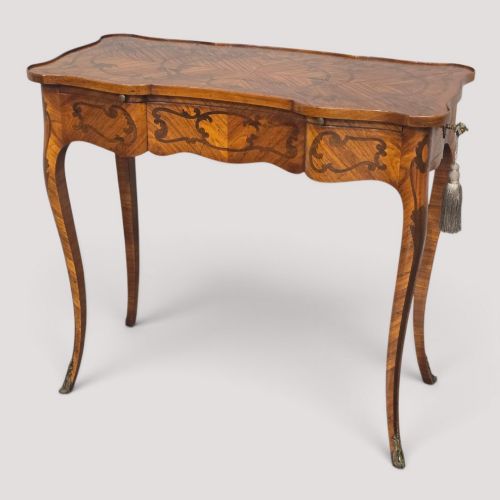
A french walnut writing bureau encompasses various practical forms designed for correspondence and private paperwork, ranging from fall-front writing desks to lady's desks and freestanding bureau plat tables. The pieces on this page span the eighteenth, nineteenth and early twentieth centuries, capturing periods from the Victorian era to Louis XV revival and Art Deco movements.
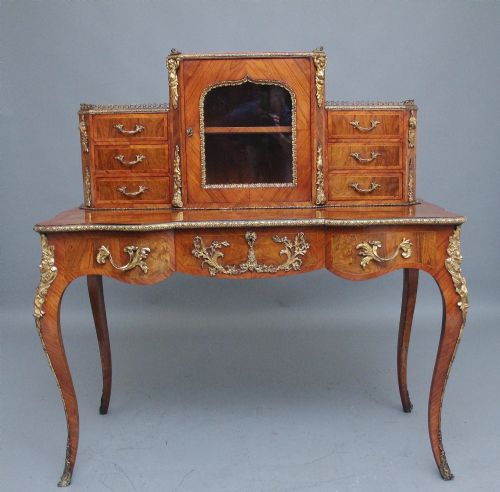
Most examples originate from French workshops or reflect continental styling, incorporating specific desk variants such as the bonheur du jour, secrétariat abattant, and kidney-shaped writing tables. These forms often feature fitted interiors with small drawers and pigeonholes concealed behind sloping or folding writing surfaces.
Materials and construction
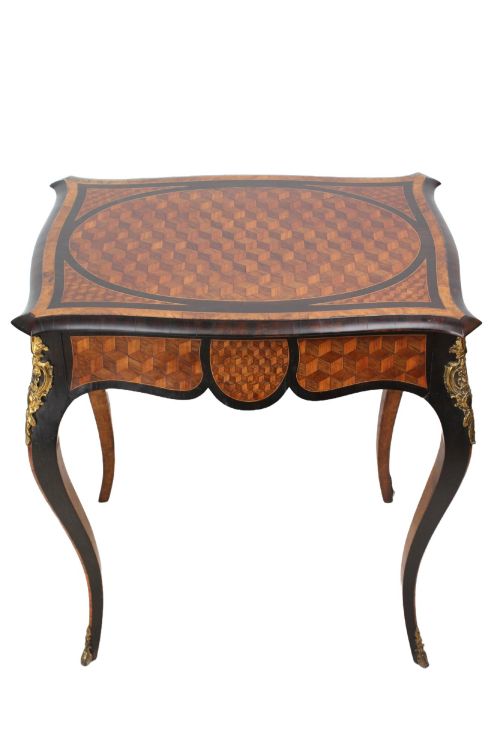
Makers utilised solid walnut and decorative burr walnut veneers over secondary timbers, often applying intricate marquetry and parquetry inlay patterns using contrasting woods. Surfaces frequently incorporate leather writing inserts surrounded by timber borders.
Metal ornamentation played a central role in finishing these pieces, with cast ormolu, gilt bronze and brass mounts applied to corners, legs and escutcheons. Structural integrity relied on traditional joinery techniques suited to complex cabinet construction.
French Walnut Writing Bureau Retail Price Guide 2026
Typical asking prices for french walnut writing bureau among the pieces listed under this phrase on Sellingantiques today, from the lower quarter to the upper quarter. They describe what is for sale here now, not the wider market.
Listings feature eighteenth-century bombe bureaus alongside Victorian revival desks and twentieth-century Art Deco interpretations.
Gradations of execution
Quality rests upon the precision of the parquetry and marquetry work, where tighter veneer matching and sharper geometric alignment distinguish finer cabinets from simpler iterations. The depth and clarity of the cast ormolu or gilt bronze mounts similarly separate standard production from exceptional examples.
Cabinetmaking standards appear in the smoothness of drawer operations, the fidelity of period revival styling, and the preservation of original leather writing surfaces. Finer items exhibit superior timber selection, particularly in highly figured burr walnut panels.
Gillows·JAS Shoolbred·Étienne Kohlmann
The French Walnut Writing Bureau Glossary
- Bureau plat
- A freestanding writing table, typically rectangular with drawers in the frieze, unencumbered by a superstructure. It stands away from walls in the centre of a room.
- Bonheur-du-jour
- A small, light lady's writing desk featuring a small cabinet or set of drawers on the upper surface above the writing slab. The form emerged in mid-eighteenth-century France.
- Marquetry
- The art of applying decorative veneer pieces in floral, pictorial or geometric patterns onto a structural carcase. It requires meticulous hand-cutting and fitting of diverse timbers.
- Ormolu
- Gilt bronze ornamentation applied to furniture mounts, feet and handles. The technique involves coating cast bronze with a finely ground gold mercury amalgam.
- Parquetry
- Geometric mosaic woodwork arranged in repeating patterns such as cubes or checkers. It differs from marquetry through its strict reliance on regular, angled shapes.
French Walnut Writing Bureau: Frequently Asked Questions
What is a french walnut writing bureau?
A french walnut writing bureau is a dedicated antique desk or writing table constructed from walnut timber, often featuring inlaid veneers and drop-front writing surfaces.
These pieces typically incorporate internal compartments for correspondence and stationery, reflecting the domestic and professional habits of past centuries.
How were these desks used originally?
Owners used these desks for private letter writing, managing household accounts, and storing documents within secure, compartmentalised drawers.
Many styles served specific domestic roles, such as ladies' writing desks placed in private boudoirs or large bureau plat tables positioned centrally in studies.
How do I distinguish revival styles from earlier pieces?
Revival pieces, such as those from the Victorian era, often emulate earlier eighteenth-century French monarchical styles like Louis XV and Louis XVI.
Distinctions lie in construction methods, hardware casting techniques, and secondary timbers used behind the primary walnut veneers.
How should I care for antique walnut timber?
Antique walnut surfaces benefit from stable room environments away from direct heat sources and strong sunlight, which can dry out timber and fade veneers.
Periodic application of appropriate wax polish helps maintain the lustre of the wood without building up heavy residue.