
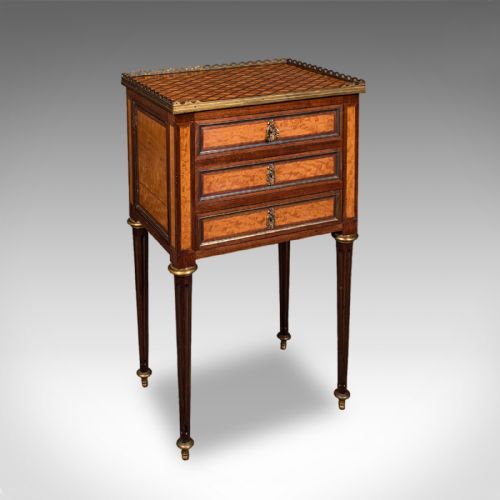
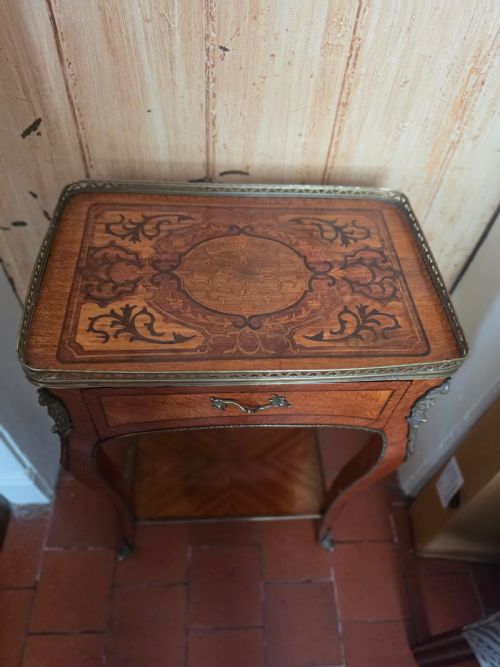
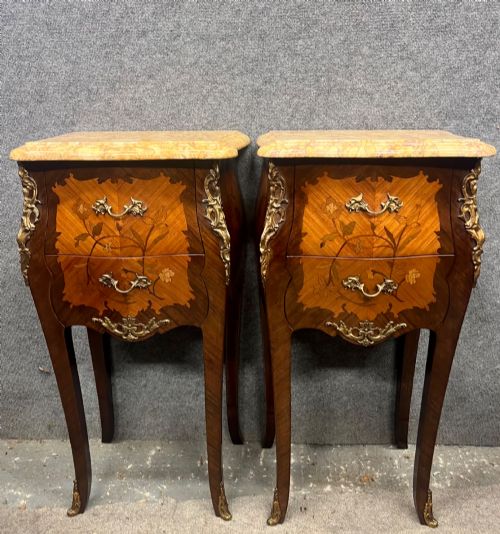
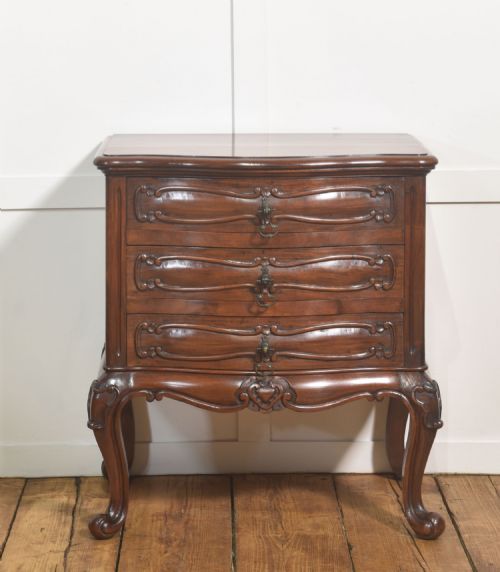




French Walnut Bedside Drawers
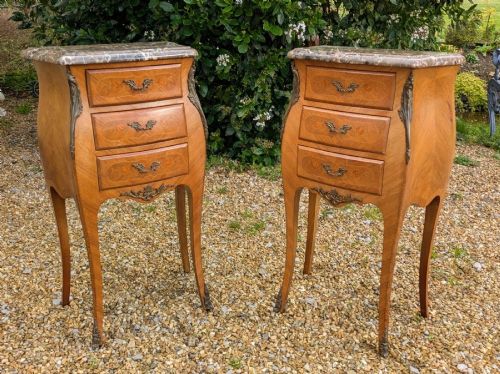
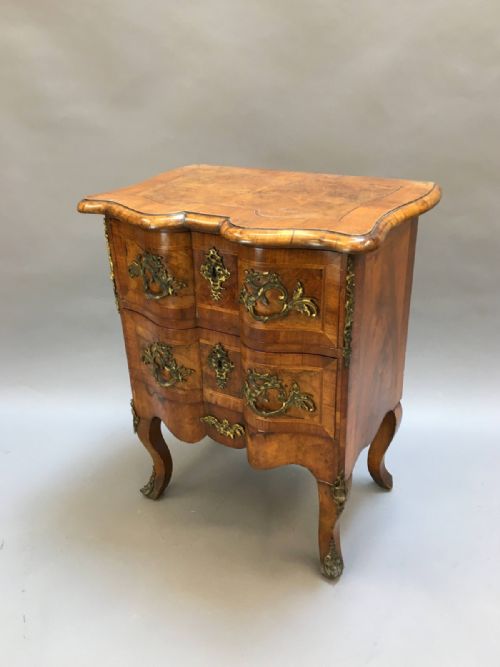
French walnut bedside drawers offer compact storage with serpentine fronts, marble tops, and marquetry inlay spanning the Victorian era to the 1930s.
French Walnut Bedside Drawers
French walnut bedside drawers appear across several decades, ranging from mid-nineteenth-century commodes to twentieth-century lamp tables and nightstands. Buyers find both single cabinets and matched pairs featuring marble tops, tambour doors, or small sliding drawers.
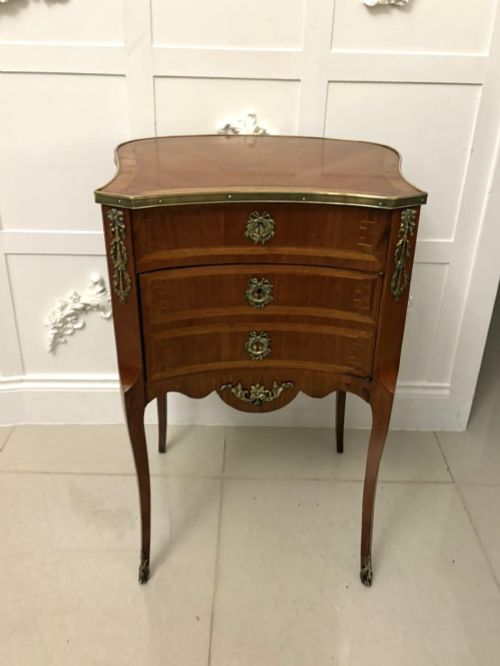
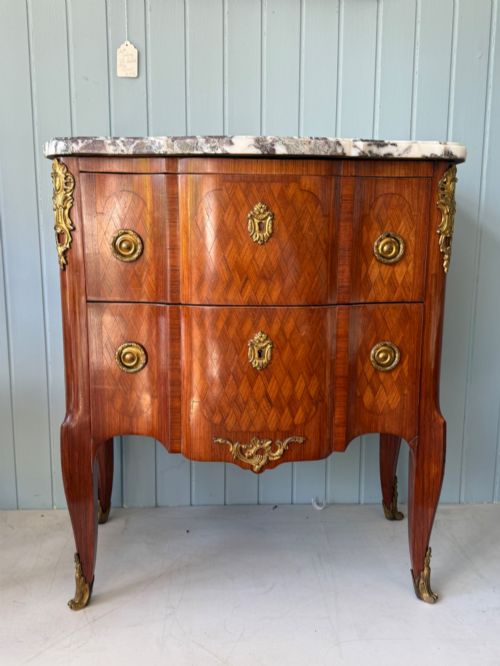
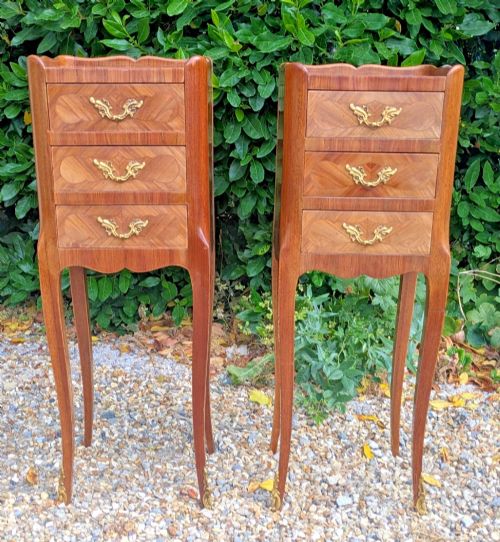
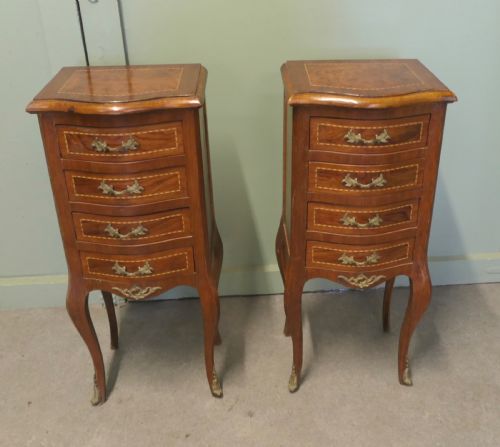
Makers drew heavily on Louis XV and Louis XVI styles, incorporating serpentine outlines, bombé profiles, and parquetry veneer into domestic furniture. The selection includes tall four-drawer side lockers alongside neat-proportioned occasional tables.
Originating predominantly from French workshops, these pieces utilise walnut and burr walnut timbers shaped to fit beside traditional beds of the period.
Materials and Construction
Cabinet makers utilised solid walnut and decorative veneers such as burr walnut, kingwood, and rosewood applied over secondary timbers. Surfaces frequently display intricate marquetry and parquetry inlay arranged in geometric or floral patterns.
Many examples incorporate polished marble slabs fitted to the top surface, complemented by cast brass and ormolu mounts, handles, and sabots.
The listings span periods from the eighteenth century to the 1930s, featuring walnut, marble, ormolu, and marquetry inlay.
Judging Quality and Execution
Superior pieces display precise alignment in their parquetry veneers and crisp definition in cast ormolu mounts. The handling of curved serpentine and bombé drawer fronts reveals the joiner's skill in shaping walnut timber without distortion.
Finer examples integrate matching marble slabs with bevelled edges and secondary interior timbers that show clean hand-cut dovetails on the drawer boxes.
The French Walnut Bedside Drawers Glossary
- Bombé
- A swelling or outward curving contour found on the front and sides of certain commodes and bedside cabinets. This shape demands advanced cabinet-making techniques to fit drawers accurately.
- Marquetry
- Decorative patterns formed by inserting thin pieces of wood veneer into a background panel. Craftsmen utilise various timber tones to create floral or geometric designs.
- Ormolu
- Gilded bronze mounts applied to furniture corners, feet, and drawer pulls for decorative effect. The metal is cast and chased to achieve crisp surface detail.
- Parquetry
- Geometric mosaic woodwork formed by small veneer tiles arranged in repeating patterns. It appears frequently on the tops of French side tables and nightstands.
- Tambour
- A flexible shutter door constructed from narrow vertical strips of wood glued to a canvas backing. It slides horizontally within tracks to enclose a bedside cabinet storage space.
French Walnut Bedside Drawers: Frequently Asked Questions
What periods do these bedside tables cover?
The available pieces span from the Victorian era and mid-nineteenth century through to the art deco period of the 1930s. Mid-eighteenth-century commodes also appear among the archive records.
Stylistic influences lean heavily toward Louis XV and Louis XVI revivals, maintaining classic French cabinet shapes across different decades.
Do bedside cabinets usually come in pairs?
Many listings consist of matched pairs designed to flank a bed symmetrically. Single bedside tables and commodes also occur frequently.
Pairs often show identical marquetry layouts or matching marble top thicknesses, though slight hand-made variations remain normal.
What materials feature on these pieces?
Walnut and burr walnut form the primary wooden structures, often enhanced by kingwood, rosewood, and satin walnut veneers. Inlay work utilises contrasting timber types.
Additional materials include polished marble tops, brass mounts, and gilt bronze ormolu furniture hardware.
How were these cabinets used originally?
Bedside tables and nightstands provided enclosed storage for chamber lighting, books, and personal items within nineteenth and early twentieth-century bedrooms. Taller lockers and commodes served similar bedside functions.
Smaller drawers and secret compartments held valuables close to the sleeping area.
How do I identify Louis XV style features?
Louis XV style pieces typically display characteristic asymmetrical curves, serpentine framing, and floral marquetry. Cabriole legs and restrained ormolu mounts frequently accompany these shapes.
Bombe profiles and quartered walnut tops further signal this specific decorative French influence.