


French Vintage Engagement Ring
A french vintage engagement ring brings together delicate platinum settings, old cut diamonds and rich sapphires from the Edwardian era through the mid-century.
French Vintage Engagement Ring
A french vintage engagement ring spans several distinctive periods, ranging from Edwardian and Belle Epoque designs to bold Art Deco geometries and mid-century pieces from the nineteen fifties and sixties. The selection focuses heavily on cluster rings, solitaires and multi-stone configurations set with diamonds, sapphires, emeralds and pearls.
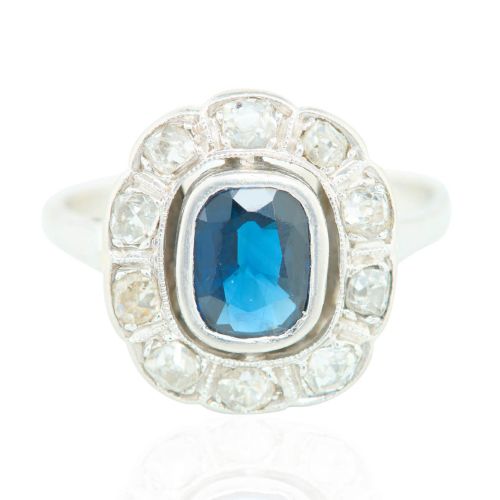
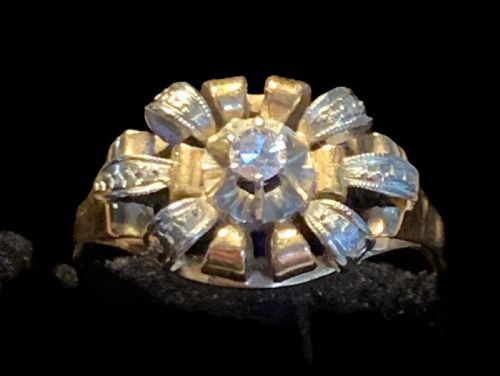
Art Deco examples from nineteen twenty to nineteen thirty dominate the selection, frequently utilising platinum or eighteen carat white gold to frame geometric arrangements of old cut diamonds and calibre-cut sapphires. Edwardian pieces rely on intricate yellow gold and platinum combinations, showcasing delicate openwork and natural pearls alongside old cut diamonds.
Materials and construction
Goldsmiths utilised platinum and eighteen carat white or yellow gold as the primary structural metals for these rings, often combining metals in a single piece to highlight the stone settings. Platinum gained favour during the Edwardian and Art Deco periods for its strength, allowing for fine wirework and secure claw or pave settings.
Gemstones feature traditional cuts such as old European cuts, transitional cuts and rose cuts, paired with natural sapphires, emeralds and cultured or natural pearls. Hand-finished details define the construction, from millegrain edges on platinum to intricate gallery work supporting cluster and target formations.
Listings feature pieces from the Edwardian period through to nineteen sixty, utilising platinum, eighteen carat white gold and eighteen carat yellow gold.
Quality variations
The distinction between tiers rests upon the precision of the hand-finishing, the uniformity of the stone cutting and the integrity of the original metalwork. Superior examples retain crisp millegrain decoration and secure, well-proportioned settings that hold the centre diamond or sapphire without excessive metal bulk.
The origin and treatment of the central gemstones influence the standing of a piece, particularly with natural untreated sapphires, emeralds and certified diamonds. Fine craftsmanship is evident in the harmonious balance between the secondary melee diamonds and the dominant stone, creating a cohesive silhouette.
The French Vintage Engagement Ring Glossary
- Old cut diamond
- A diamond cut by hand before modern machinery, characterised by a smaller table, higher crown and larger culet that produce a softer, warmer candlelit sparkle.
- Cluster ring
- A ring style featuring a central gemstone surrounded by a border of smaller stones, typically diamonds encircling a sapphire, emerald or pearl.
- Millegrain
- A decorative jewellery technique involving a line of tiny beaded metal beads along the edges of a setting, common in Edwardian and Art Deco design.
- Transition cut
- A diamond cut used roughly between nineteen fifteen and nineteen thirty that bridges the older old European cut and the modern brilliant cut.
- Target ring
- A circular cluster ring design featuring concentric rings of contrasting gemstones, often pairing a central diamond with a vivid outer band of calibre sapphires.
French Vintage Engagement Ring: Frequently Asked Questions
What periods do these rings cover?
The pieces span the Edwardian era, the nineteen twenties, nineteen thirties, and mid-century periods up to nineteen sixty. Each era brings distinct aesthetic choices, from delicate yellow gold Edwardian settings to platinum Art Deco geometries.
Design vocabulary shifts noticeably across these decades, moving from ornate floral motifs into sharp geometric lines and later returning to organic clustered arrangements.
Which gemstones appear most often?
Diamonds and sapphires form the core of the selection, frequently accompanied by emeralds and pearls. Old cut diamonds provide the primary sparkle across Edwardian and Art Deco examples.
Coloured stones such as blue sapphires and emeralds serve as striking centrepieces or contrasting borders in cluster and target ring configurations.
Are the platinum settings original?
Platinum was the preferred metal for fine Edwardian and Art Deco mounts due to its durability and tensile strength. This allowed artisans to create delicate wirework and secure settings without heavy metal weight.
Pieces from these eras utilise platinum either as the dominant metal or plated over eighteen carat white or yellow gold foundations.
How do I care for a vintage ring?
Gentle cleaning with warm soapy water and a soft brush maintains the brilliance of the stones and the integrity of the metal. Avoid harsh ultrasonic cleaners, particularly with pearl or emerald rings.
Routine inspection by a specialist jeweller ensures that older claw settings and delicate millegrain edges remain secure during daily wear.