
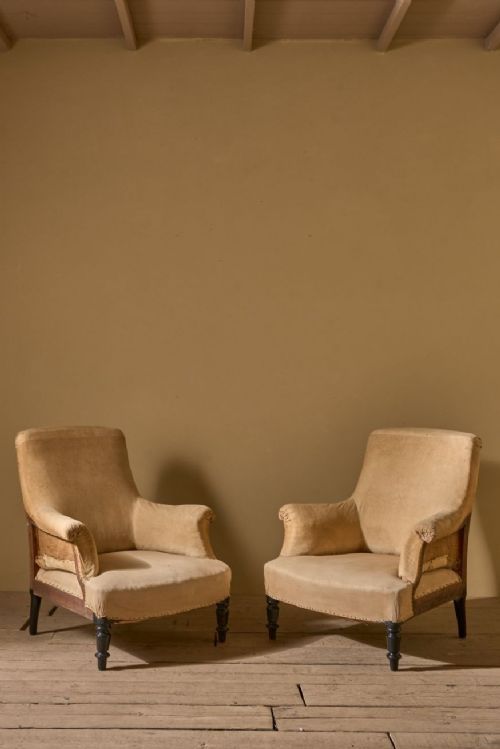
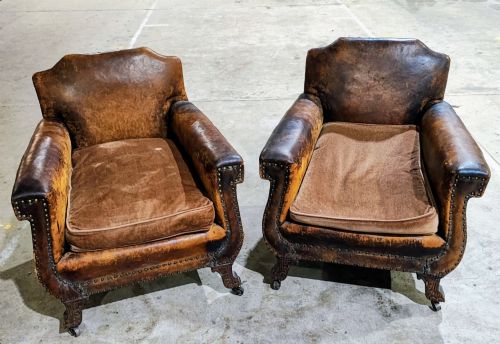
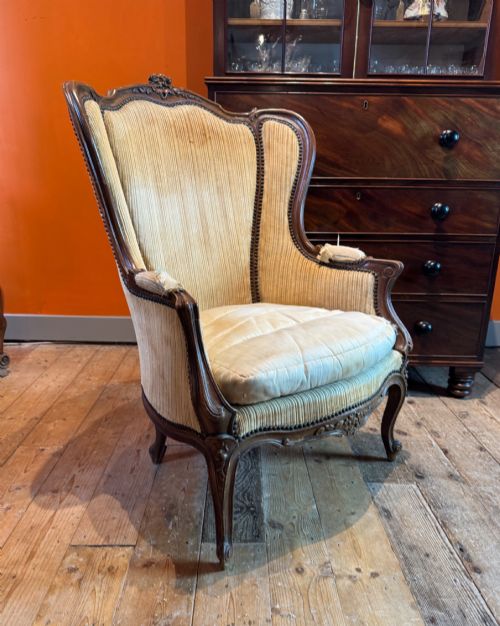
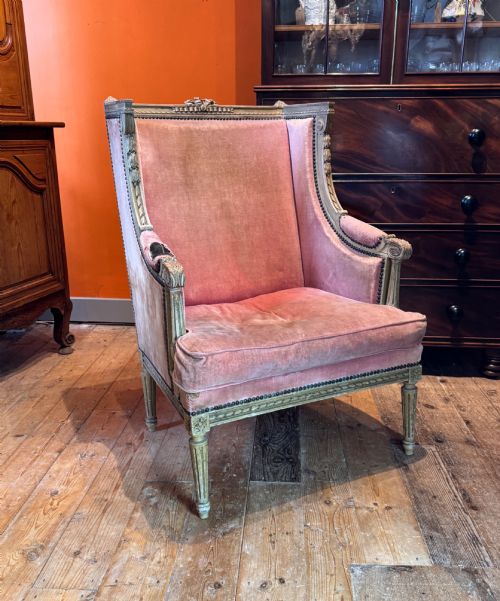
French Velvet Armchair
A French velvet armchair brings rich upholstery and Continental character to a room, offering both comfortable seating and historic presence.
Materials and construction
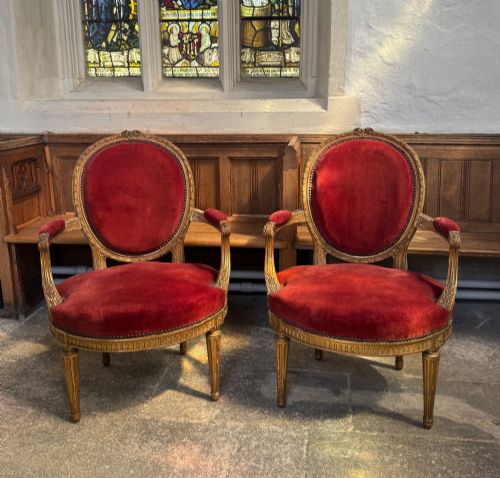
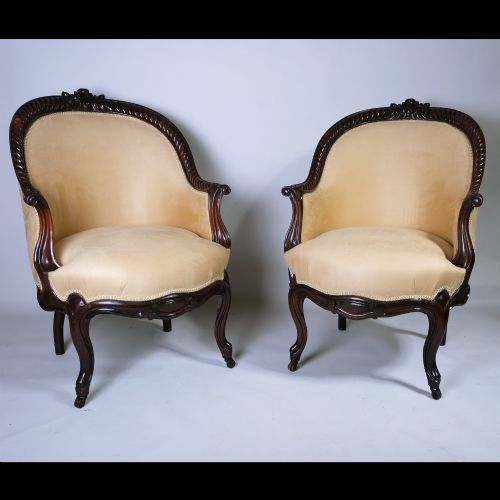
Frames rely primarily on traditional hardwoods such as walnut, beech, mahogany, and oak, alongside carved giltwood and painted timber. These structural woods provide the necessary strength to support curved armrests, cabriole legs, and ornate crest rails.
Upholstery relies on woven pile textiles, specifically velvet, complemented by secondary materials like brass tacks, linen underpinnings, and traditional stuffing techniques. Gilded or painted surfaces often receive protective treatments or show remnants of original polychrome decoration.
Judging the execution
Quality rests heavily on the depth and precision of the timber carving, distinguishing crisp hand-chiselled details on walnut or giltwood frames from softer, mass-produced moulding. The integrity of the underlying joinery determines how securely the arms and legs withstand daily weight.
The harmony between the frame style and its upholstery treatment dictates the visual success of the piece. Original or sympathetic textile choices that respect the historic period elevate the overall character compared to unsympathetic modern replacements.
The French Velvet Armchair Glossary
- Fauteuil
- An open-arm armchair with upholstered back and seat, typically featuring exposed wooden framing. This form became popular during the seventeenth and eighteenth centuries in France.
- Bergere
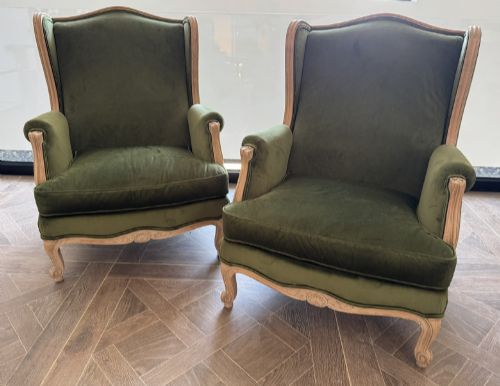
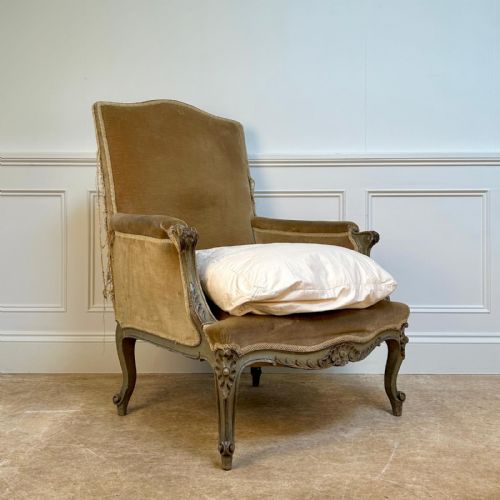
- An enclosed armchair with solid upholstered sides and a loose seat cushion, originating in France. These seats provide a deeper, more enclosed sit than an open fauteuil.
- Giltwood
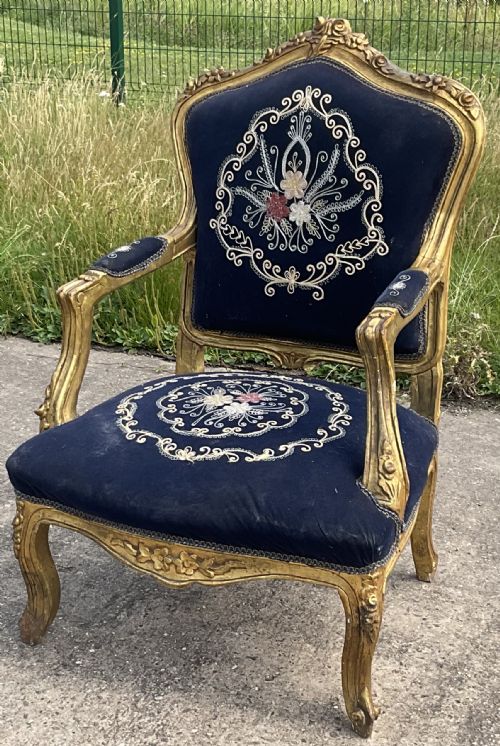
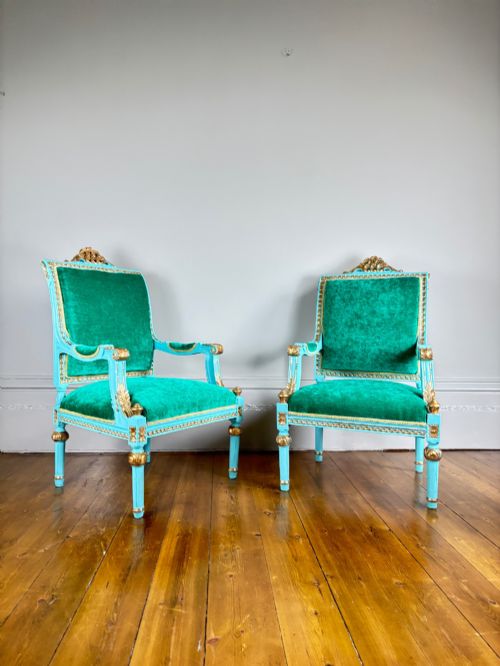
- Timber coated with a thin layer of gold leaf or gilt pigment over a prepared gesso ground. This finish appears frequently on formal revival seating.
- Napoleon III
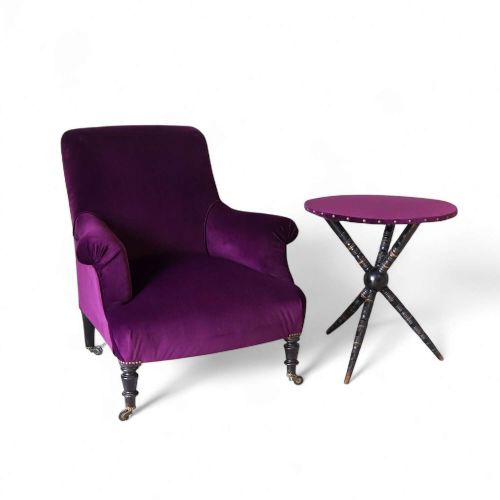
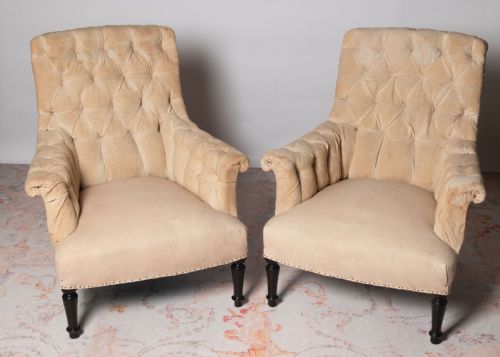
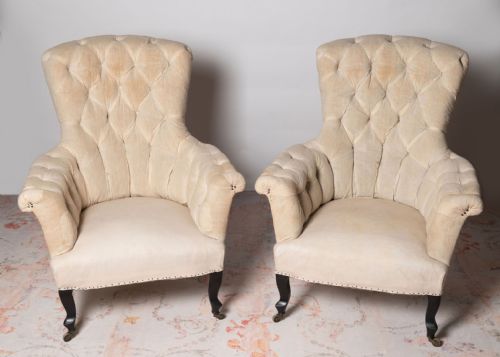
- A decorative style spanning the mid to late nineteenth century, characterised by eclectic revivals, buttoned upholstery, and lavish use of applied ornamentation.
- Cabriole leg
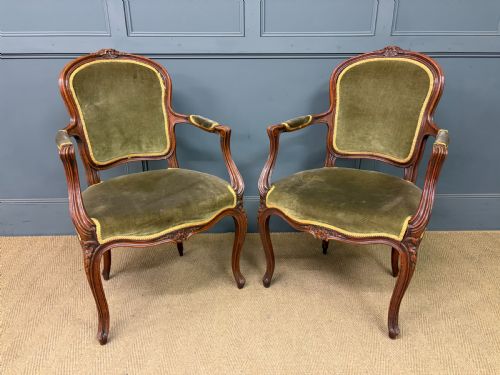
- A furniture leg that curves outward at the knee and tapers inward toward the foot, mimicking animal limbs. It is a defining feature of Louis XV revival seating.
French Velvet Armchair: Frequently Asked Questions
How do I identify a Louis XV style armchair?
Look for asymmetrical curved lines, cabriole legs, and floral carved motifs adorning the crest rail and seat frame. These elements reflect the organic, flowing aesthetic of eighteenth-century French design.
Such chairs often feature open arms with padded elbows and curved wooden members that sweep smoothly into the legs without sharp angles.
Are these armchairs comfortable for daily use?
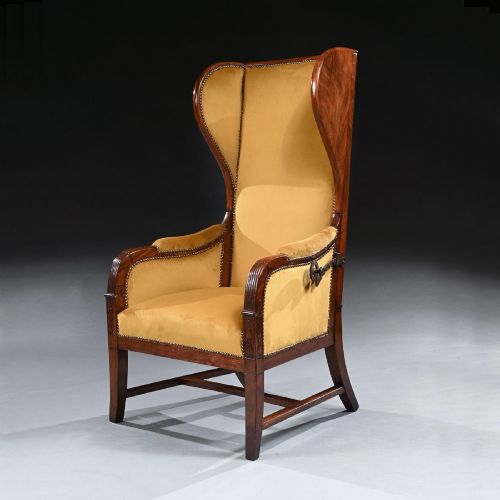
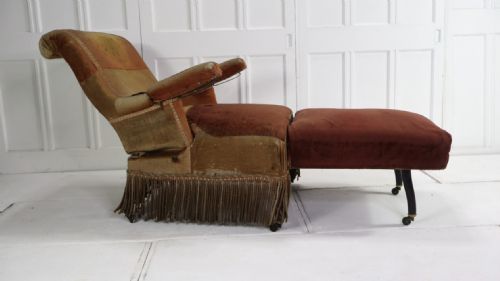
Many examples, particularly Napoleon III buttoned designs and Victorian wingbacks, offer deep cushioning and supportive backrests designed for relaxation. Their generous proportions accommodate comfortable upright or reclining sitting positions.
Comfort levels depend largely on the internal webbing and padding structure, which may vary across different periods and past restorations.
How should I care for antique velvet upholstery?
Protect the pile fabric by keeping the chair away from direct sunlight and excessive heat sources to prevent fading and fibre degradation. Regular gentle brushing helps maintain the nap and prevents flattening.
Professional specialist cleaning is recommended for any deeper stains to avoid damaging the delicate pile or underlying historic structure.