


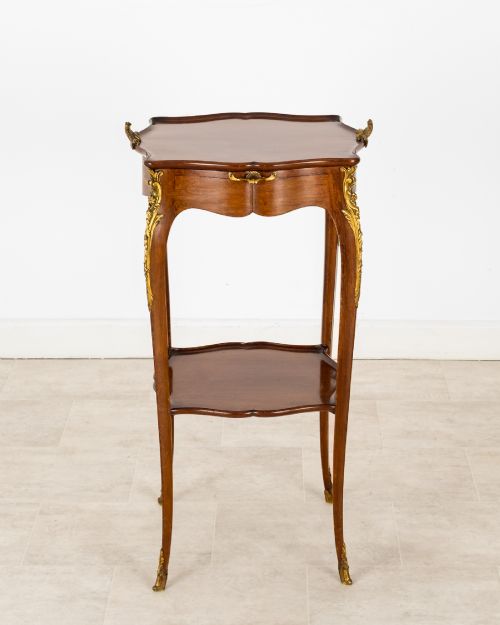


French Tiered Accent Table
A french tiered accent table brings multiple levels of display and decorative timber work into a room.
French Tiered Accent Table
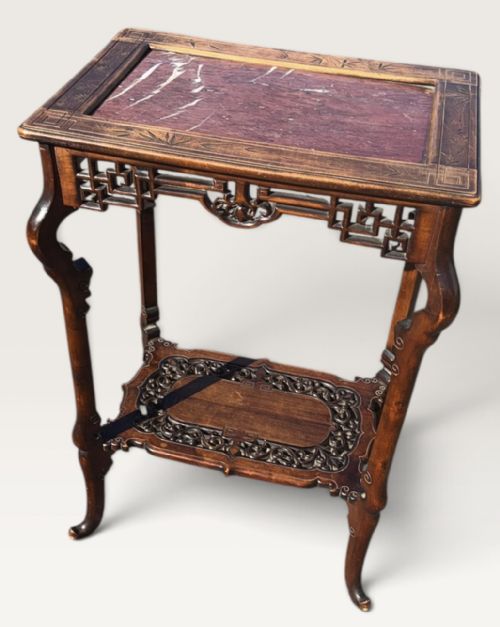
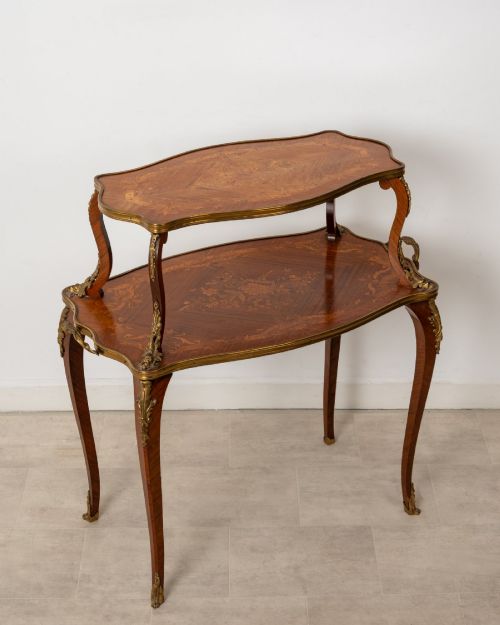
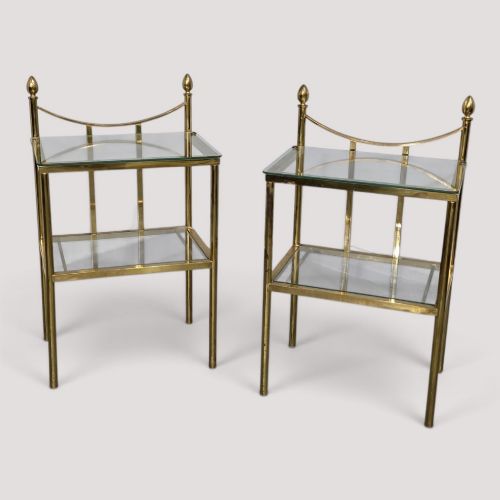
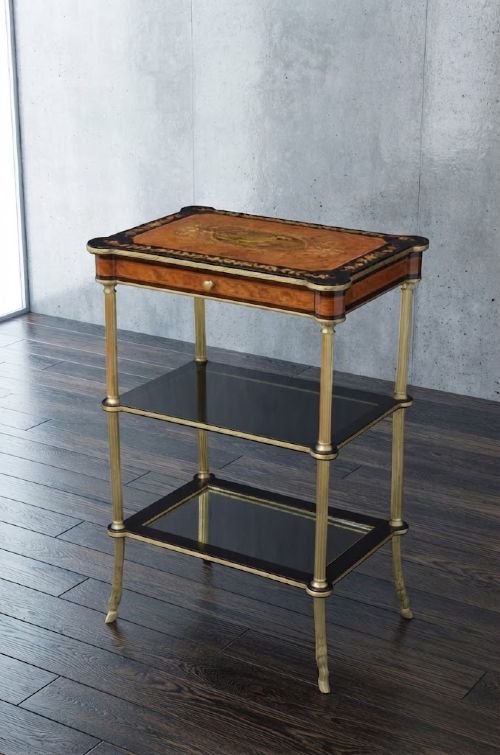
When you search for a french tiered accent table, you look for multi-level surfaces designed to hold lamps, plants or decorative objects in a living space. The pieces appearing in this selection include etageres, two-tier side tables, plant stands and occasional tables originating largely from the nineteenth and early twentieth centuries.
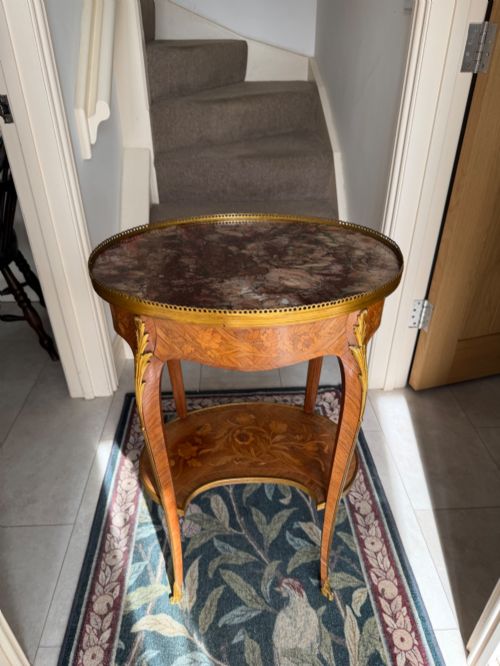
The prevailing designs draw heavily on Louis XV and Louis XVI revivals, alongside Napoleon III and Empire styles. These take the form of round guerdons, kidney-shaped stands, and multi-shelf display units intended to maximise surface area while maintaining a delicate footprint.
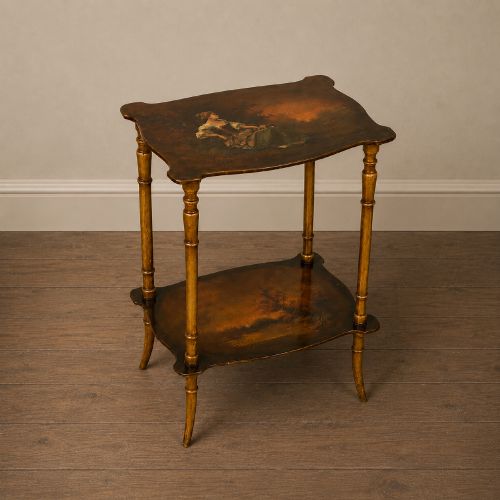
Many examples incorporate multiple tiers supported by slender uprights, featuring inlaid shelves connected by brass or ormolu mounts. Others offer marble tops combined with canework, mirror glass or hand-painted decorative panels to suit formal drawing rooms or boudoirs.
How They Were Made
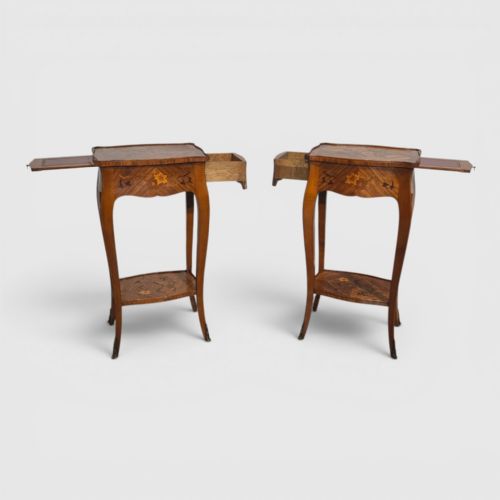
Cabinetmakers constructed these tables using a foundation of native and exotic timbers such as mahogany, walnut, kingwood, rosewood, amboyna and satinwood. Marquetry and parquetry veneers were meticulously cut and laid in floral or geometric patterns across the top and lower tiers.
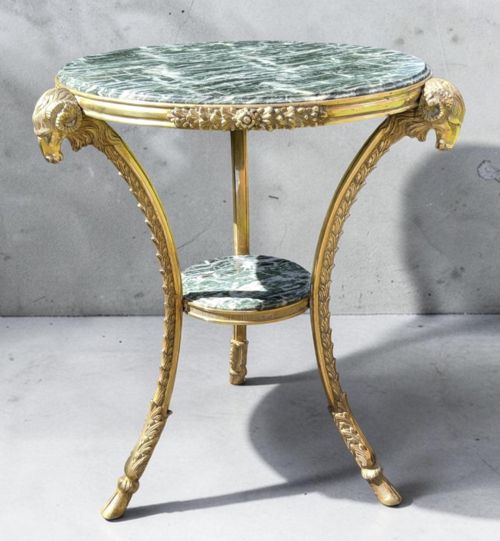
Metalwork played a defining structural and decorative role, utilising cast brass and ormolu mounts, edgings, ram's head details and gallery rails. Insets of white or coloured marble provided heavy, cool surfaces on top tiers, while occasional pieces integrated mirrored glass or canework into the design.
French Tiered Accent Table Retail Price Guide 2026
Typical asking prices for french tiered accent table among the pieces listed under this phrase on Sellingantiques today, from the lower quarter to the upper quarter. They describe what is for sale here now, not the wider market.
Materials documented in the inventory range from hardwoods like mahogany, walnut and kingwood to polished marble, brass, ormolu and mirror glass.
What Varies in Quality
The refinement of the marquetry inlay and the crispness of the bronze or ormolu casting separate standard production pieces from workshop masterpieces. Fine examples exhibit tight, seamless timber joints and substantial cast mounts that are securely fixed rather than simply glued in place.
The selection of cabinet woods and the presence of signed maker labels or attributions to prominent furniture houses elevate an item's standing. Proportion and the integration of secondary materials, such as heavy marble slabs or bevelled mirror glass, dictate the overall elegance of the finished stand.
François Linke·Edwards & Roberts·Gabriel Viardot·Haentgos Freres
The French Tiered Accent Table Glossary
- Étagère
- A set of open shelves or tiers designed for displaying small objects, ornaments or books. These freestanding units often feature slender uprights and multiple levels.
- Gueridon
- A small round table supported by a central pillar or multiple legs, frequently topped with marble and edged with a brass gallery. Originally introduced in seventeenth-century France, the form persisted through various revival periods.
- Marquetry
- Decorative veneer work where pieces of contrasting wood, shell or ivory are fitted together to form pictorial or geometric designs. This technique covered the flat surfaces of tabletops and tiers.
- Ormolu
- Gilded bronze mounts and decorative trimmings applied to the angles, feet and edges of fine furniture. The technique involves coating bronze with a finely ground mercury and gold amalgam.
- Parquetry
- A geometric mosaic of wood pieces used for decorative floors and tabletops. It differs from marquetry by relying strictly on repeating angular or rectilinear patterns.
French Tiered Accent Table: Frequently Asked Questions
What is a french tiered accent table used for?
These tables served historically as versatile surfaces for holding lamps, small decorative objects, porcelain, or writing materials in sitting rooms. Their multiple tiers allowed owners to display collections without occupying excessive floor space.
In modern interiors, they function effectively beside seating or in hallways to support table lamps, plants, and small personal items while adding period character to the room.
How do I identify the period of an etagere?
Dating relies on examining the timber construction, the style of the brass or ormolu mounts, and the prevailing revival aesthetic. Nineteenth-century pieces frequently display dense mahogany or walnut framing with classical or rococo revival motifs.
Later pieces from the Edwardian era or early twentieth century often incorporate lighter satinwood, painted details, or simplified Arts and Crafts influences that reflect changing interior tastes.
Are marble tops original to these tables?
Inset marble slabs are common on nineteenth-century French guerdons and occasional tables, particularly those designed in the Louis XV and Empire styles. The stone provided a durable, heat-resistant surface for lamps and drinks.
When inspecting a piece, check that the marble sits flush within its brass or wooden gallery and matches the age and wear patterns of the supporting frame.
How should I care for inlaid wood surfaces?
Inlaid marquetry and parquetry surfaces require protection from direct sunlight and extreme humidity changes to prevent the delicate veneers from lifting or drying out. Dust them regularly with a soft, dry cloth.
Avoid using silicone-based polishes or harsh chemical cleaners, applying a quality beeswax sparingly only when the timber appears dry and dull.