

French Tapestried Armchair
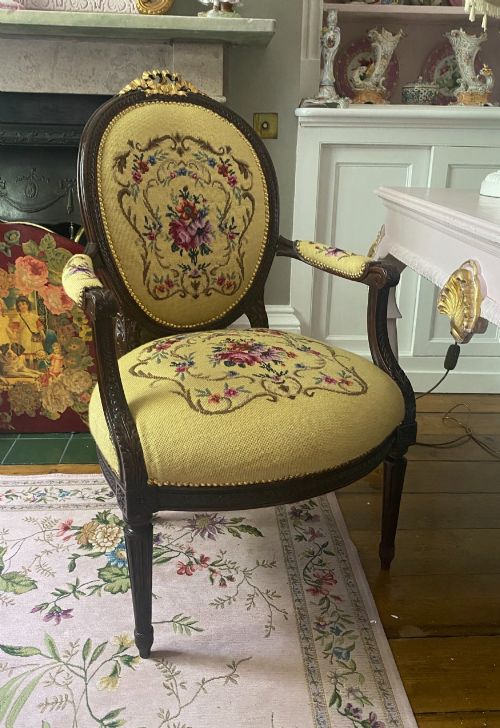
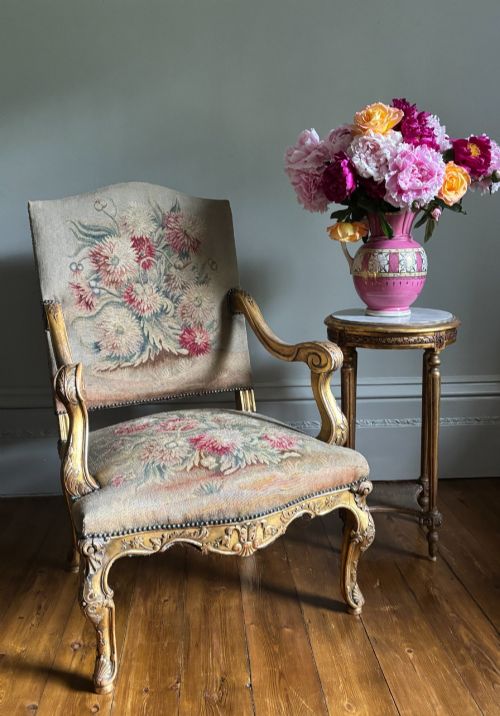
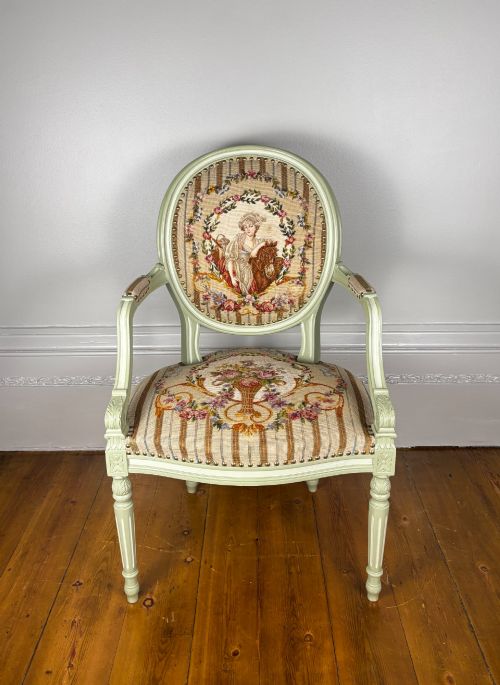
A french tapestried armchair brings together substantial historic woodwork and hand-worked needlepoint panels for a commanding seat in any room.
French Tapestried Armchair
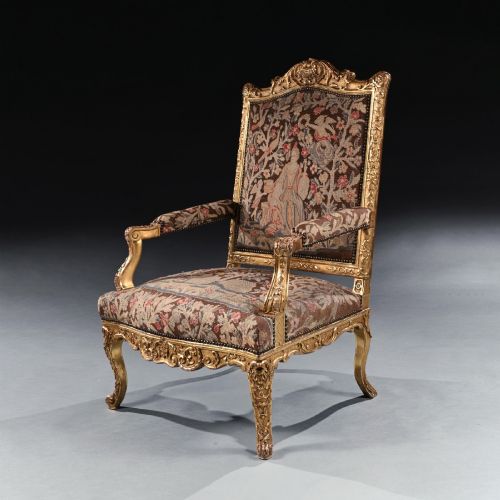
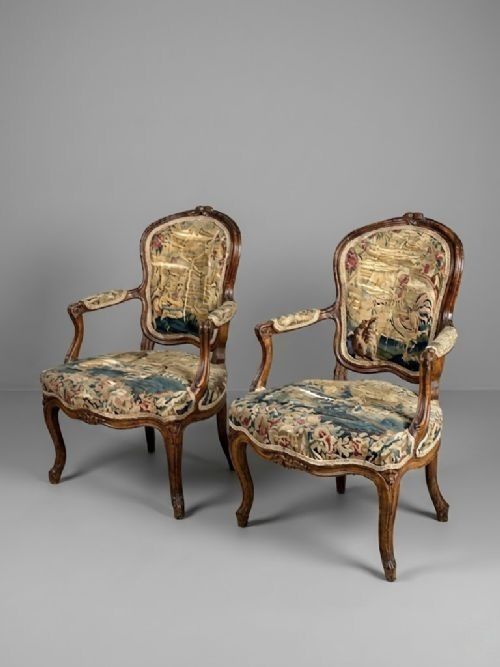
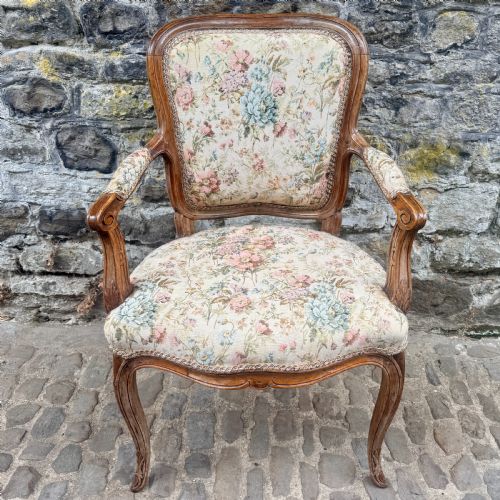
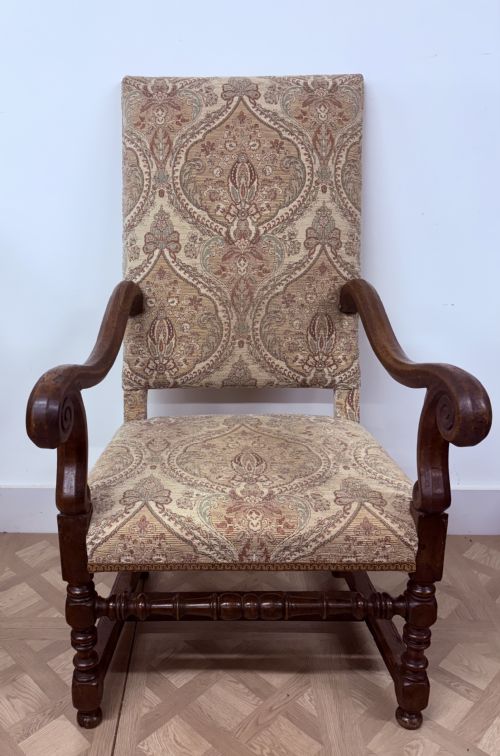
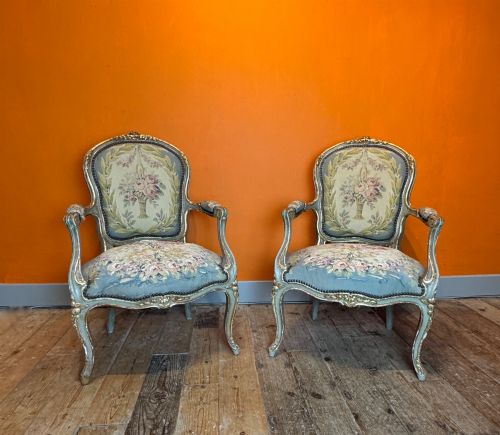
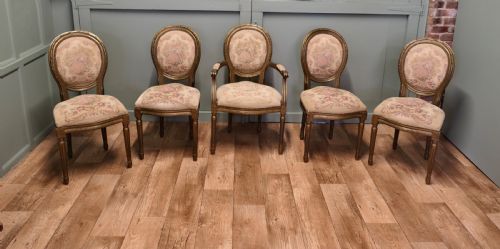
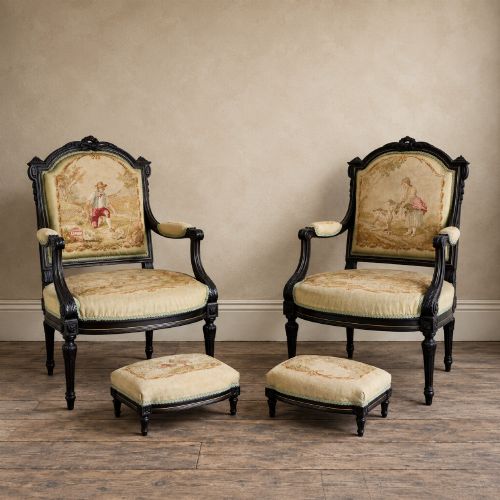
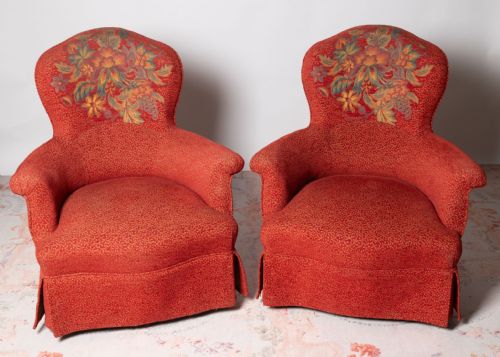
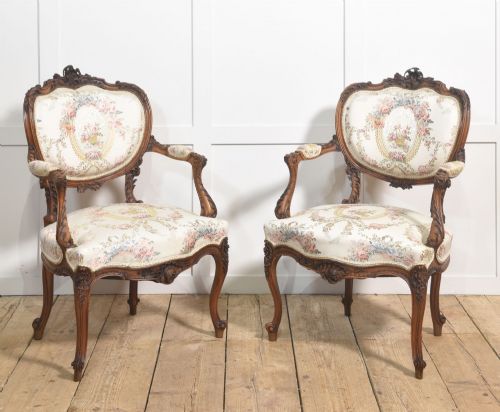
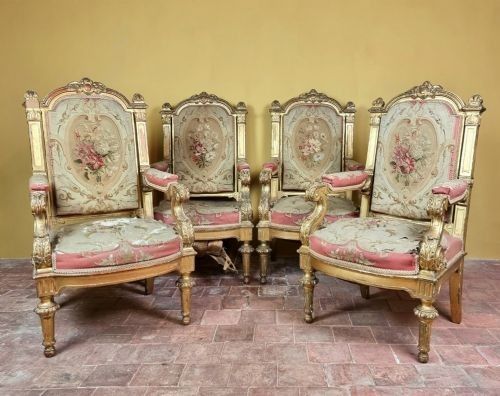
When you search for a french tapestried armchair, you encounter seating constructed in walnut, giltwood, and beech, upholstered in wool tapestry, needlework, and petit point fabric. The majority of pieces appearing here originate from the nineteenth century, often executed in revived Louis XV, Louis XVI, and Regence styles alongside provincial interpretations.
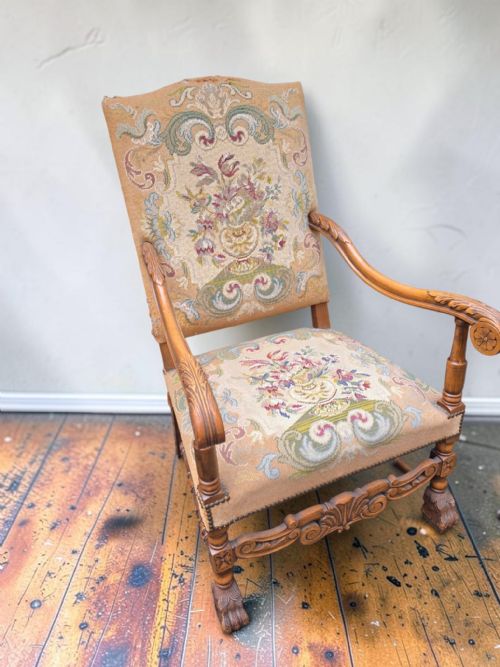
The physical forms range from open armchairs and fauteuils to large salon suites and throne armchairs. Frames span from the seventeenth through to the twentieth centuries, reflecting changing decorative tastes across French chateaux and provincial homes.
Materials and Construction
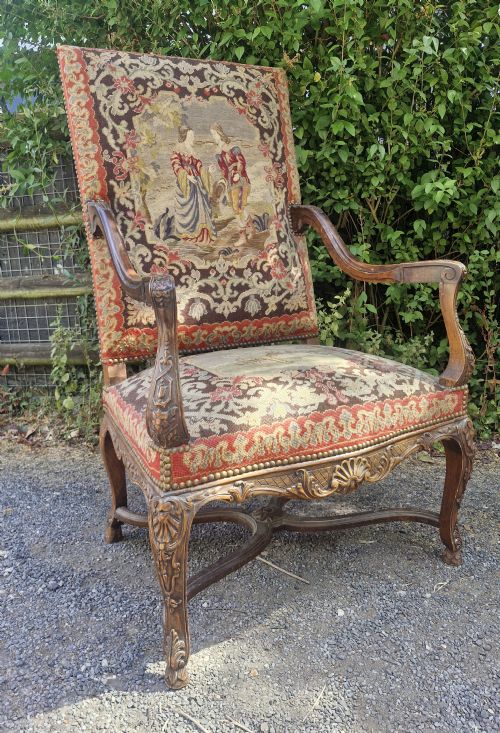
Makers shaped structural frames from hardwoods such as walnut and beech, alongside carved giltwood and painted finishes secured with brass tacks. These wooden supports carry detailed carving around the arms, rails, and crests.
Upholstery relies on heavy textile panels, specifically wool tapestry, needlework, and petit point panels depicting figurative or floral scenes. These covers are fastened directly to the frames, frequently edged with decorative brass tacks.
French Tapestried Armchair Retail Price Guide 2026
Typical asking prices for french tapestried armchair among the pieces listed under this phrase on Sellingantiques today, from the lower quarter to the upper quarter. They describe what is for sale here now, not the wider market.
Listings feature frames dated from the seventeenth up to the twentieth century, including distinct groupings from the eighteenth and nineteenth centuries.
Judging the Seating
Quality rests upon the crispness of the timber carving and the density of the needlepoint upholstery. Finer examples display deeply carved frames in walnut or giltwood paired with intricate petit point needlework panels.
Simpler provincial pieces or later revivals utilise softer detailing and standard tapestry fabric. The harmony between the original frame construction and the needlework cover dictates the overall success of the piece.
The French Tapestried Armchair Glossary
- Fauteuil
- An open-framed armchair with upholstered back and armrests, originating in France. These chairs typically feature exposed wooden arms.
- Petit point
- A form of needlepoint executed on fine single-mesh canvas using wool or silk threads. This technique allows for high pictorial detail on chair backs and seats.
- Giltwood
- Timber coated with a thin layer of gold leaf applied over a prepared gesso ground. This finish provides a bright reflective surface on formal eighteenth and nineteenth-century frames.
- Tapisserie
- The French term for woven or needleworked textile coverings used on upholstery. These panels display pictorial or botanical designs.
- Regence
- A transitional style of French design bridging the baroque and rococo periods. Characterised by restrained curving lines and symmetry.
French Tapestried Armchair: Frequently Asked Questions
How do I care for needlework upholstery?
Keep textile-covered chairs out of direct sunlight to prevent the wool threads from fading over time. Gentle vacuuming through a mesh screen helps remove dust without pulling the historic fibres.
Avoid using liquid cleaners on old tapestry fabric. Consult a specialist textile conservator if deeper cleaning becomes necessary.
Are these chairs comfortable for daily use?
Many salon and open armchairs were built for formal sitting rather than deep lounging. The supportive wooden frames and firm upholstery encourage an upright posture.
Some examples feature padded armrests and generous proportions that suit relaxation in a sitting room or study.
How do I identify a revival style frame?
Revival frames produced during the nineteenth century often copy eighteenth-century Louis XV or Louis XVI outlines. Examine the timber seasoning, tool marks, and construction joints to understand the true age of the wood.
Stylistic details frequently mix elements from different periods, reflecting Victorian or Edwardian interpretations of French design.
Can these armchairs fit into a modern interior?
The rich texture of wool tapestry and carved wood introduces historical warmth to contemporary spaces. Pairing an antique armchair with minimalist furniture creates a striking contrast.
Placing a single chair in a hallway or bedroom provides a practical seat while acting as a focal point.