

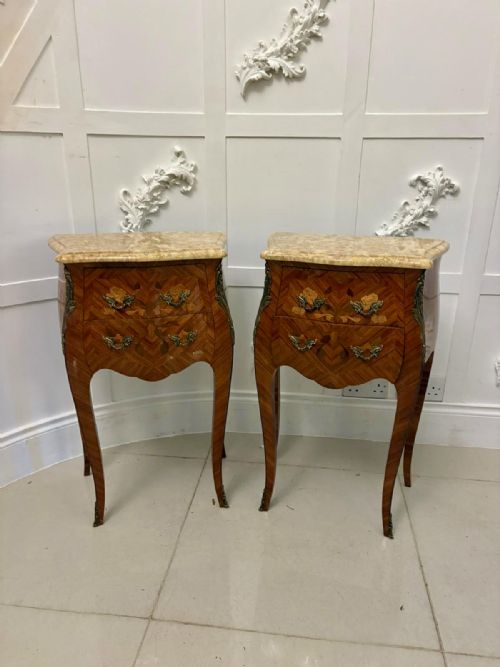


French Style Side Cupboards
French style side cupboards bring continental elegance to an interior, offering practical surface space and concealed storage through refined historic designs.
French Style Side Cupboards
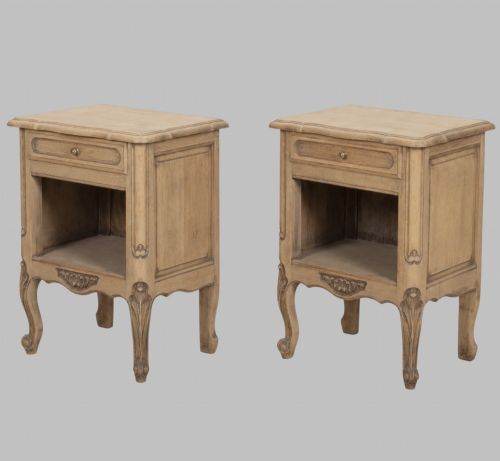
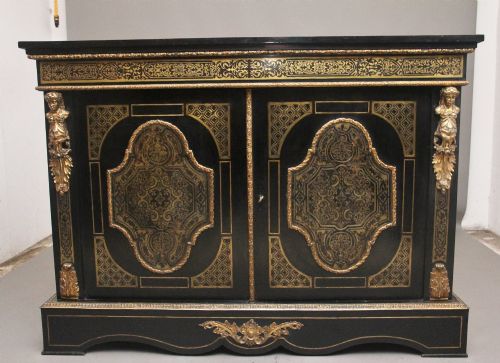
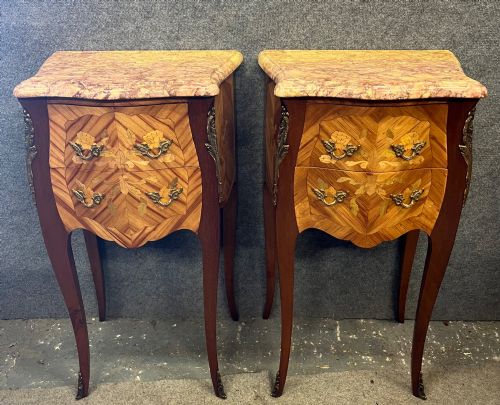
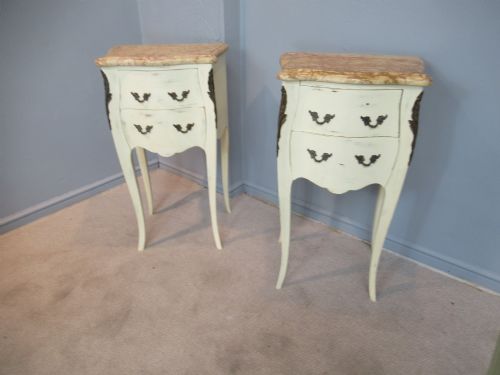
French style side cupboards encompass a diverse group of compact storage furniture, predominantly appearing as bedside chests, lamp tables, and smaller pier or display cabinets. Buyers seeking this search phrase often encounter pieces influenced by Louis XV and Louis XVI revivals, alongside French provincial and chateau interpretations.
The selection ranges from nineteenth-century walnut and kingwood examples to early twentieth-century iterations dated around nineteen thirty. Forms vary from demi-lune consoles and vitrines to twin-door buffets and serpentine commodes.
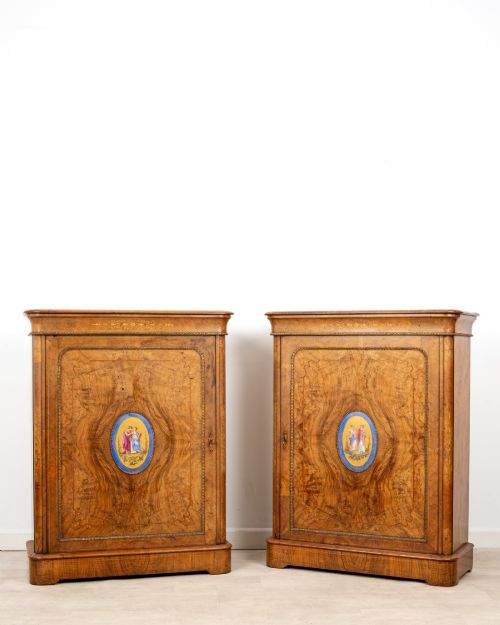
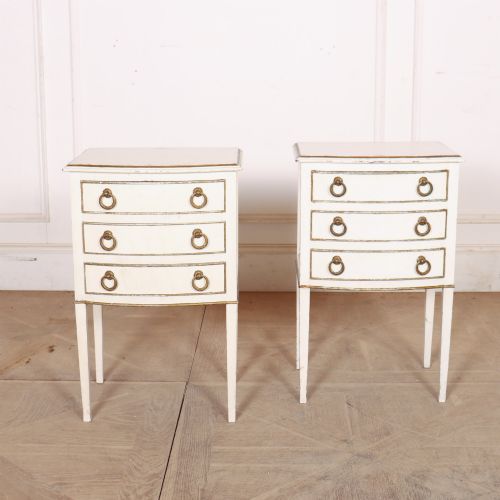
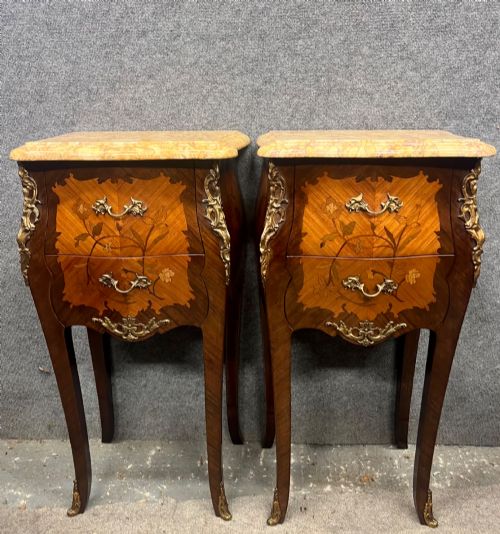
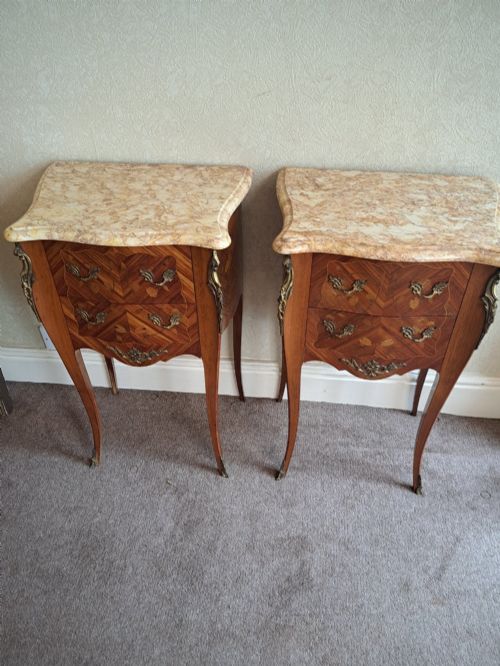
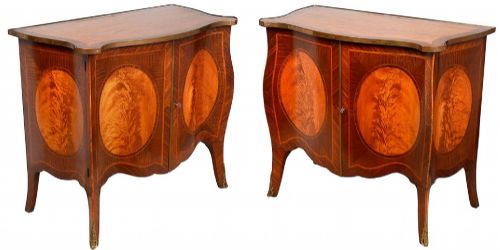
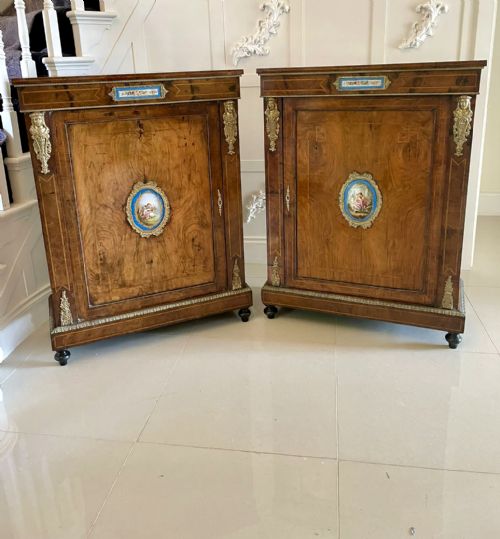
Originating largely from nineteenth-century and early twentieth-century workshops, these side cupboards frequently incorporate marble tops, porcelain plaques, and intricate marquetry. Pairs are notably common among the bedside chests and lamp tables listed.
Materials and construction
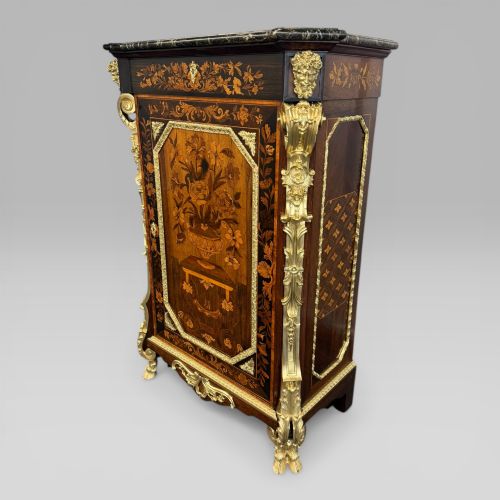
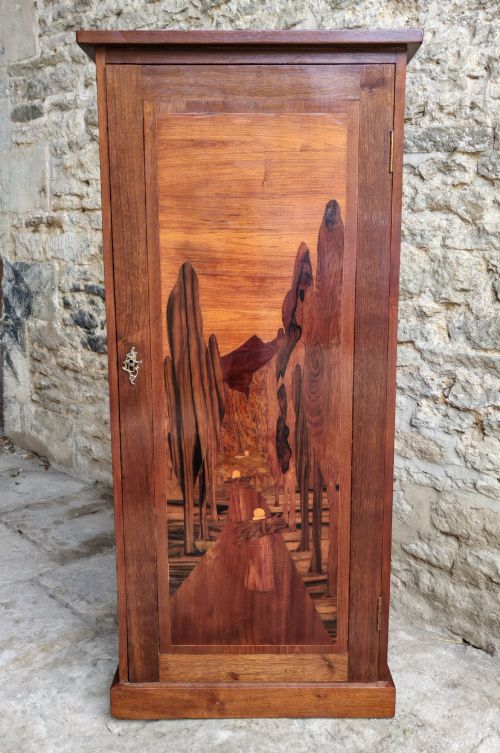
Cabinet makers utilised dense hardwoods such as walnut, kingwood, rosewood, and mahogany as foundations, frequently applying elaborate marquetry, parquetry, and burr walnut veneers to the surfaces. Ebonised finishes and painted treatments also appear across the nineteenth-century and twentieth-century examples.
Mounts cast in brass and ormolu complement marble tops and porcelain plaques, particularly on Louis XV and Louis XVI style pieces. Marquetry inlays and delicate ebony details further define the decorative vocabulary of these cabinets.
Several bedside chests double as lamp tables, ready to hold a midnight book or illuminate a darkened boudoir.
Markers of quality
Quality reveals itself in the precision of the marquetry and parquetry work, the crispness of ormolu mounts, and the selection of figured veneers such as burr walnut and kingwood. Superior pieces demonstrate meticulous hand-fitting of brass details and precise alignment of doors and drawers.
The integration of substantial marble slabs, hand-painted porcelain plaques, and attribution to known makers or workshops elevates certain cabinets above standard production. The depth of finish and the restraint or exuberance of the carving indicate the maker's tier.
Edward Holmes Baldock·Maison Millet·Joseph Zwiener·Beurdeley
The French Style Side Cupboards Glossary
- Ormolu
- Gilded bronze mounts applied to furniture. This technique gained widespread use during the eighteenth century and saw a revival in nineteenth-century French cabinet making.
- Marquetry
- Decorative patterns formed by inserting pieces of wood, veneer, and other materials into a structured wooden surface. It often depicts floral or geometric motifs on these cabinets.
- Parquetry
- Geometric mosaic woodwork used for floors and furniture surfaces. It creates repeating patterns like squares and lozenges across tabletop and cabinet doors.
- Pier Cabinet
- A narrow cabinet designed to stand against the wall space between windows. These pieces often feature glass doors or porcelain mounts.
- Vernis Martin
- A type of simulated Japanese lacquer developed in France during the eighteenth century. It involves successive layers of varnish to achieve a translucent coloured finish.
French Style Side Cupboards: Frequently Asked Questions
What are French style side cupboards?
French style side cupboards are decorative storage items including bedside chests, lamp tables, and small pier cabinets inspired by historic French design movements. They provide surface space and enclosed shelving for domestic rooms.
Most examples date from the nineteenth century through to the early twentieth century, featuring distinctive details such as marble tops and marquetry veneers.
How were these cupboards used?
These cabinets served multiple domestic functions, functioning primarily as bedside storage, lamp tables, or compact display units in salons and bedrooms. Their enclosed cupboards kept personal items out of sight.
Larger variations operated as hall cupboards, buffets, or music cabinets to hold domestic paraphernalia while enhancing the room's decor.
How do I identify Louis styles?
Louis XV style pieces typically display asymmetrical curves, cabriole legs, and flowing floral marquetry. They embrace organic shapes and ornate ormolu mounts.
Louis XVI style furniture introduces neoclassical symmetry, straight tapered legs, fluted columns, and geometric parquetry patterns reflecting a turn toward classical restraint.
Where should I place a side cupboard?
These versatile pieces suit bedrooms as bedside chests or lamp tables where their marble tops offer practical, wipe-clean surfaces. They also function well in hallways or living spaces as accent cabinets.
Pair them beside seating areas or against narrow wall spaces to display decorative objects or lamps while utilising the interior storage.