



French Style Porcelain Clock
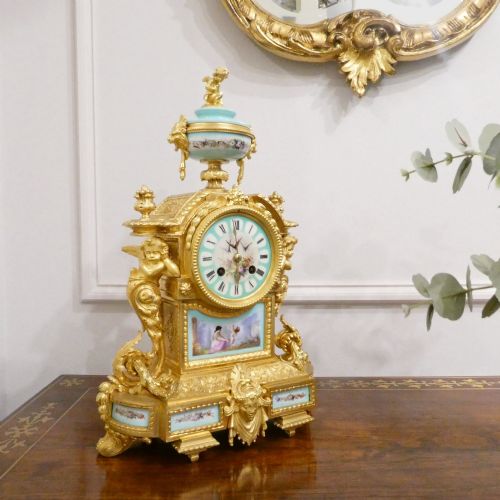
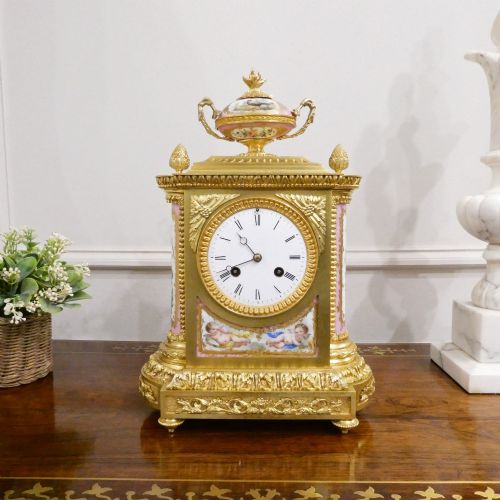
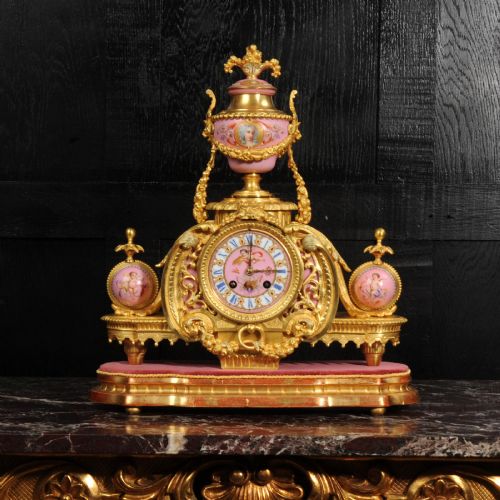
A french style porcelain clock combines decorative ceramic panels with gilt metal mounts to anchor a nineteenth-century interior.
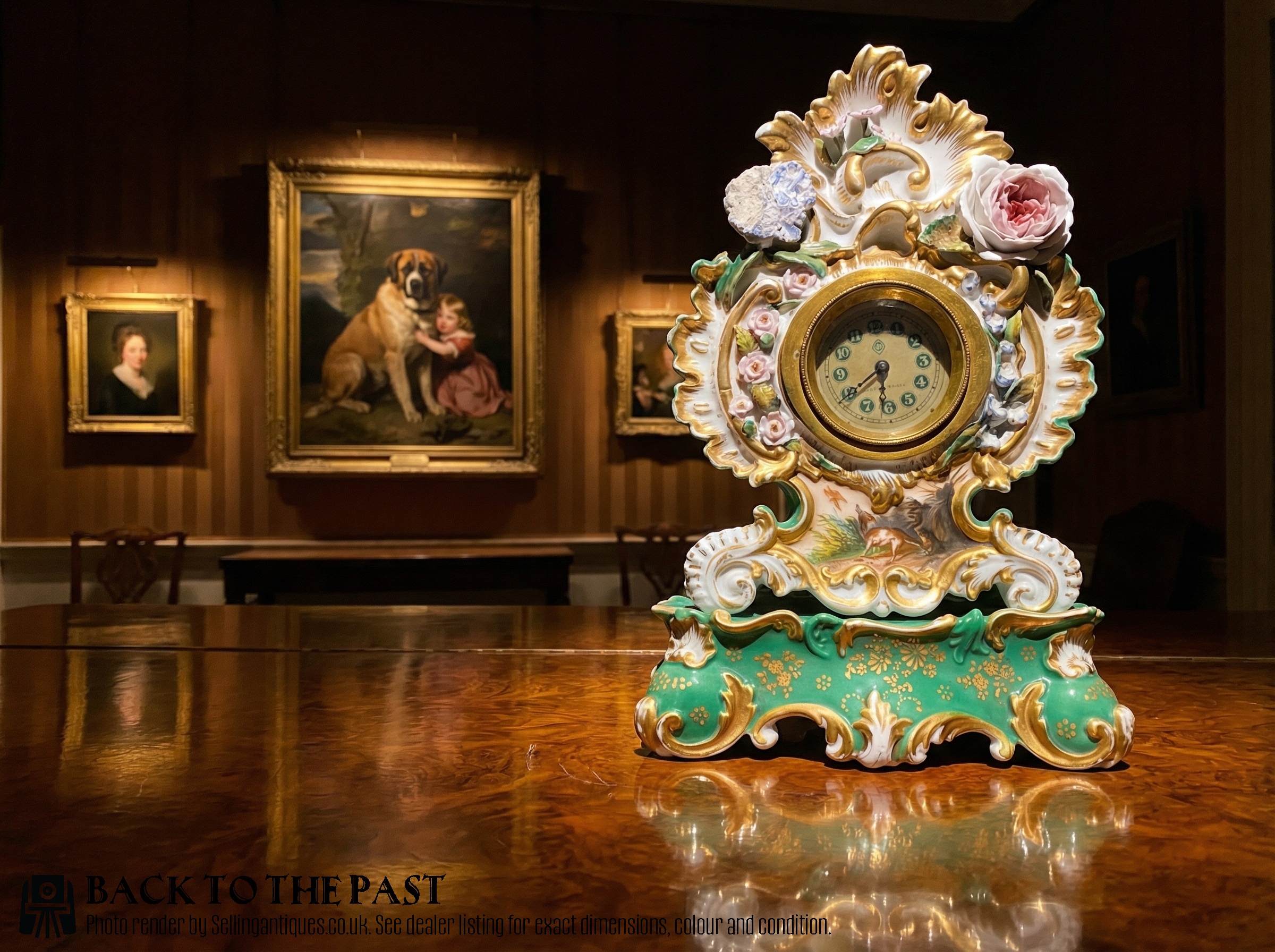
French Style Porcelain Clock
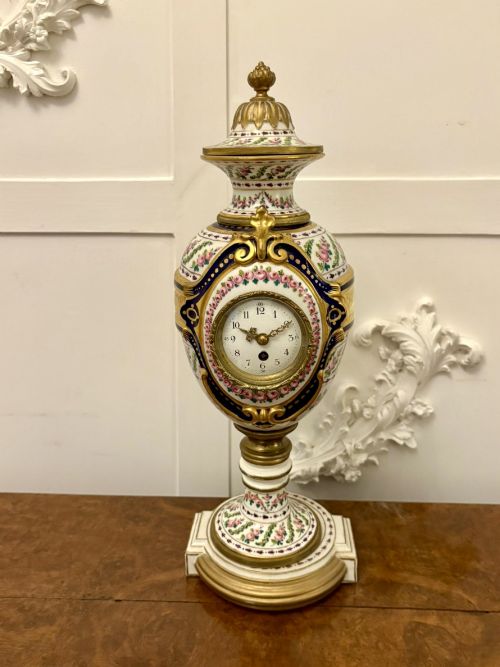
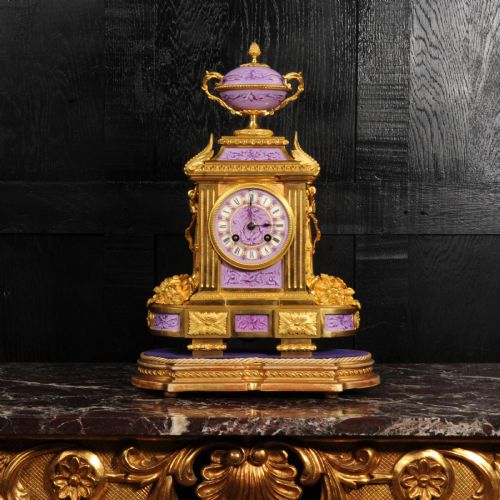
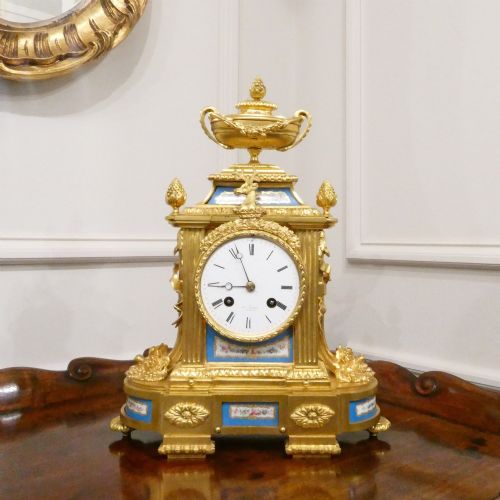
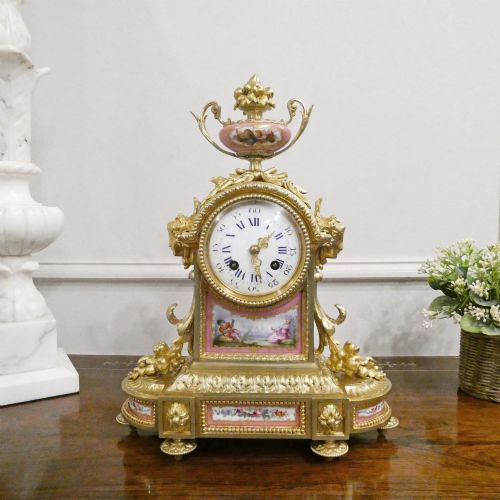
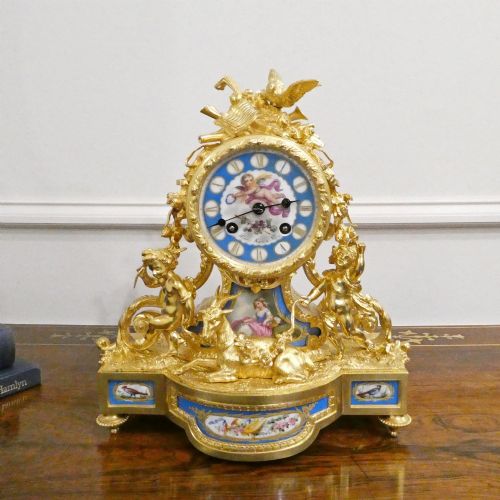
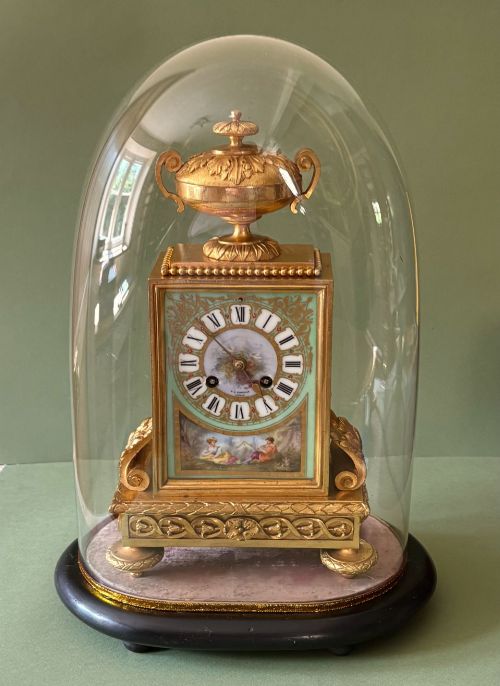
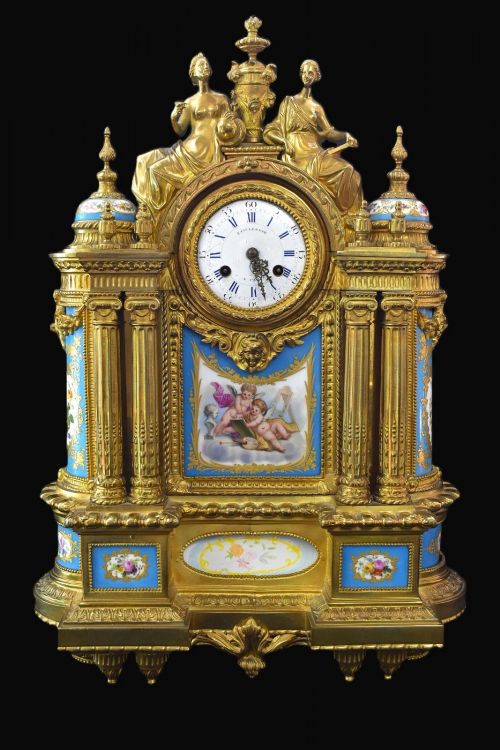
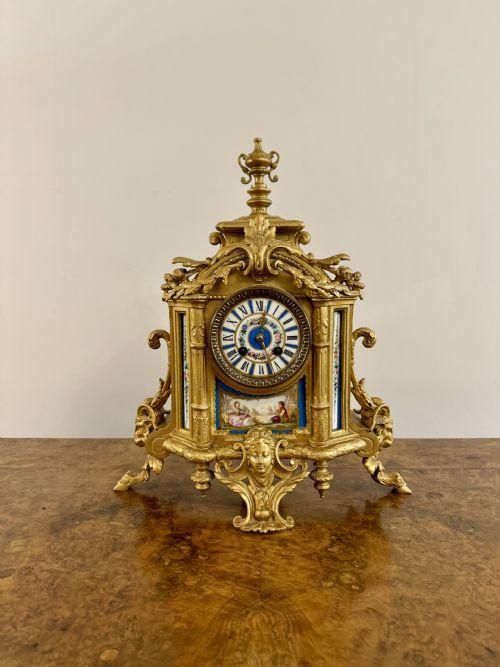
A french style porcelain clock typically takes the form of a mantel clock, a clock garniture set, or an urn-shaped body designed for placement on a fireplace mantel or console table. The most common examples date from the nineteenth century, spanning periods such as the Victorian era, Napoleon III, and the 1850s to the 1900s.
These timepieces often incorporate stylistic revivals, particularly French Rococo Revival, Louis XVI Style, and Second Empire designs. Many feature matching garniture pieces or sit beneath glass domes to protect the delicate porcelain and metalwork.
Makers and horologists whose names appear on these clocks include Achille Brocot, Jean-Baptiste Delettrez, Henry Marc, Japy Freres, Etienne Lenoir, PH Mourey, Le Roy & Fils, and Rodier, alongside factory names like Sèvres, Meissen, and KPM Berlin.
Materials and construction methods
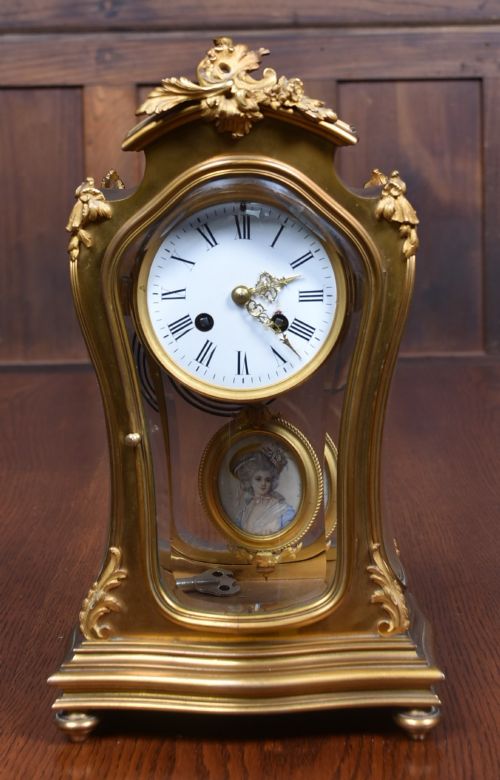
Makers constructed the primary case structures using gilt bronze, ormolu, and gilded metal, cast into ornate rococo or classical architectural forms. These metal mounts frame glazed ceramic dials and hand-painted porcelain plaques or urn bodies.
The porcelain components frequently display coloured grounds such as bleu de roi or blue celeste, decorated with hand-painted scenes or floral motifs. Enamel is utilised for the clock face numerals, while glass elements protect the delicate movements and dials.
Listings feature porcelain, gilt bronze, ormolu, and enamel across Victorian and Napoleon III periods.
Distinctions in execution and design
The sophistication of the bronze casting and the precision of the gilding set individual pieces apart, alongside the delicacy of the hand-painted porcelain panels. Clocks featuring signed movements or dials by recognised makers demonstrate higher levels of horological and artistic collaboration.
The presence of complete garniture sets or original glass domes enhances the structural integrity and visual cohesion of the ensemble.
Jean-Baptiste Delettrez·Achille Brocot·Henry Marc·Japy Freres·Etienne Lenoir·PH Mourey·Le Roy and Fils·Sèvres·Meissen·KPM Berlin
The French Style Porcelain Clock Glossary
- Ormolu
- Gilded bronze produced by applying a mercury-gilding mixture to cast brass or bronze. This technique creates a rich, durable golden surface on nineteenth-century clock mounts.
- Garniture
- A set of matching decorative objects, typically comprising a central clock flanked by two matching urns or candelabra. They were designed as a unified mantel display.
- Sèvres
- A famous French porcelain manufactory. Pieces often bear distinct painted marks and fine blue ground colours.
- Lyre Clock
- A clock shaped like the ancient musical instrument, featuring an open-frame body often executed in porcelain and gilt bronze.
- Movement
- The internal mechanical workings of the clock. Eight-day movements require winding weekly to maintain accurate timekeeping.
French Style Porcelain Clock: Frequently Asked Questions
How do I wind a french style porcelain clock?
Use the provided key to turn the winding squares on the dial carefully until resistance is felt. Avoid overwinding to protect the internal spring mechanism.
Ensure the clock rests on a level surface so the pendulum swings evenly and maintains correct time.
What is a clock garniture set?
A garniture set includes a central clock accompanied by matching side ornaments such as decorative urns. These items were manufactured together to create a symmetrical mantel display.
They share identical porcelain grounds, gilt bronze mounts, and stylistic motifs.
How do I identify the period of the clock?
Examine the stylistic details, such as Louis XVI Revival symmetry or Rococo asymmetrical scrolls, alongside maker stamps on the backplate. Nineteenth-century pieces often display specific foundry marks and hand-painted ceramic signatures.
Comparing the dial enamel style and mounting techniques also helps narrow down the decade of production.
Where should I place the clock in a room?
Position the piece on a sturdy mantelpiece, console, or sideboard away from direct sunlight and moisture. Stable placement prevents vibrations that can disrupt the pendulum.
Keep glass domes intact if included, as they protect delicate hand-painted porcelain surfaces from dust.