


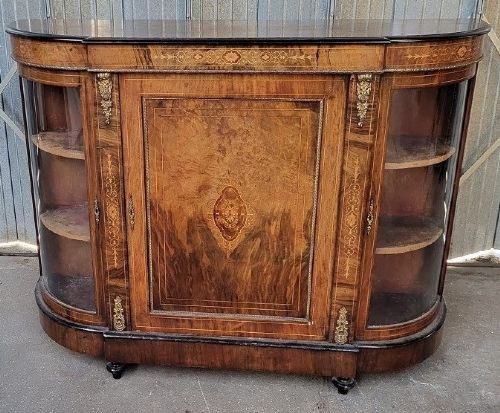

French Style Marquetry Sideboard
A french style marquetry sideboard brings together rich timber veneers and polished metal mounts to anchor a formal interior.
French Style Marquetry Sideboard
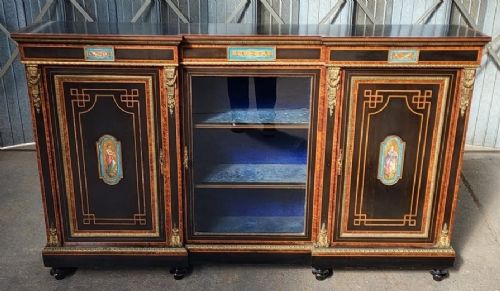
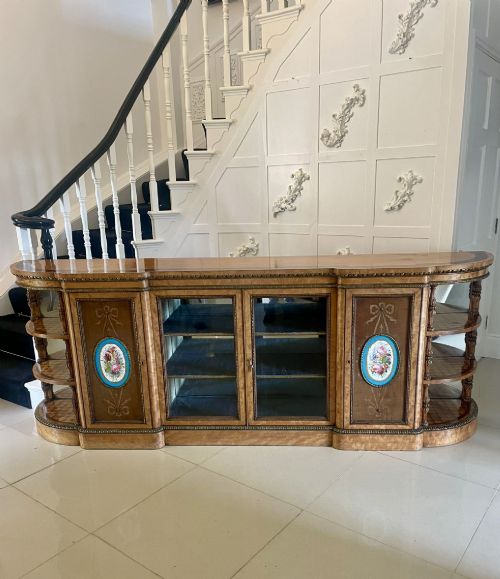
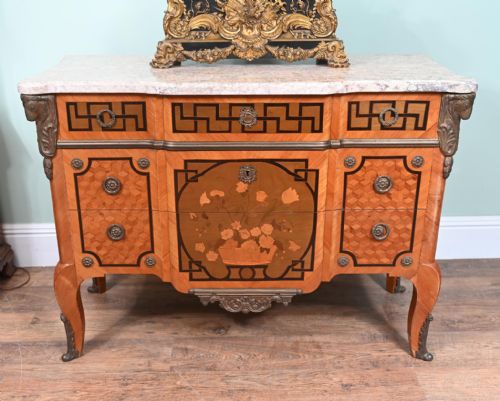
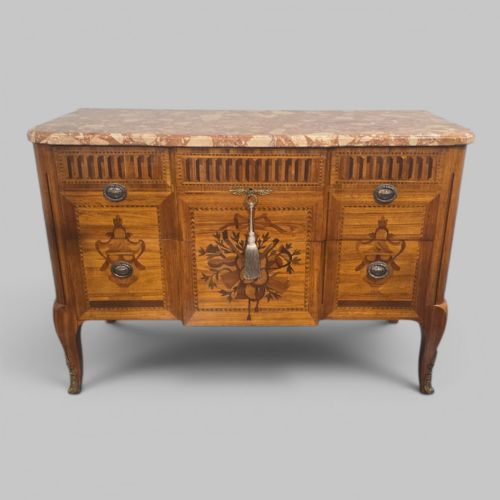
A french style marquetry sideboard encompasses low credenzas, serpentine commodes, and side cabinets spanning the nineteenth and early twentieth centuries. These pieces reflect Victorian interpretations of continental design alongside items produced directly in Louis phases.
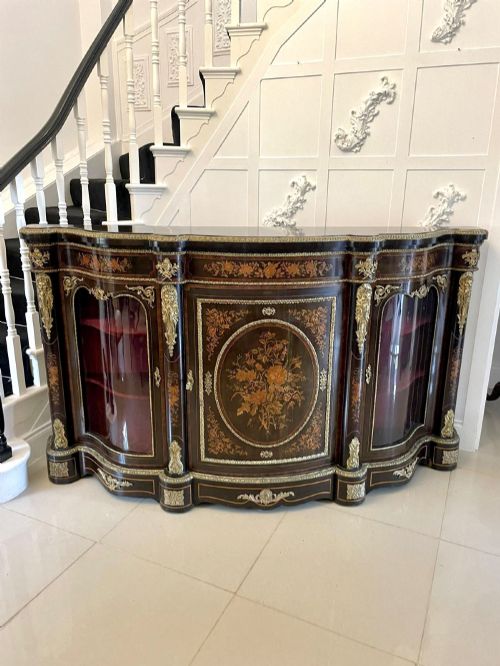
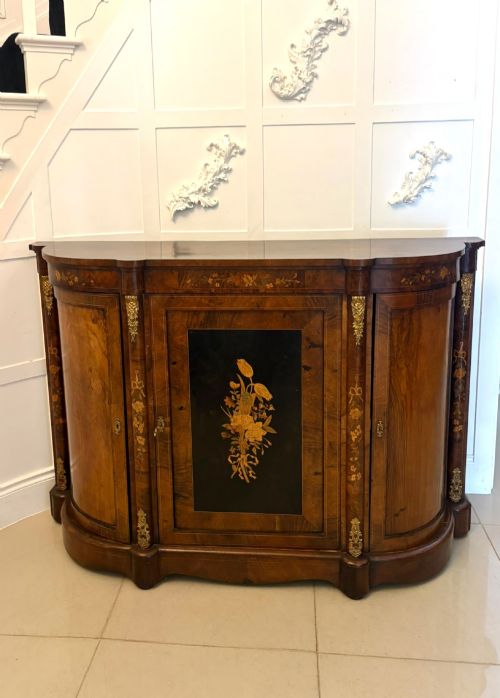
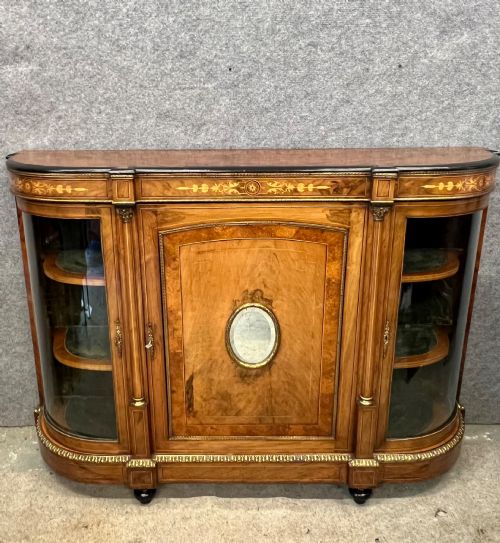
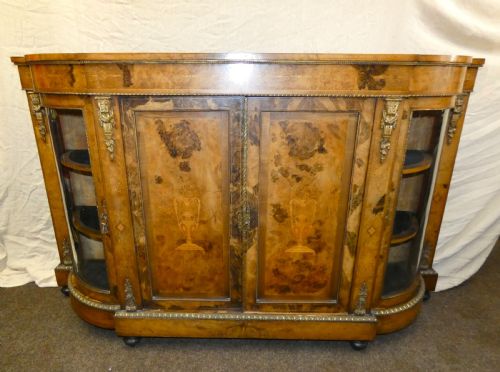
The version most commonly met on this page is the Victorian walnut credenza featuring floral marquetry and shaped doors. These low-profile storage items often sit upon plinths and display extensive wood grain alongside decorative veneers.
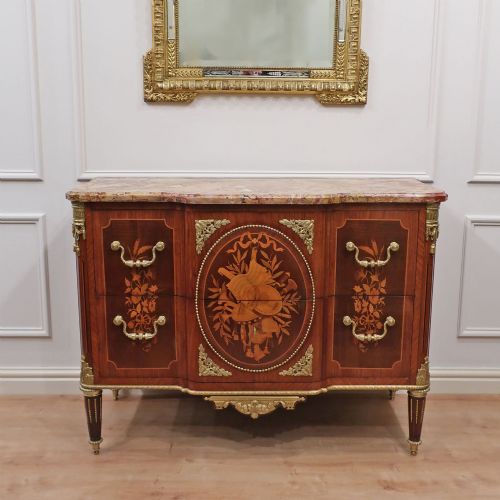
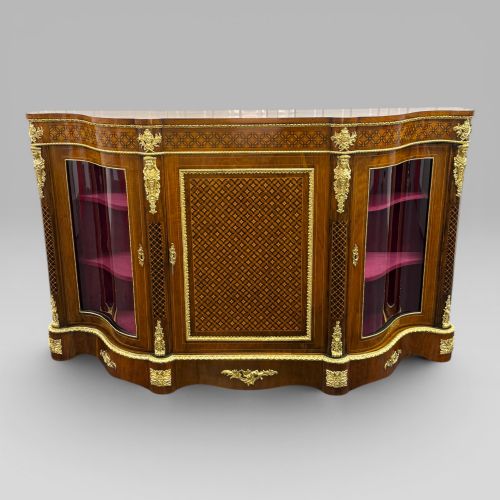
Makers drew on Louis XV and Louis XVI aesthetic traditions to create functional cabinets for principal rooms. Forms range from straight-fronted cupboards to serpentine configurations with glass doors and marble surfaces.
Distinctions in craftsmanship
The finest examples display meticulous precision in the cutting and fitting of individual marquetry veneers, where complex floral motifs flow seamlessly across doors and drawers. Lesser pieces rely on stamped or painted decoration with simpler repeating borders.
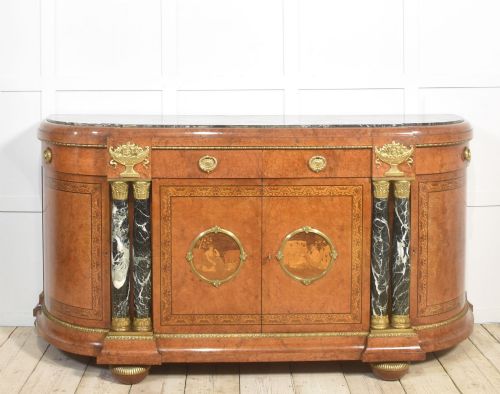
Cast metal mounts separate standard production from exhibition-grade work through crisp chasing and heavy gilding. Finer pieces integrate heavier marble slabs with shaped edges that follow the exact contours of the underlying timber carcass.
Internal secondary timbers and drawer linings indicate the underlying care taken during manufacture. Superior cabinets maintain tight door seals and smooth drawer movement despite decades of environmental changes.
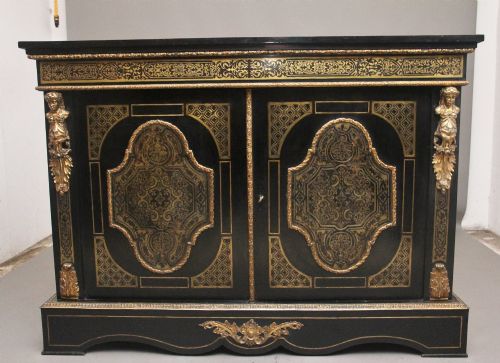
Listings demonstrate a strong preference for burr walnut and ebonised finishes across Victorian and nineteenth-century examples.
Maison Gagneau·Joseph Zwiener
The French Style Marquetry Sideboard Glossary
- Marquetry
- Decorative patterns formed by fitting together thin slices of wood veneer onto a structural surface. This technique allows for detailed floral and pictorial designs across cabinet doors.
- Ormolu
- Gilt bronze mounts applied to furniture edges and corners for decorative effect. The metal is cast and chased before receiving a gold finish.
- Credenza
- A low dining room or parlour cabinet used for storage and display. Victorian examples often incorporate central cupboards flanked by curved glass doors.
- Commode
- A low chest of drawers or cabinet with doors, originating in France. These pieces frequently feature marble tops and shaped fronts.
- Serpentine
- A curved furniture front that undulates with a convex centre flanked by concave sides. This shape requires advanced carpentry skills to construct accurately.
French Style Marquetry Sideboard: Frequently Asked Questions
Where did these sideboards go in the home?
These cabinets traditionally occupied principal reception rooms, parlours, and dining spaces where hosts displayed porcelain, silver, and decorative objects. Their low profiles allowed wall space above for mirrors or paintings.
In modern interiors, they function well as credenzas in living areas or as statement storage pieces in hallways. Their flat upper surfaces provide practical display areas for lamps and decorative items.
How do I care for marble tops?
Marble surfaces require gentle cleaning with warm water and neutral soap to preserve the polished finish. Acidic liquids such as wine or citrus juice can etch the stone if left unattended.
Applying a specialist stone wax helps protect the surface from moisture rings and daily wear. Avoid abrasive cleaners that scratch the polished stone.
What is the difference between a credenza and a commode?
A credenza is typically a low cabinet featuring a combination of central cupboards and curved side display sections. They often incorporate glass panels to showcase collections.
A commode generally refers to a chest of drawers or a low cupboard with drawers above doors, frequently topped with marble. Commodes tend to have more pronounced serpentine or bombé fronts.
How do I identify Louis XV style?
Louis XV style furniture relies on asymmetrical curves, cabriole legs, and naturalistic floral motifs without rigid symmetry. Ormolu mounts on these pieces often feature C-scrolls and foliage.
The aesthetic emphasises flowing lines and a lighter visual weight compared to earlier formal styles.