


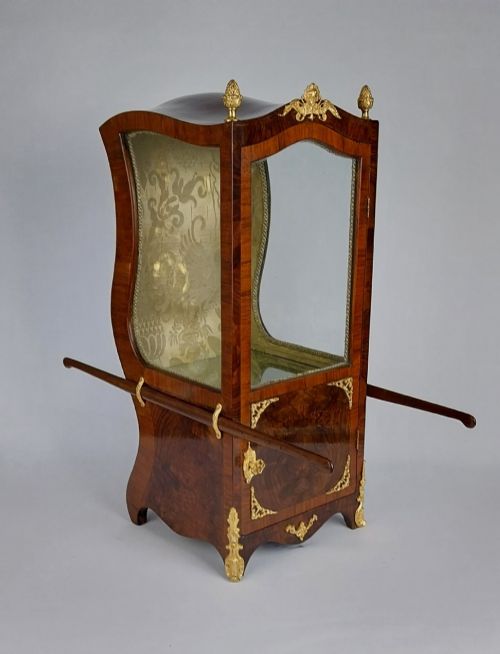

French Style Display Table
These french style display tables bring continental elegance to interiors, offering glass-topped surfaces designed to showcase fine objects and treasured collections.
French Style Display Table
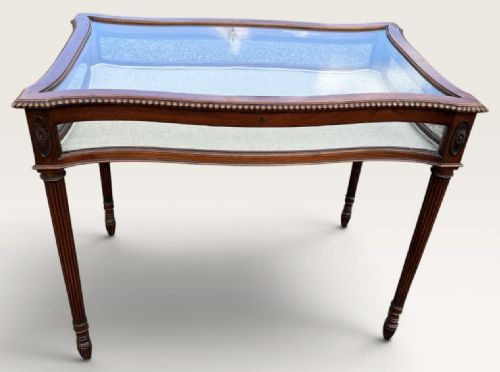
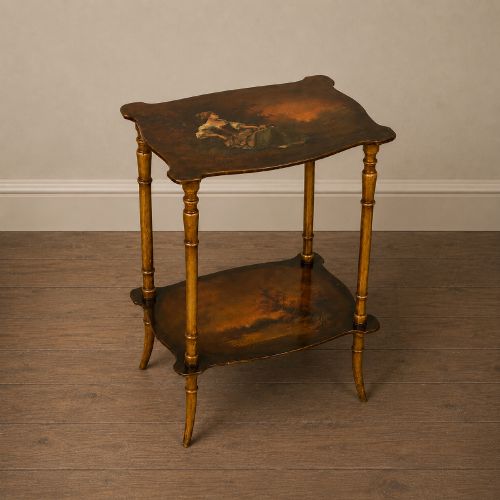
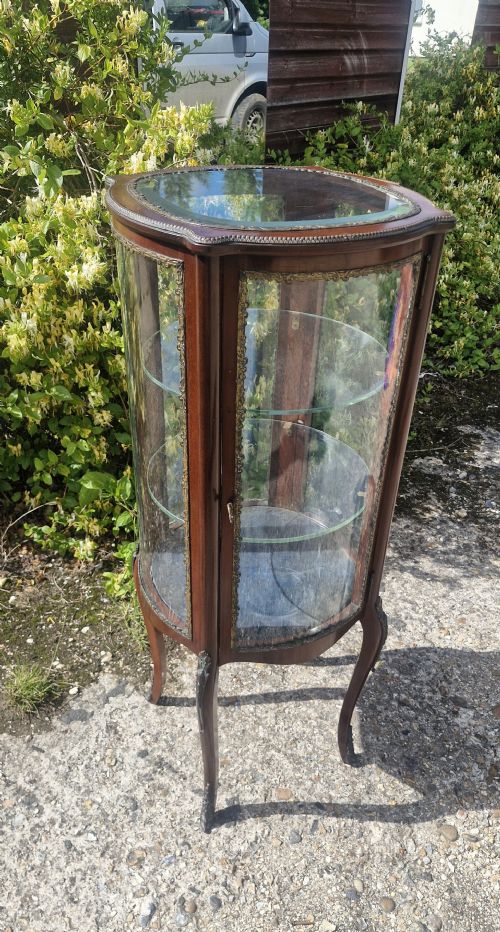
A french style display table combines the functional surface of an occasional table with the glass-enclosed compartment of a vitrine or bijouterie case. These pieces emerge across the nineteenth and early twentieth centuries, drawing heavily upon Louis XV and Louis XVI design vocabularies.
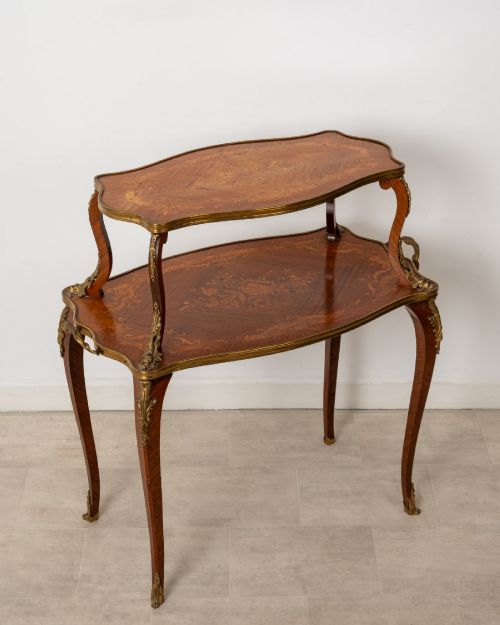
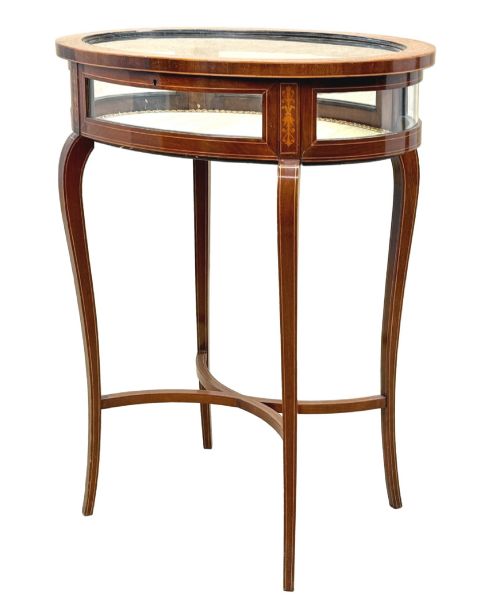
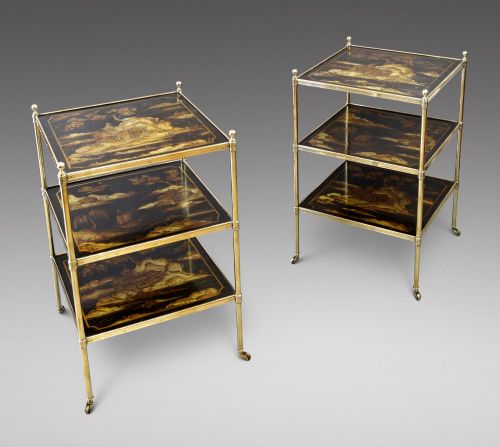
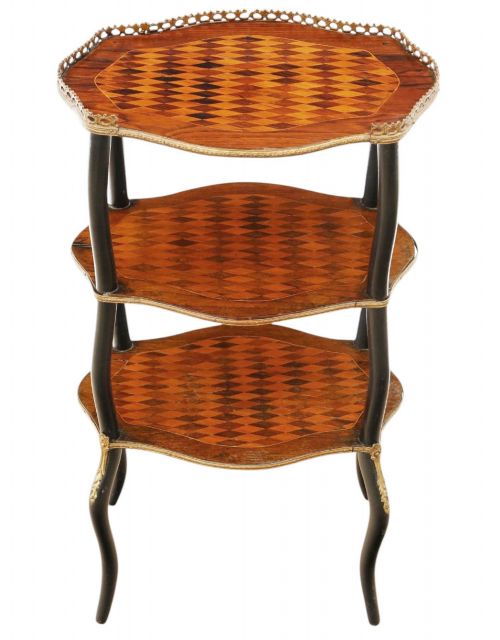
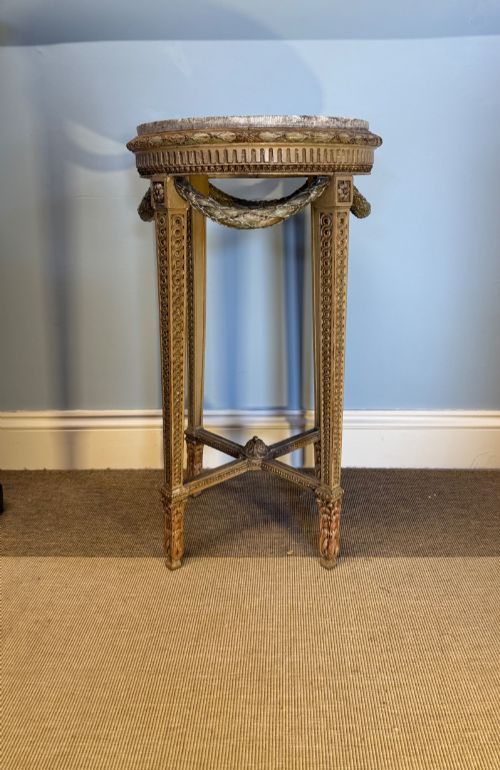
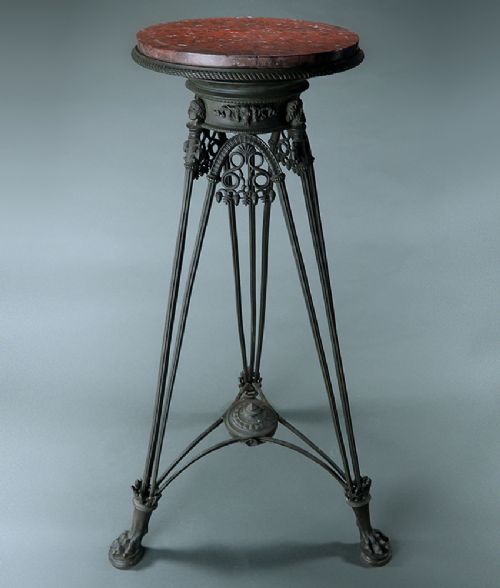
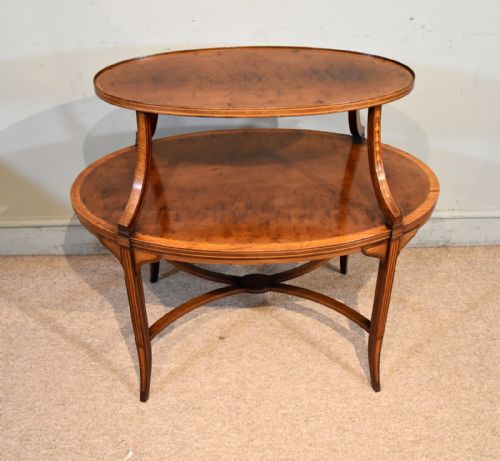
Buyers encounter serpentine and oval bijouterie tables alongside multi-tiered étagères and marble-topped stands. The common purpose across these variations is the presentation of small valuables, jewellery, and curiosities beneath glass.
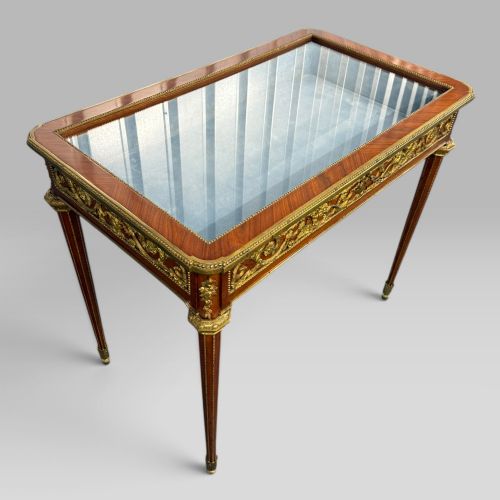
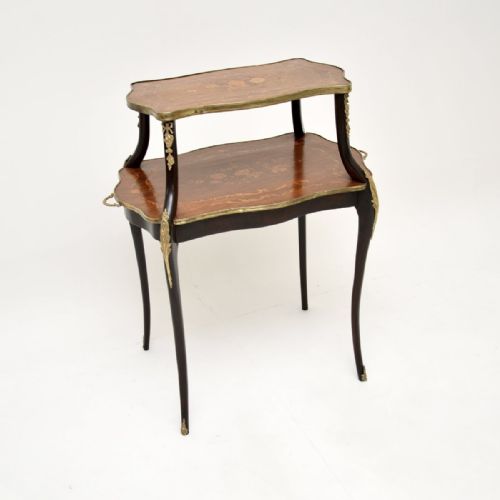
The materials span rich hardwoods like mahogany, walnut, kingwood, and rosewood, frequently enhanced by marquetry and parquetry. Gilt metal mounts and ormolu framing define the continental aesthetic found throughout the period selections.
Materials and construction
Cabinetmakers constructed the structural carcasses using solid timbers such as mahogany and walnut, often applying decorative veneers of kingwood or rosewood in elaborate marquetry patterns. Complex geometric parquetry and inlaid motifs require precise hand-cut wood segments assembled onto the primary frames.
Cast ormolu and gilt bronze mounts decorate corners, legs, and aprons, secured with traditional fixings. Glass panels are fitted into hinged or glazed lids, allowing interior access for displaying objects while protecting them from dust.
One remarkably adaptable specimen served its later years carrying Breitling watch advertisements beneath its glass.
Judging quality and craftsmanship
Quality rests in the precision of the cabinetwork and the crispness of the cast ormolu mounts. Finer examples display fluid marquetry lines, tight wood joints, and heavy gilded bronze rather than lighter pressed brass.
The refinement of the timber selection dictates value, with well-figured kingwood and rosewood veneers showing deep natural grain patterns. Original glass panes, sturdy hinges, and balanced proportions further separate standard production pieces from master workshop outputs.
Edwards & Roberts·Gabriel Viardot·François Linke
The French Style Display Table Glossary
- Bijouterie table
- A specialised display table featuring a glass-topped compartment specifically designed for holding jewellery and small decorative items. These pieces often lift open or slide to reveal a velvet-lined interior.
- Étagère
- An open tiered piece of furniture used for display and storage. Multiple shelves allow for the arrangement of ornaments and small objects across distinct vertical levels.
- Ormolu
- Gilded bronze applied as a decorative mount to furniture pieces. The technique involves treating bronze with gold amalgam to achieve a durable golden finish.
- Marquetry
- Decorative veneer work arranged in pictorial or geometric patterns using various coloured wood timbers. Artisans cut thin wood slices to create intricate surface designs.
- Parquetry
- A geometric mosaic of wood pieces used for decorative surface inlay on tabletops and cabinets. The technique creates repeating patterns like chequers or cubes.
French Style Display Table: Frequently Asked Questions
What is a french style display table used for?
These tables serve primarily to exhibit small collectables, pocket watches, medals, and jewellery inside a protective glass casing.
They function simultaneously as decorative occasional tables and secure vitrines within a drawing room or study.
How do I date a french style display table?
Dating relies upon examining the timber species, construction methods, and stylistic revival periods such as Louis XV or Edwardian interpretations.
Hardware styles, screw types, and the composition of ormolu mounts provide further clues to nineteenth and twentieth-century origins.
Are these tables sturdy enough for daily use?
Most examples are constructed from dense hardwoods like mahogany and walnut, making them structurally sound for holding decorative items.
The glass tops require careful handling, and weight should be limited to prevent strain on the display compartment hinges.
How do I clean and maintain the wood and glass?
Maintain the wood surfaces using traditional beeswax applied sparingly with a soft cloth to nourish the grain without buildup.
Clean the glass display panels with a mild glass cleaner sprayed onto a cloth rather than directly onto the piece to protect adjacent wood and metal mounts.