


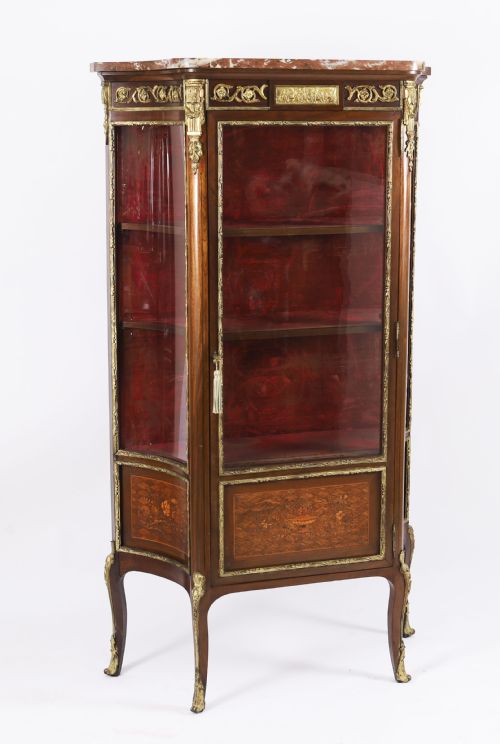


French Style China Vitrine
A french style china vitrine brings light and display space into a room, offering glazed panels to showcase porcelain and decorative objects.
French Style China Vitrine
When you search for a french style china vitrine, you encounter pieces designed to display porcelain, glass, and precious objects behind glass panels. The selection spans the nineteenth century into the Edwardian era, taking the form of display cabinets, bookcases, and vitrines.
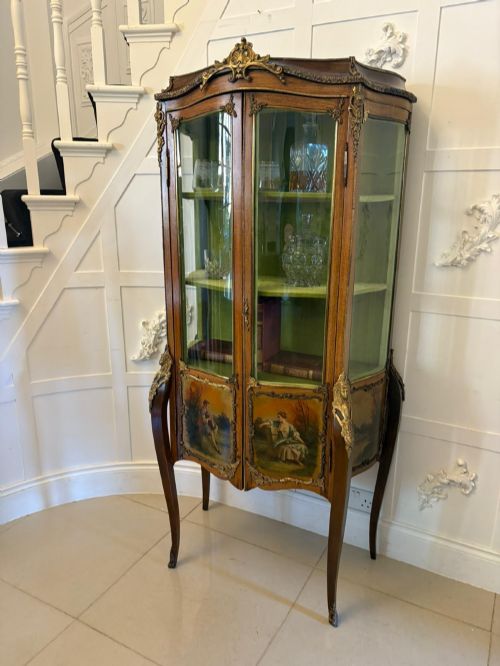
The version you are most likely to meet on this page is a nineteenth-century or Edwardian piece shaped by Louis XV Revival or Louis XVI Revival tastes. These cabinets frequently combine glazed sides with shaped fronts and decorative panel work.
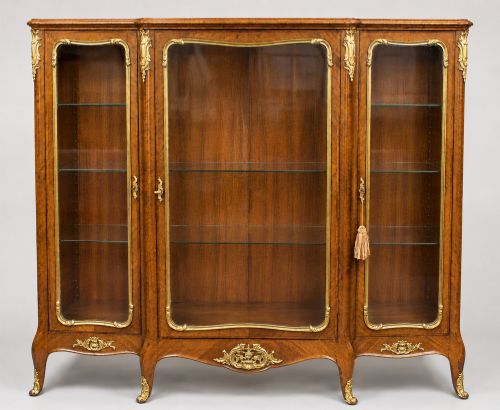
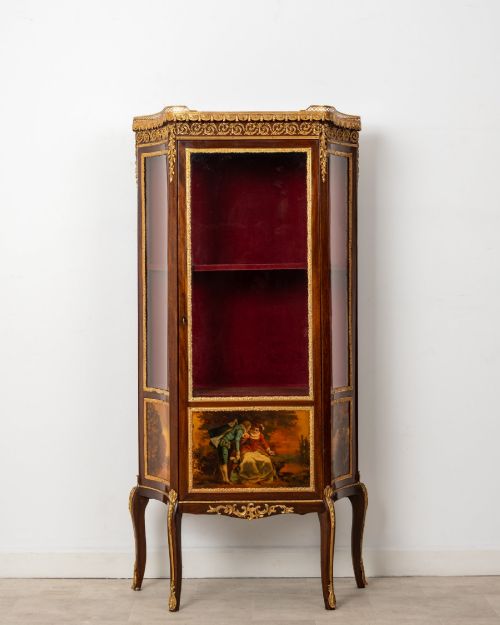
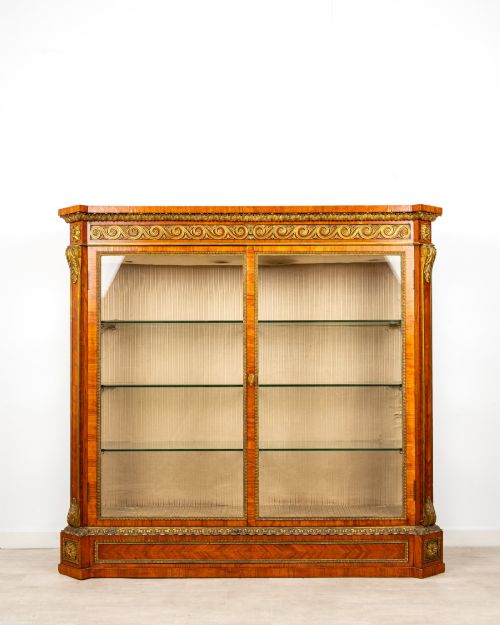
Makers and workshops of the period adopted specific revival idioms, resulting in cabinets that range from compact serpentine frontages to large exhibition pieces. Each variation reflects the prevailing European demand for decorative storage.
How They Were Made
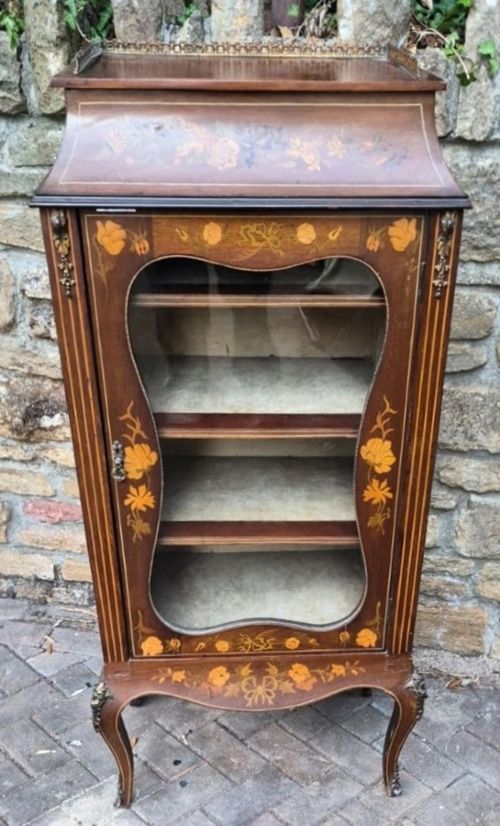
Cabinet makers utilised foundational timbers such as mahogany, walnut, and kingwood, often enhanced by marquetry inlay or parquetry geometric patterns. Carcasses were shaped into curved or serpentine outlines, particularly in pieces following transitional or Louis styles.
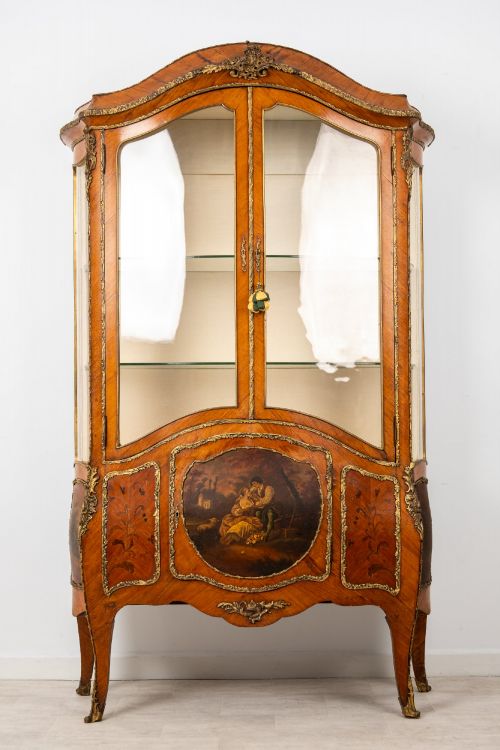
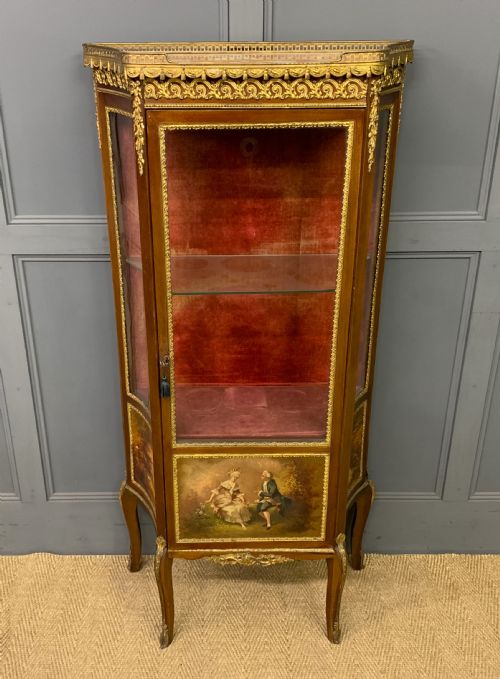
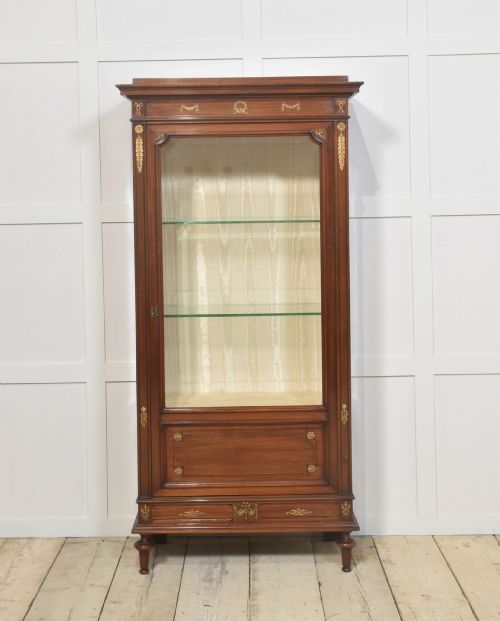
Surface decoration relies heavily on cast or chased ormolu and gilt bronze mounts that accent the corners, borders, and feet. Many cabinets incorporate Vernis Martin painted panels depicting pastoral scenes or floral motifs beneath a clear varnish layer.
Glazing forms a central element of construction, utilising clear or concave glass held within wooden frames to protect the interior shelves. Marble tops appear on selected cabinets, providing a robust and polished upper surface.
Listings feature mahogany, kingwood, walnut, and burr walnut, alongside ormolu, gilt bronze, and marble.
What Varies in Quality
The distinction between standard production and top-tier pieces rests on the crispness of the gilt bronze mounts and the finesse of the hand-painted Vernis Martin panels. Superior cabinets display finely chased ormolu that integrates smoothly with the timber contours rather than appearing stiff or cast coarsely.
Timber selection and veneer matching dictate the visual depth of the cabinet, with figured kingwood and intricate marquetry requiring high levels of joinery skill. The weight and proportion of the bronze mounts relative to the mahogany or walnut body separate workshop output from master cabinet maker production.
H. J. Hatfield and Sons·François Linke·Paul Sormani
The French Style China Vitrine Glossary
- Vitrine
- A glass-fronted cabinet designed specifically for displaying porcelain, curiosities, and small decorative works of art. These pieces rely heavily on glazed sides to admit light.
- Ormolu
- Gilt bronze mounts applied to furniture for decorative accent and edge protection. The technique involves applying a gold amalgam to bronze.
- Vernis Martin
- A simulated Japanese lacquer technique developed in France, utilising multiple coats of varnish to seal painted pastoral scenes. It became popular on eighteenth-century revival furniture.
- Marquetry
- Inlaid wood veneers arranged in decorative patterns or pictorial scenes across the surface of a cabinet. Craftsmen cut contrasting woods to fit flush within the ground timber.
- Parquetry
- Geometric wood inlay forming repeating patterns such as cubes or squares on cabinet doors and panels. It creates a structured surface texture through grain contrast.
French Style China Vitrine: Frequently Asked Questions
What is a french style china vitrine?
A french style china vitrine is a glazed display cabinet rooted in nineteenth-century revival aesthetics. It serves as an enclosure for porcelain and decorative objects.
These pieces draw on Louis XV and Louis XVI design vocabulary, featuring glass panels and decorative mounts.
How do I identify a revival style?
Revival styles are identified through their adherence to historical design periods like Louis XV or Directoire. Look for characteristic curves, symmetry, and specific mount placements.
Craftsmanship details and timber choices further clarify the period of production during the nineteenth century.
Where were these cabinets placed?
These cabinets occupied principal reception rooms and drawing rooms in large residences. They provided a secure place to exhibit fine porcelain and curated collections.
The glazed sides allowed light to reach the displayed items from multiple angles.
What materials indicate quality?
Quality is indicated by the use of dense hardwoods like kingwood and mahogany, paired with finely chased ormolu mounts. Hand-painted Vernis Martin panels also elevate the standing of a piece.
The integration of marble tops and precise marquetry denotes higher workshop standards.