

French Style Appliques
French style appliques bring decorative illumination to a room, taking the form of gilded wall lights and sconces shaped by classical and revival designs.
French Style Appliques
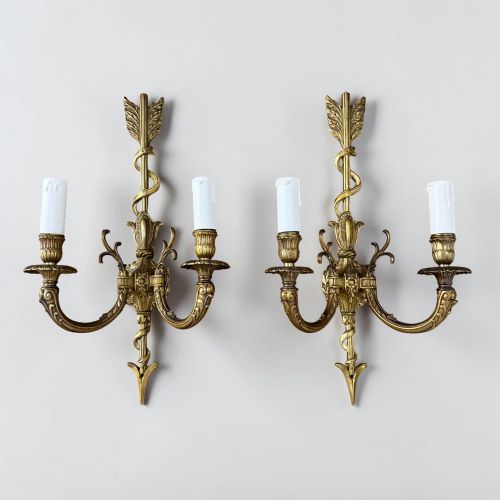
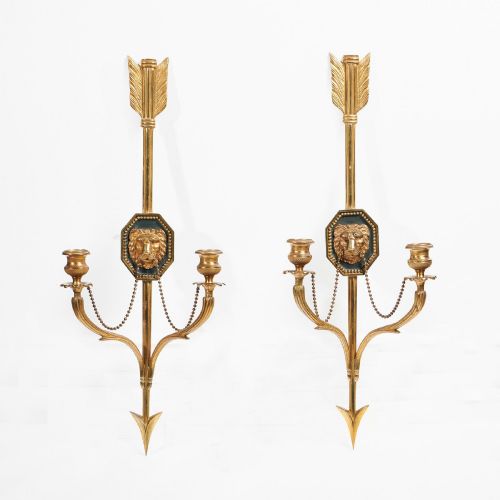
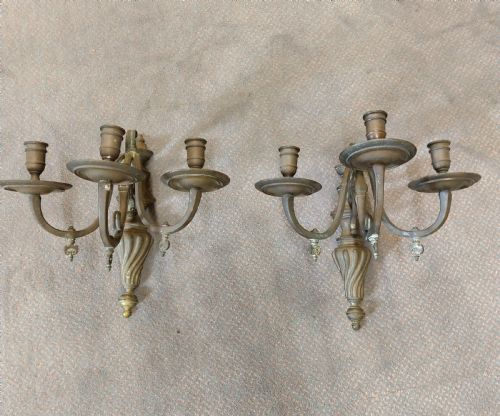
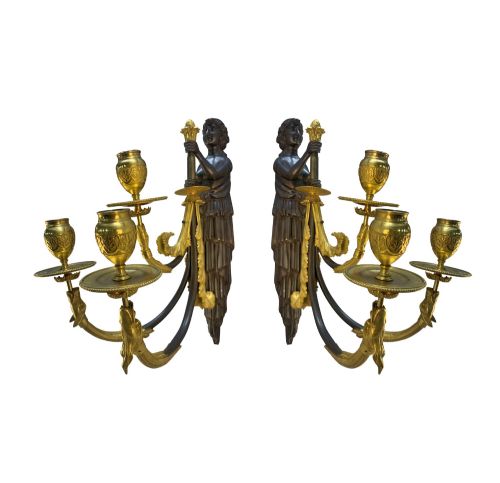
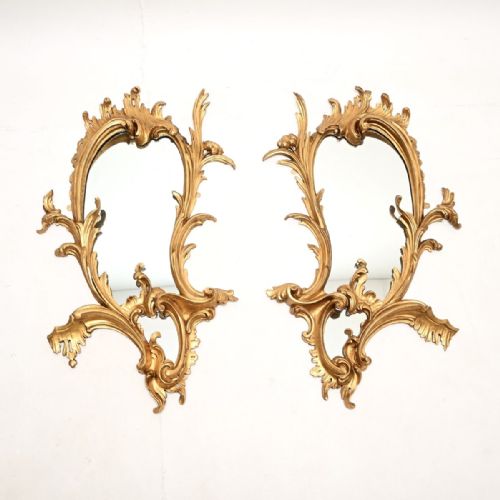
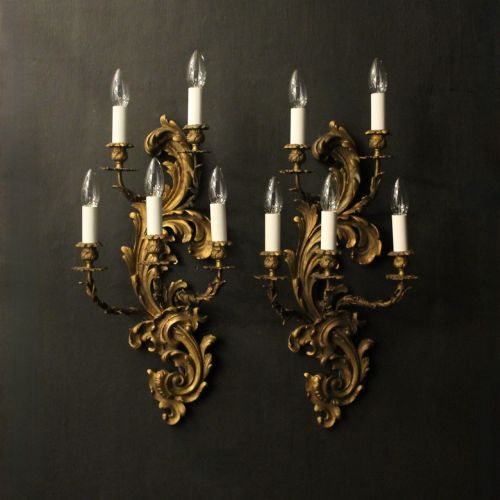
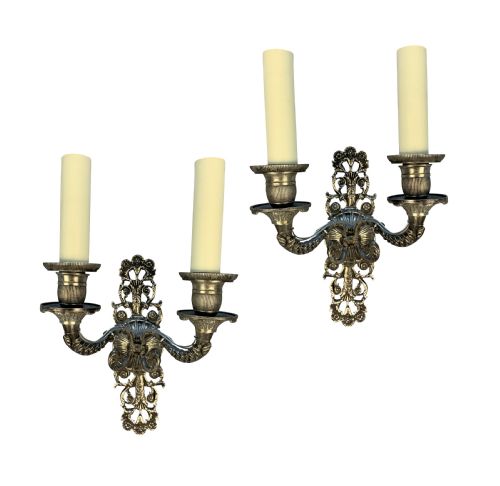
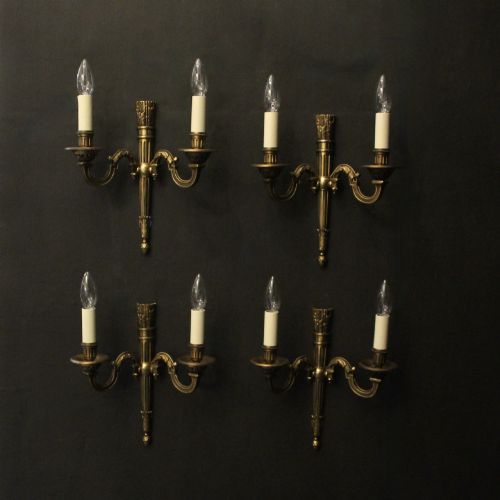
French style appliques primarily take the form of wall lights, wall sconces, and occasionally wall mirrors designed to mount directly onto vertical surfaces. When buyers search for french style appliques, they encounter pairs and sets originating from the nineteenth and early twentieth centuries, alongside later interpretations.
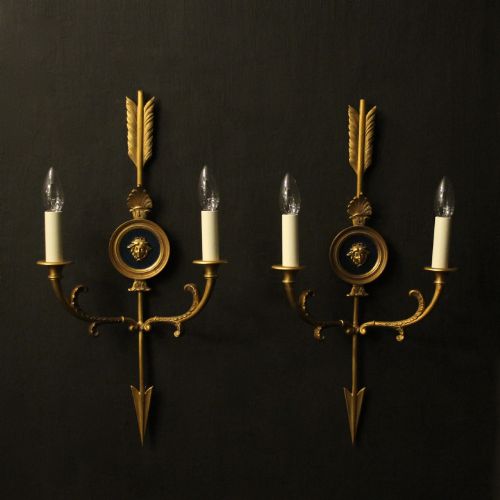
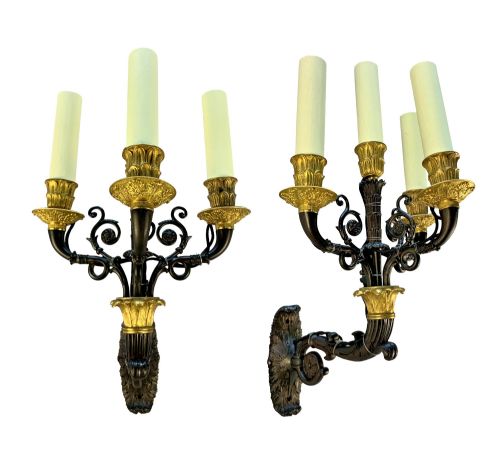
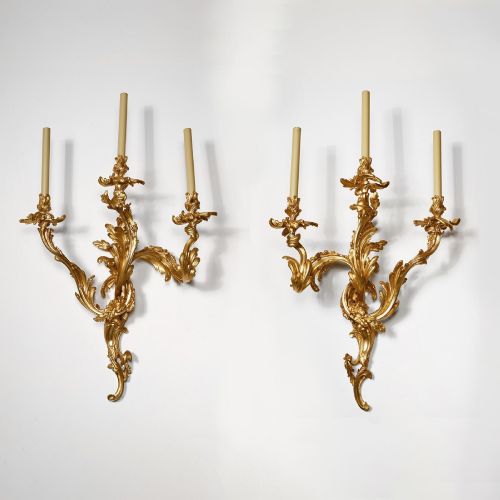
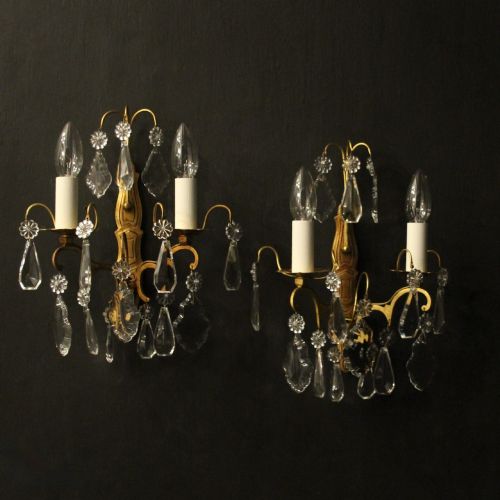
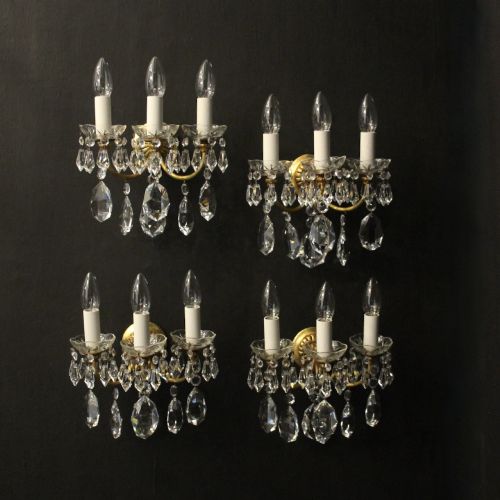
The most common versions met on this page are matched pairs and larger sets of twin-branch or three-branch wall lights. These pieces draw heavily on historical aesthetics such as French Rococo, Louis XVI, and French Empire styles.
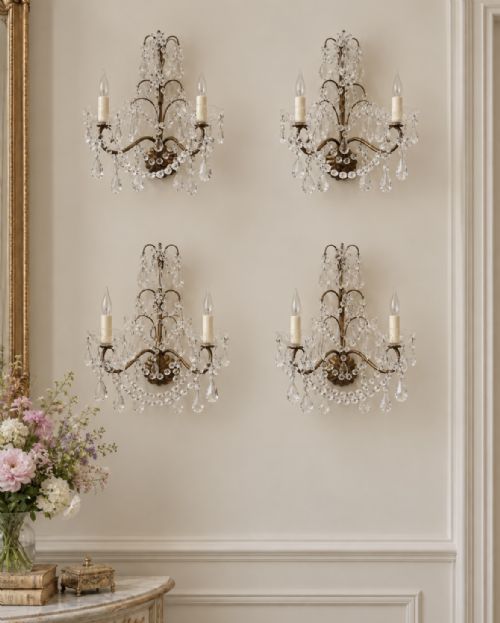
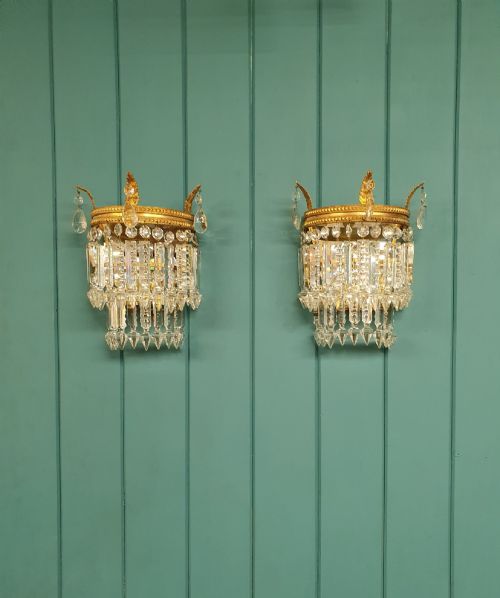
Origins stretch from continental workshops to British adaptations influenced by continental motifs. The forms range from simple twin-arm gilt brass fixtures to large multi-branch ormolu and crystal chandeliers mounted to the wall.
Materials and construction
Metalwork forms the structural core of these pieces, utilising brass, gilt brass, bronze, gilt bronze, and ormolu. Artisans cast these metals into elaborate scrollwork, classical urns, and figurative elements before applying gilding.
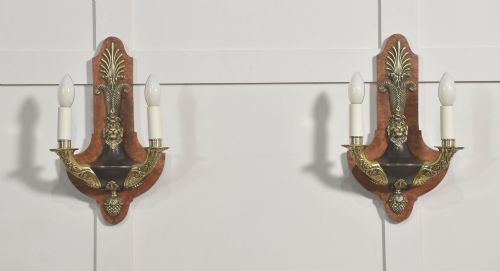
Glass and crystal elements frequently accompany the metal frames, taking the form of cut glass drops, lustres, and panels that refract the light. Burr walnut and carved gilt wood also appear in specific iterations, particularly within mirror frames and backplates.
French Style Appliques Retail Price Guide 2026
Typical asking prices for french style appliques among the pieces listed under this phrase on Sellingantiques today, from the lower quarter to the upper quarter. They describe what is for sale here now, not the wider market.
Several wall lights feature sculpted ram's head masks peering out from the backplates, keeping a watchful, classical eye over the room.
Assessing quality and execution
The precision of the casting and the depth of the chasing separate standard production from finer examples. Superior pieces display crisp relief work on acanthus leaves, masks, and floral motifs without softening in the metal details.
The quality of the gilding and the clarity of the crystal components significantly impact the overall standard. Rich, even application of ormolu or gold leaf and hand-cut crystal drops indicate higher tier manufacture.
The French Style Appliques Glossary
- Applique
- A wall-mounted lighting fixture or sconce designed to hold candles or electric lamps. These pieces project outward from the wall surface.
- Ormolu
- Gilded bronze produced by applying a mercury and gold amalgam to a bronze base and heating it. This technique creates a durable, rich metallic finish characteristic of high-end continental metalwork.
- Empire Style
- A neoclassical design movement originating in early nineteenth-century France. It employs military motifs, classical laurel wreaths, and symmetrical geometric forms.
- Louis XVI Style
- A decorative aesthetic defined by straight lines, neoclassical symmetry, and restrained ornamentation. It frequently incorporates urns, fluted columns, and ribbons.
- Lustre
- A glass pendant or drop hung from a light fixture to catch and reflect illumination. These components add sparkle and visual weight to wall sconces.
French Style Appliques: Frequently Asked Questions
How do I mount french style appliques safely?
These wall lights require secure attachment to wall studs or appropriate wall anchors due to the weight of cast bronze and crystal components.
Electrical wiring should be assessed by a qualified professional to ensure compatibility with modern standards.
What is the difference between an applique and a sconce?
In historical and marketplace terms, both words describe wall-mounted lighting fixtures designed to project illumination across a room.
Applique tends to lean toward continental terminology, while sconce is commonly used in English descriptions for the same bracketed wall light.
How do I identify a Louis XVI style applique?
Louis XVI style pieces display straight lines, neoclassical symmetry, and restrained ornamentation rather than the heavy asymmetry of Rococo designs.
Look for motifs such as fluted columns, ribbons, and classical urns integrated into the bronze or brass backplate.
Can these wall lights be cleaned without damage?
Metal frames benefit from gentle dusting with a soft, dry cloth to prevent the accumulation of dirt on the gilded surfaces.
Crystal drops can be removed and washed in warm soapy water, provided they are dried completely before being rehung.