



French Spelter Table Lamps
French spelter table lamps are decorative lighting pieces combining cast zinc alloy figures with marble or metal bases, prized for their sculptural forms.
French Spelter Table Lamps
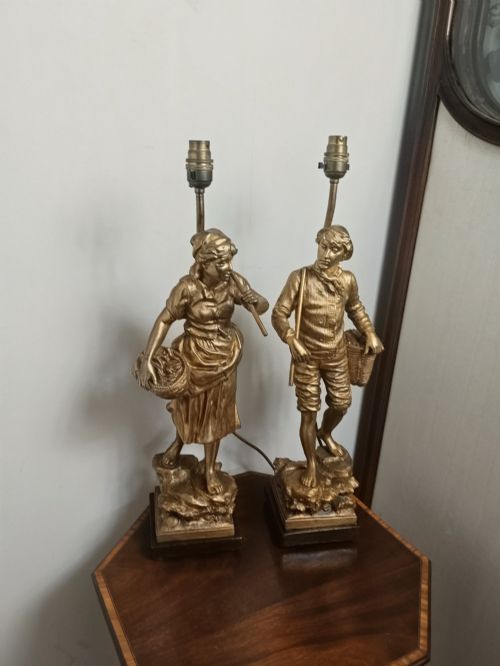
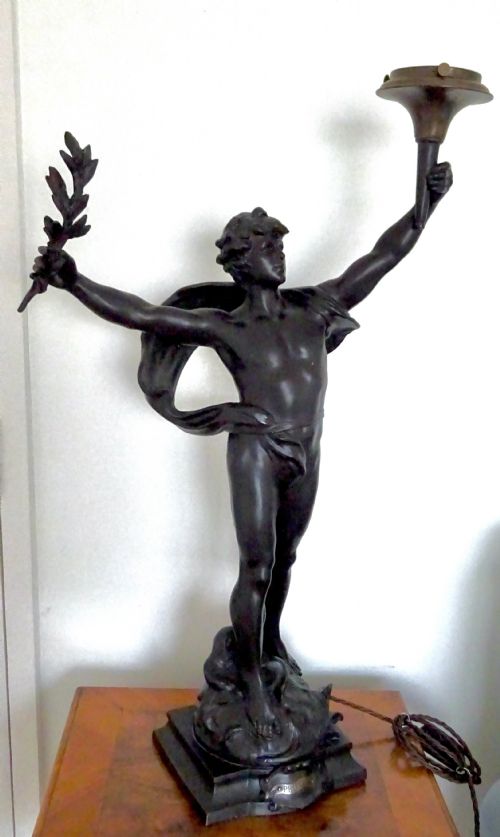
French spelter table lamps are primarily sculptural lighting pieces that merge functional illumination with decorative figural art. When searching for French spelter table lamps, buyers encounter diverse forms ranging from late nineteenth-century romantic figures to geometric Art Deco designs. The selection spans periods from the late Victorian era through the Edwardian years and into the 1920s and 1930s.
Makers such as L & F Moreau, Auguste Moreau, E Rousseau, and P. Sega appear frequently in the titles, alongside unsigned works. Common motifs include figural studies, night lights with torchere shades, and themed subjects like pierrots and seagulls. These pieces serve equally as functional lamps and as sculptural ornaments for interiors.
How they were made
Makers cast spelter, a zinc-based alloy, into detailed moulds to produce figural sculptures and lamp bodies. This metal alloy allows for intricate detailing, which workshops then finish with painted, silvered, or gilt surfaces to imitate bronze. Artisans mount these metal sculptures onto heavier bases made of marble, brass, or wood to provide stability.
Lighting components such as glass shades, fabric shades, and metal fittings are integrated into the design to transform the sculpture into a working lamp. The combination of cast metal, stone bases, and specialised shades defines the physical construction of these pieces across the nineteenth and twentieth centuries.
French Spelter Table Lamps Retail Price Guide 2026
Typical asking prices for french spelter table lamps among the pieces listed under this phrase on Sellingantiques today, from the lower quarter to the upper quarter. They describe what is for sale here now, not the wider market.
A whimsical pierrot playing an accordion brings musical charm to the lineup.
What varies in quality
The degree of crispness in the metal casting distinguishes different examples, as finer moulds capture delicate facial expressions, drapery, and anatomical details more clearly. Superior pieces often feature signed work from established sculptors and integrated artistic bases of solid marble rather than simpler metal plinths.
The surface finish also determines distinction, with original patination, silvering, or polychrome paint retaining more visual harmony than later repainted surfaces. Quality lies in the integrity of the figural sculpture and the balanced proportion between the spelter figure and its mounting.
L & F Moreau·Auguste Moreau·E Rousseau·P Sega
The French Spelter Table Lamps Glossary
- Spelter
- A zinc-based alloy commonly used as an economical alternative to bronze for casting decorative figures and lamp bodies. It takes patination and paint well to simulate more costly metals.
- Art Deco
- A design style emerging in the 1920s and 1930s characterised by sleek geometric shapes, streamlined forms, and modern motifs. It marks a sharp departure from earlier organic styles.
- Art Nouveau
- A turn-of-the-century aesthetic focused on flowing organic lines, natural forms, and plant motifs. This style heavily influences many nineteenth-century figural lamp designs.
- Torchere shade
- An upward-pointing lamp shade designed to diffuse light toward the ceiling. In these pieces, it often forms part of a figural torch-holding motif.
- Patina
- The surface coloration and ageing developed on metal over time through handling and exposure. Original patination is valued by collectors for authenticity.
French Spelter Table Lamps: Frequently Asked Questions
What is spelter?
Spelter is a zinc alloy that nineteenth and twentieth-century French foundries used extensively for casting decorative figures and lamp bases. It provided a cost-effective alternative to bronze while allowing for fine surface detail.
Foundries typically applied bronze-like patinas, silvering, or paint finishes to the metal to enhance its decorative appeal for domestic interiors.
How do I date a lamp?
Dating relies on the stylistic markers of the sculpture, such as the flowing organic lines typical of turn-of-the-century Art Nouveau versus the geometric abstraction of 1920s and 1930s Art Deco. Materials like heavy marble bases and specific shade types also point to particular manufacturing decades.
Signatures or foundry marks inscribed on the metal base or figure provide further chronological clues regarding when the piece was produced.
Are these lamps safe to use?
Many antique lamps retain older electrical wiring that may not meet modern safety standards. Buyers often have professional electricians rewire the fixtures using contemporary cords and safe lamp holders while preserving the original body.
Preserving the antique body and shade fittings ensures the decorative integrity remains intact while making the lamp suitable for daily use.
Who were the Moreau makers?
The Moreaus were a prominent French family of sculptors whose works were frequently cast in spelter for decorative objects and lamps. Pieces bearing signatures from artists like Auguste Moreau or the L & F Moreau firm represent notable examples of French figural casting.
Their sculptures often depict classical, allegorical, or romantic figures that translate well into sculptural lighting.