



French Small Settee
A french small settee brings compact elegance to a room, offering intimate seating carved in classic European styles.
French Small Settee
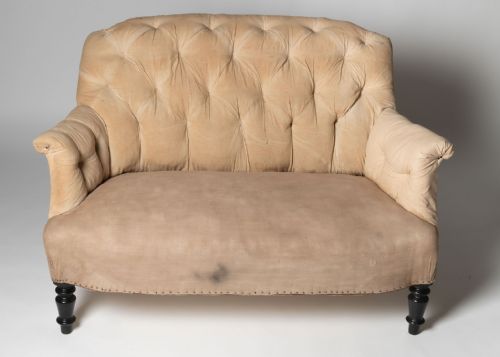
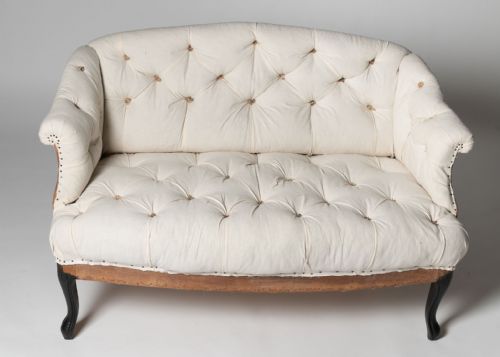
A french small settee provides compact seating for two individuals, taking the form of a boudoir sofa, love seat, or canape. These pieces function well in bedrooms, dressing rooms, and smaller reception spaces where standard sofas prove too bulky.
The selections available here span the nineteenth century, with particular examples emerging from the eighteen-eighties, eighteen-nineties, and nineteen-tens. Common iterations include Louis XV style frames, button-backed Napoleon III seating, and painted canework couches.
Makers and designers from this tradition favoured graceful proportions over grand scale, resulting in intimate seating arrangements. Buyers encounter variations ranging from giltwood canapes to walnut and painted two-seat sofas.
How they were made
Frames rely upon traditional timbers including walnut, beech, mahogany, and rosewood, alongside giltwood and painted finishes. Artisans shaped these woods into curved rails and cabriole legs characteristic of French design.
Upholstery methods involve traditional stuffing and springing, finished with silk, velvet, fabric, or canework panels. Details such as tassel trim and buttoned backs reflect the upholstery practices of the nineteenth century.
French Small Settee Retail Price Guide 2026
Typical asking prices for french small settee among the pieces listed under this phrase on Sellingantiques today, from the lower quarter to the upper quarter. They describe what is for sale here now, not the wider market.
One tiny nineteenth-century sofa spent its life specifically assigned to the end of a bed.
What varies in quality
The crispness and depth of hand-carved woodwork distinguish finer frames from simpler production. Carved floral motifs and moulded rails require skilled execution that elevates the appearance of the finished seat.
The integrity of the structural joinery and the retention of original gilding or paint layers determine the character of the piece. Untouched surfaces and firm, traditional upholstery work indicate higher original craftsmanship.
The French Small Settee Glossary
- Canape
- An upholstered French sofa featuring an exposed wooden frame, typically with an open arm design and padded back. This form often mirrors the stylistic developments of the Louis XV and Louis XVI periods.
- Giltwood
- Timber coated with a thin layer of gold leaf or gilt paint. This finish appears frequently on formal nineteenth-century salon seating.
- Canework
- Woven cane material utilised for seat panels or backrests. It provides a lighter texture compared to solid or fully upholstered surfaces.
- Louis XV Style
- A revival style characterised by asymmetrical curves, cabriole legs, and naturalistic scrollwork. It dominated much nineteenth-century French furniture production.
- Napoleon III
- A decorative period spanning the mid-to-late nineteenth century known for eclectic revivalism, sumptuous upholstery, and button-backed padding.
French Small Settee: Frequently Asked Questions
Where should I place a small settee?
These compact seats fit comfortably at the foot of a bed, in a dressing room, or within a small parlour. Their modest footprint allows them to occupy awkward corners or window alcoves where standard seating fails.
They also serve well as conversational seating paired with a single armchair in a study or boudoir.
How do I identify a Louis XV style frame?
Look for curved lines, cabriole legs, and carved floral motifs that lack symmetry. The woodwork typically flows continuously from the crest rail down to the feet.
These frames often feature exposed giltwood, walnut, or painted finishes rather than plain timber surfaces.
What is the difference between a canape and a love seat?
A canape is a traditional French term for an upholstered sofa, usually featuring an exposed wooden frame and open arms. A love seat generally refers to any small two-seater sofa designed for intimate conversation.
French examples often lean towards specific historical revivals like the Louis XV style.
How do I care for antique upholstery and giltwood?
Keep upholstered surfaces clean using gentle vacuum attachments and protect them from direct sunlight to prevent fading. Silk and velvet fabrics require professional cleaning when stained.
Dust giltwood frames lightly with a dry cloth and avoid harsh chemical polishes that can damage the metallic leaf.