







French Silver Sculpture
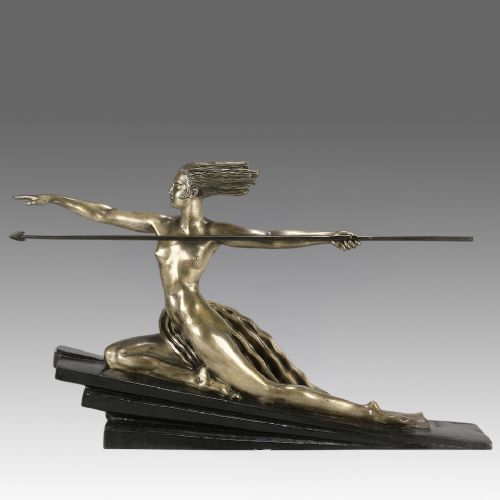
French silver sculpture brings together the luminous finish of silvered metal and bronze with the striking forms of the Art Deco and Nineteenth Century periods.
French Silver Sculpture
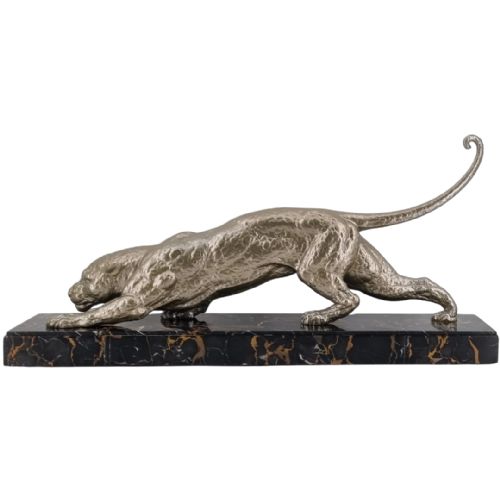
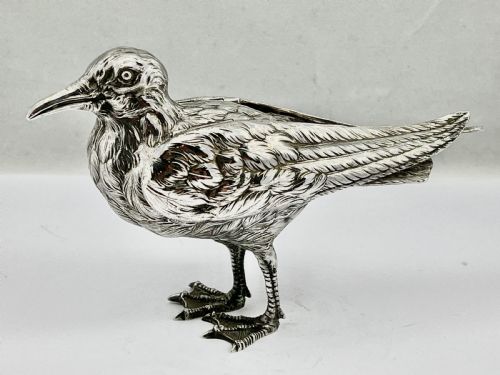
When you search for french silver sculpture, you encounter figures and decorative objects finished in silvered bronze, silvered metal, and silvered spelter. These pieces range from dancers and animals to religious statues and figural lamps.
The most common examples on this page date from the Art Deco period of the nineteen-twenties and thirties, alongside nineteenth-century works. They frequently combine metallic figures with contrasting bases made of marble or onyx.
Makers and sculptors often mounted their figures upon solid stone plinths to elevate the composition. Table lamps, mantel clocks, and candlesticks also appear alongside standalone sculptural figures.
Materials and construction
The creation of these works involved casting metals such as bronze, spelter, and pewter before applying a silvered finish or cold paint. Foundries utilised skilled casting techniques to capture fine details in drapery, feathers, and facial expressions.
Many sculptures incorporate heavy bases of marble or onyx to anchor the metallic figures securely. Artisans occasionally combined silver plating with gilt bronze or crystal glass to create varied surface textures.
French Silver Sculpture Retail Price Guide 2026
Typical asking prices for french silver sculpture among the pieces listed under this phrase on Sellingantiques today, from the lower quarter to the upper quarter. They describe what is for sale here now, not the wider market.
Materials in these listings include marble, onyx, silvered bronze, spelter, bronze, cold paint, silvered metal, and glass.
Assessing quality and execution
The choice and stability of the mounting materials also distinguish the work, particularly where heavy marble or onyx plinths are fitted. Superior pieces maintain a balanced proportion between the sculptural subject and its base.
Ouillon Carrere·Lalique·D. H. Chiparus·Maurice Giraud-Rivière·Pierre Le Faguays·Claire Jeanne Roberte Colinet·Alexandre Kelety·Geo Maxim·Auguste Moreau·Antoine Bofill
The French Silver Sculpture Glossary
- Spelter
- A zinc alloy commonly used as a less expensive alternative to bronze for sculptural figures. It accepts silvered finishes and cold paint effectively.
- Silvered Bronze
- Bronze that has been coated with a layer of silver to give a bright metallic sheen. This technique was widely utilised during the Art Deco period.
- Cold Painted
- A method where paint is applied to a metal sculpture without being fired in a kiln. This decoration is often found on early twentieth-century bronze and spelter figures.
- Onyx
- A banded variety of chalcedony used frequently for sculptural bases. Its natural grain provides a decorative contrast to metallic figures.
French Silver Sculpture: Frequently Asked Questions
What is french silver sculpture made from?
These pieces are primarily cast in bronze, spelter, or pewter, and then treated with a silvered finish or silver plating. Many examples also incorporate marble or onyx bases.
Some works integrate additional materials such as crystal glass or cold paint to enhance specific details of clothing or plumage.
How do I date a french silver sculpture?
Dating relies heavily on the stylistic markers of periods like Art Deco or the nineteenth century. Clean geometric lines and stylised dancer motifs point towards the nineteen-twenties and thirties.
Earlier nineteenth-century pieces tend to display more classical or romantic drapery and more ornate figurative groupings.
Where were these sculptures produced?
The works originate from France, created by artists and foundries operating during the nineteenth and early twentieth centuries. Many pieces bear signatures or foundry marks directly on the metal or the stone base.
Parisian workshops and independent sculptors drove much of this production, particularly during the Art Deco era.
How should I clean a silvered bronze figure?
Dust the surface gently with a soft, dry cloth to prevent the accumulation of dirt. Avoid chemical silver dips or abrasive cleaning agents, as these can strip the silvered finish from the bronze or spelter underneath.
Keep the sculpture away from direct moisture and humid environments to protect both the metal plating and the stone base.