
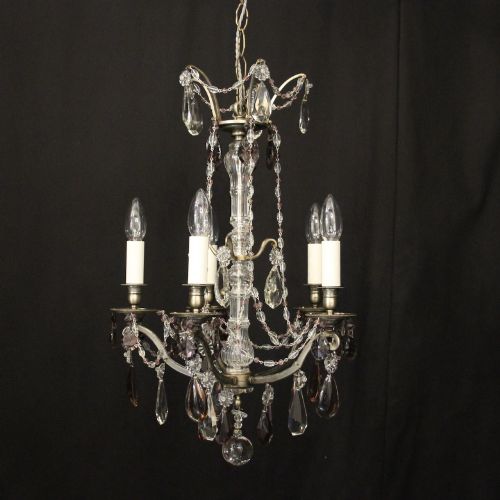
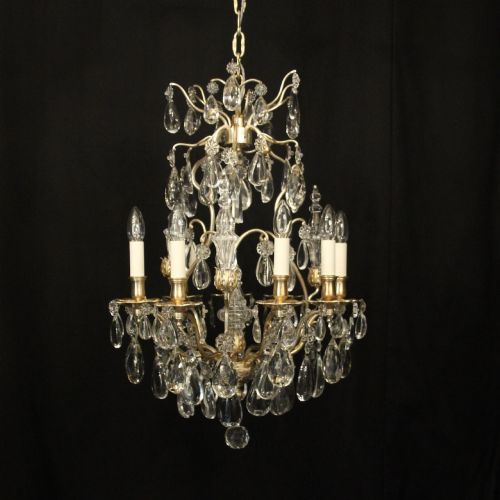
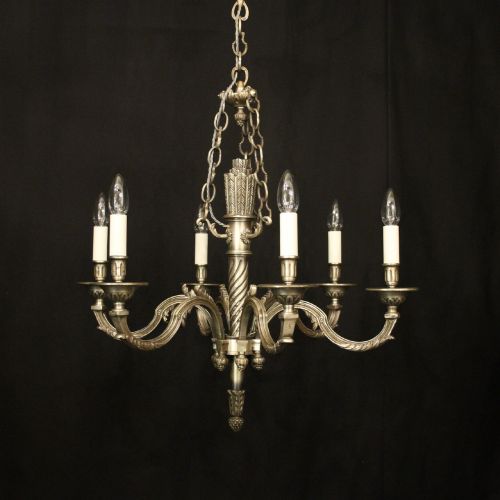
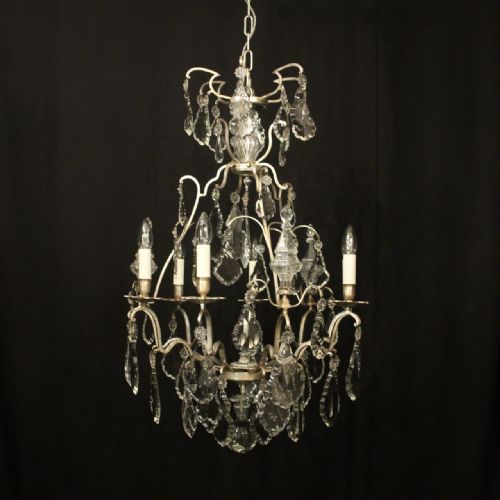


French Silver Gilt Chandelier
A french silver gilt chandelier brings unmistakable decorative weight to a room, catching the eye with layered metalwork and glass.
French Silver Gilt Chandelier
When you search for a french silver gilt chandelier, you are looking at grand overhead light fittings that combine silvered finishes with gilded highlights. These pieces arrive in styles such as French Rococo, French Classical, and French Neoclassical, often taking the form of multi-light chandeliers or hanging lanterns. Most examples encountered on this page date from the twentieth century or the nineteenth century.
How they were made
The foundational structure of these chandeliers relies on cast bronze, brass, silvered metal, and giltwood. Artisans shaped and joined these metallic elements to form robust frames capable of supporting numerous candle arms or lamp holders. Gilded bronze and silvered bronze components provide both structural integrity and a dual-tone metallic sheen.
Glass and crystal elements hang from the metallic frames to refract light across the room. These glass components include faceted drops and decorative bobeches positioned beneath each light source. The combination of silvered and gilded surfaces requires careful application of metal leaf or chemical silvering over cast bronze or brass bases.
Materials recorded across the inventory include crystal, glass, silvered bronze, gilded bronze, brass, and giltwood.
What varies in quality
The distinction between standard fixtures and superior examples lies in the crispness of the bronze casting and the depth of the metal finishing. Finer pieces display sharply chased ornamentation along the arms and central stems, where the interplay between the silvered and gilded areas appears deliberate and balanced. Lesser examples often feature softer cast details and flat, uniform metallic applications that lack dimensionality.
Another measure of quality involves the integration of the crystal and glass components with the main metal frame. Superior chandeliers utilise hand-cut crystal drops that retain sharp facets and secure wire fixings, whereas simpler versions rely on moulded glass with softer edges. The overall harmony of proportion between the number of lights and the scale of the metalwork ultimately dictates the visual success of the piece.
The French Silver Gilt Chandelier Glossary
- Silver gilt
- Metal that has been coated with a thin layer of silver or treated to achieve a silvered finish, often combined with gilded highlights. This dual-tone appearance distinguishes these chandeliers from plain brass or bronze fittings.
- Bobeche
- A small saucer-like disc fitted beneath the candle nozzle to catch drips of melted wax. In these chandeliers, bobeches often feature matching silvered or gilded metalwork alongside hanging crystal prisms.
- Rococo revival
- A nineteenth-century design movement that revives the asymmetrical scrolls, natural motifs, and elaborate curves of the eighteenth-century Rococo style. Chandeliers from this tradition exhibit energetic, sweeping lines.
- Chandelier
- A branched ceiling-mounted lighting fixture designed to hold multiple bulbs or candles. The examples found here typically support anywhere from five to fifteen lights across tiered metallic frames.
- Lantern
- An enclosed hanging light fixture featuring glazed panels set within a metal frame. The lanterns on this page adopt the same silver gilt and bronze treatments seen on the larger chandeliers.
French Silver Gilt Chandelier: Frequently Asked Questions
How do I clean a french silver gilt chandelier?
Dust the metal frame and glass components gently with a soft feather duster or microfiber cloth on a regular basis. Avoid harsh chemical cleaners or abrasive polishes that can strip away the delicate silvered and gilded finishes.
For deeper cleaning, remove the crystal drops individually and wash them in warm soapy water before drying them thoroughly. Wipe down the metal structure with a dry or barely damp cloth, ensuring no moisture lingers in the electrical fittings.
What ceiling height do I need?
These multi-light fixtures demand substantial vertical space to hang properly without dominating the room. They suit high ceilings found in period properties, large hallways, or formal dining spaces where the drop of the chandelier remains well above head height.
Check the overall dimensions of the specific piece, including any chain or suspension rod, to calculate the clearance from the floor. A hanging lantern or smaller five-light version works better in more modest spaces than a fifteen-light chandelier.
Are these chandeliers wired for modern electricity?
Many antique chandeliers of this type have been adapted for modern electrical use during their lifetime. Rewiring often occurs to meet contemporary safety standards while preserving the original candle tubes and sockets.
It is advisable to have a qualified electrician inspect the internal wiring before installation. They can ensure the metal frame is properly earthed and compatible with modern household circuits.
How do I identify the period?
Dating relies on stylistic clues, the composition of the metal frame, and the manufacturing techniques visible in the casting. Nineteenth-century examples often display heavier cast bronze and more complex decorative programs like Rococo Revival.
Twentieth-century pieces, such as those from the 1920s and 1930s, may incorporate cleaner lines associated with French Neoclassical or simplified Chateau styles while retaining traditional silvered and gilded finishes.