
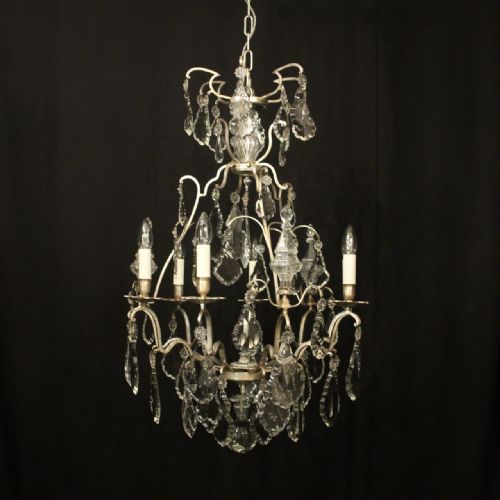


French Silver Chandelier
A french silver chandelier brings distinct luminosity and architectural weight to a room, catching light through layered crystal and metalwork.
French Silver Chandelier
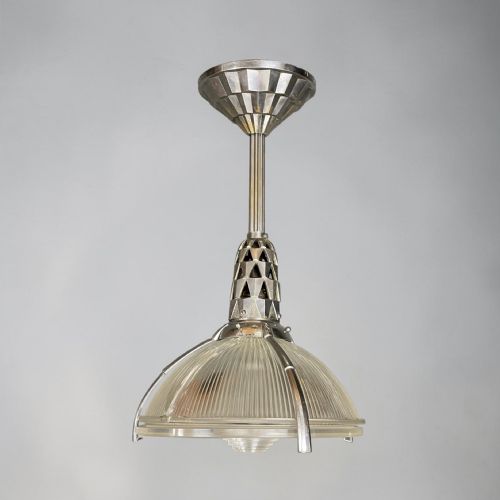
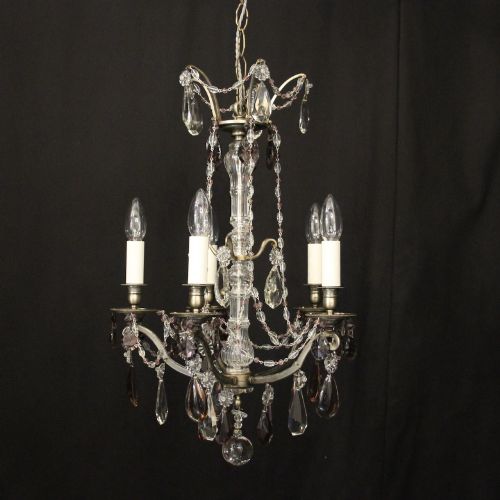
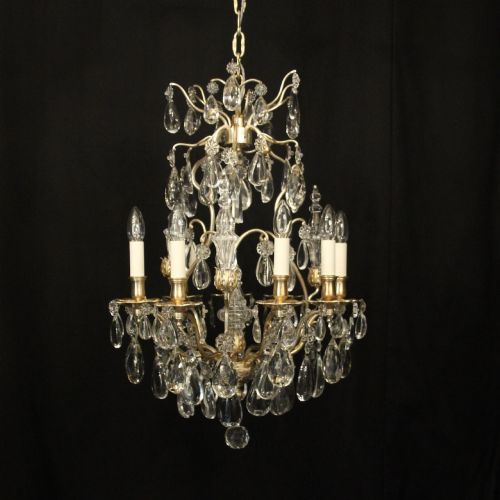
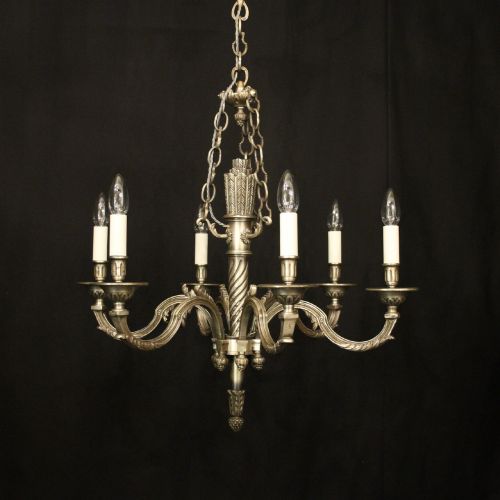
A french silver chandelier spans multilight configurations, ceiling lanterns, and pendant lights produced across the nineteenth and twentieth centuries. These fixtures combine silvered, plated, or gilded metal surfaces with glass or crystal drops, reflecting established periods from neoclassical to art deco.
The versions met most frequently on this page date from the nineteen-twenties and nineteen-thirties, often taking the form of multicount arm chandeliers or hall lanterns. Many examples incorporate brass, bronze, or steel beneath their silvered finishes, supporting multiple candle or bulb lights.
Buyers encounter formats ranging from simple six-arm designs to fifteen-light multi-tiered centerpieces. Stylistic influences span French chateau and baroque revivals alongside cleaner twentieth-century lines.
Materials and construction
Makers utilised bronze, brass, steel, and base metals as armature, applying silver gilding, silver plating, or nickel finishes directly to the metal surface. These metallic foundations support cut glass or crystal components, including drops, pendeloques, and bowls.
Wiring and candle tubes were integrated into multi-arm frames, while lanterns employed glazed panels set within metal frameworks. Structural elements such as arms and coronas were cast or forged before assembly and surface treatment.
Listings feature fixtures dated across the nineteenth and twentieth centuries, including nineteen-ten, nineteen-twenty, and nineteen-thirty.
Grading quality and execution
Distinctions in quality rest on the weight and density of the metal casting and the precision of the surface silvering. Heavy cast bronze frames retain crisp chased detail, whereas lighter brass or plated steel constructions rely on simpler profiles.
The clarity and cut of the crystal or glass elements separate standard production from finer examples. Hand-cut pendants display sharp facets and refractive depth, while moulded glass components show softer edges.
Émile-Jacques Ruhlmann·G.E.C·H. Vian
The French Silver Chandelier Glossary
- Silvered bronze
- Bronze metal treated with a silver coating to give the appearance of solid silver. This technique provides durability while maintaining a bright metallic finish.
- Tent and waterfall
- A lighting configuration where strings of crystal beads form an upper cone above a lower tiered spray of drops. The arrangement increases light reflection across the room.
- Pendeloque
- A hanging crystal drop, often pear or almond shaped, suspended from the arms or corona of a light fixture. These elements move slightly to catch and disperse ambient light.
- Gilded bronze
- Bronze metal coated with a thin layer of gold or silver leaf. It forms a stable base that resists tarnishing under normal indoor conditions.
- Birdcage
- A rounded skeletal frame of metal bands holding interior glass drops and candles. This form protects the central components within a cage-like silhouette.
French Silver Chandelier: Frequently Asked Questions
How do I hang a heavy chandelier safely?
Suspension requires fixing directly into ceiling joists or structural timber using rated steel hooks and chains capable of supporting the combined weight of metal and crystal. Professional installation ensures the electrical load and physical anchor meet safety standards.
Heavier multi-tier fixtures and large lanterns demand load calculations that standard plaster ceilings cannot handle without reinforcement.
How are silvered metal surfaces cleaned?
Dusting with a soft dry cloth removes surface debris without disturbing delicate crystal drops or aged finishes. Chemical polishes should be avoided on silvered bronze or plated items to prevent stripping the historic layer.
Maintenance is limited to gentle wiping of accessible metal and careful washing of detached crystal components in warm soapy water.
Can these chandeliers be rewired for modern bulbs?
Most antique fixtures accept modern wiring routed through the central channel and arms during professional restoration. Electricians adapt old brass or ceramic lamp holders to current voltage requirements while retaining original exterior components.
Rewiring preserves the functional integrity of the piece for contemporary interior use.
What distinguishes an art deco design from earlier styles?
Art deco examples from the nineteen-twenties favor geometric restraint and streamlined metalwork over the exuberant curves of earlier revival styles. Forms become more architectural, reducing ornate cast foliage in favour of clean lines.
Earlier nineteenth-century pieces lean heavily on rococo or neoclassical motifs with elaborate chasing and complex crystal arrangements.