

French Side Desk
A french side desk offers compact writing utility with continental elegance, bringing heritage craftsmanship and refined surfaces to domestic interiors.
French Side Desk
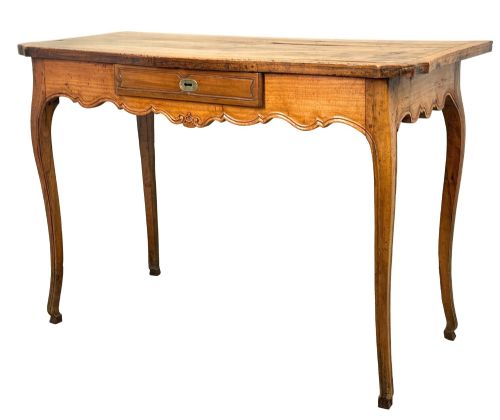
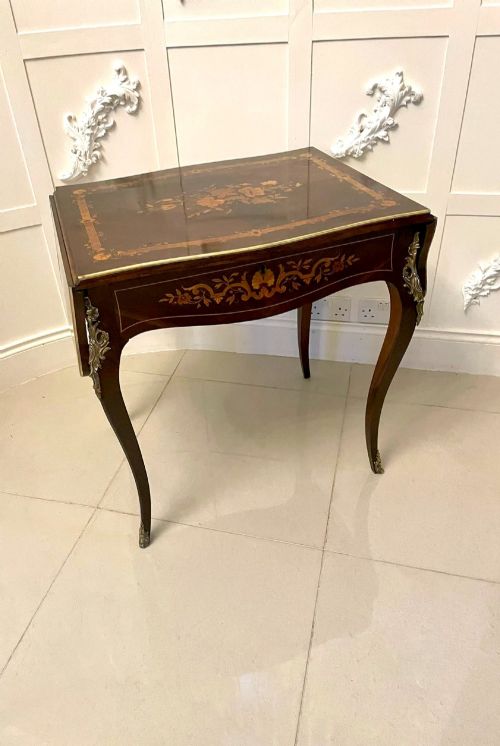
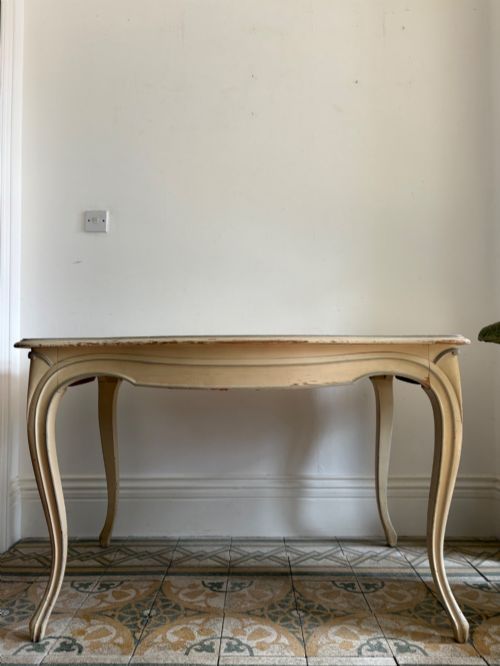
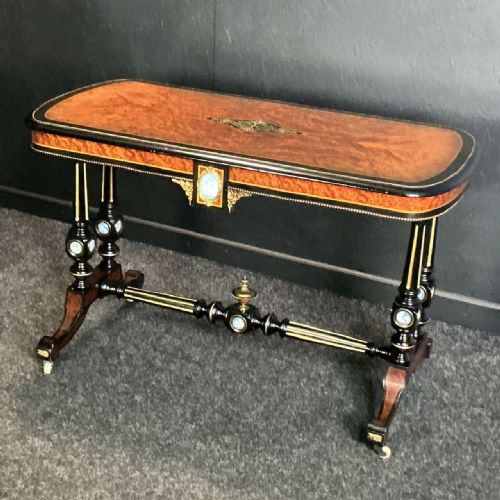
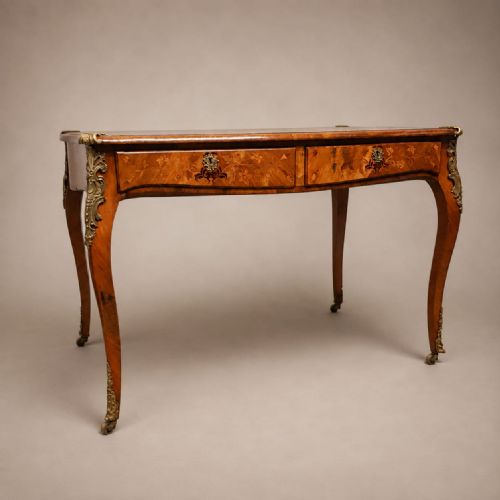
A french side desk combines writing surfaces with domestic utility, appearing frequently in forms such as the bureau plat, writing table, or compact vanity. Buyers seeking this form encounter walnut, kingwood, mahogany, and cherry constructions dating from the nineteenth century into the twentieth.
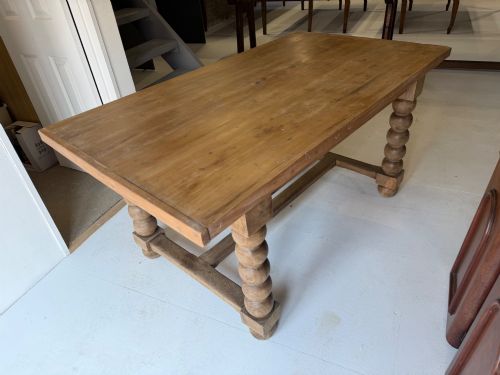
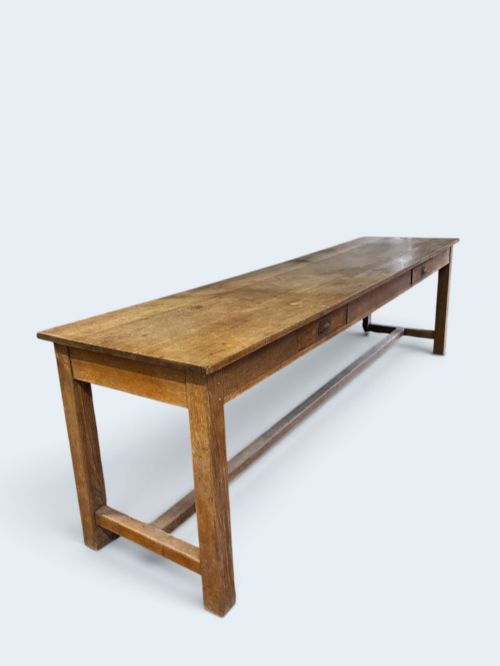
The selection ranges from provincial oak interpretations to ornate revival pieces featuring parquetry and marquetry inlay. These tables serve smaller rooms where full pedestal desks overwhelm the floor plan.
Makers such as JAS Shoolbred, Edwards and Roberts, and Alphonse Tahan occasionally mark these pieces, linking domestic furniture to recorded cabinet makers of the period.
How they were made
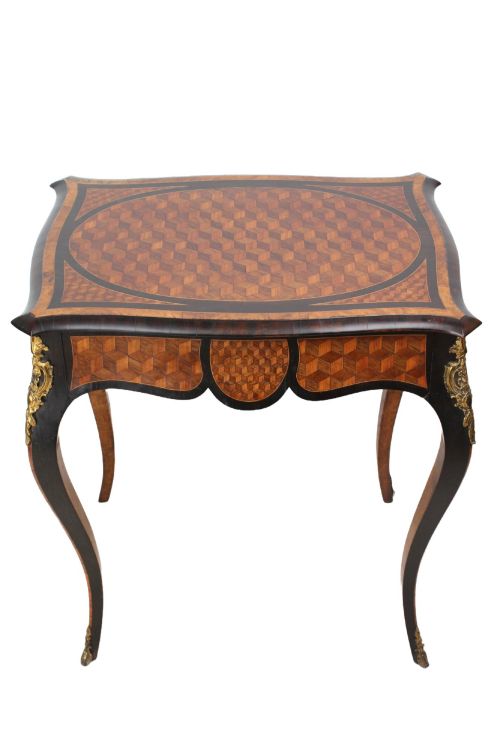
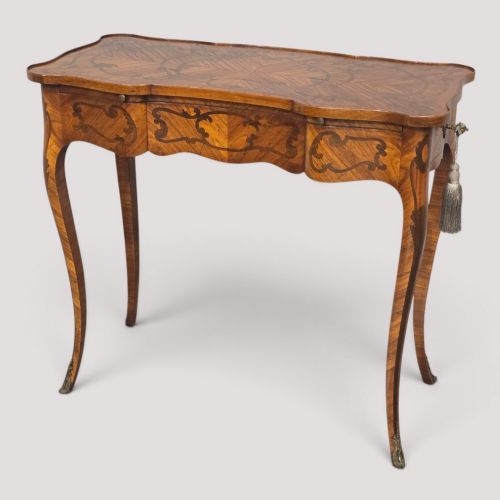
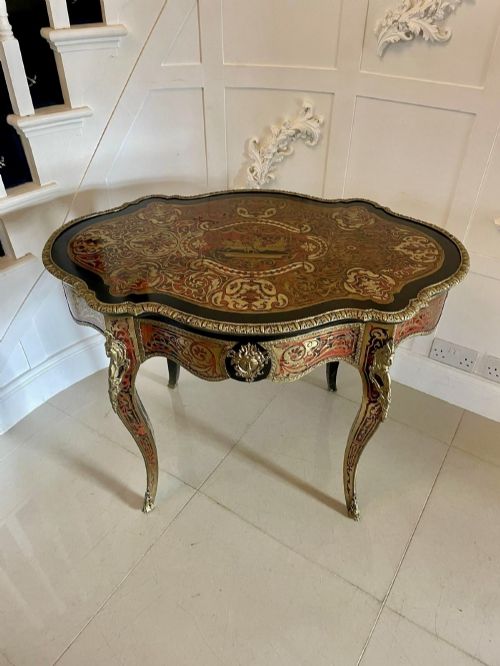
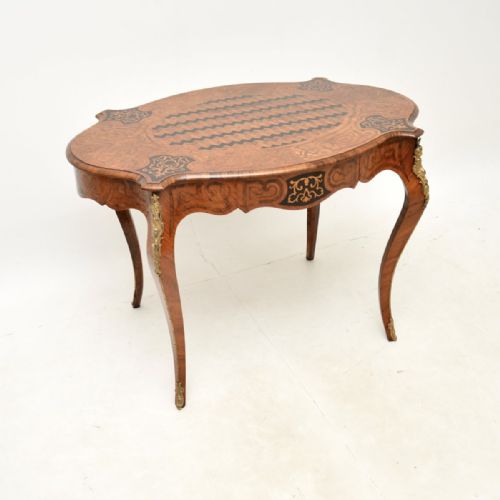
Cabinet makers utilised dense hardwoods including walnut, kingwood, and mahogany for structural frames and drawer carcases, often applying elaborate kingwood or satinwood veneers in geometric parquetry and floral marquetry patterns.
Ormolu mounts, cast in brass or gilt bronze, embellish the corners, legs, and aprons of revival pieces, while inset leather or suede provides a durable writing surface.
Marble tops appear alongside wooden panels, supported by cabriole legs or tapering supports characteristic of Louis XV and Louis XVI revivals.
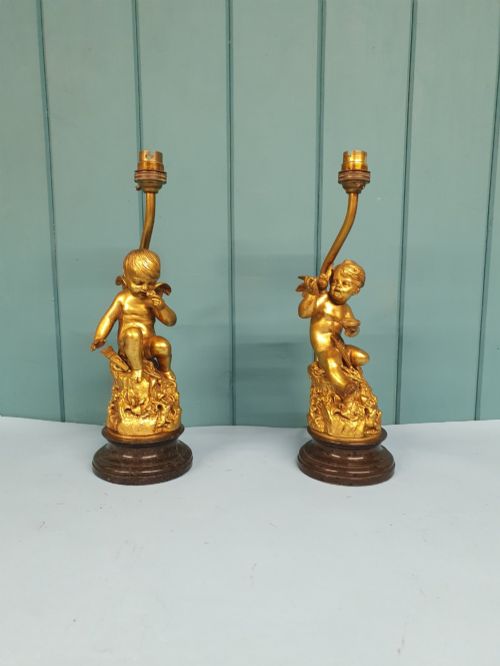
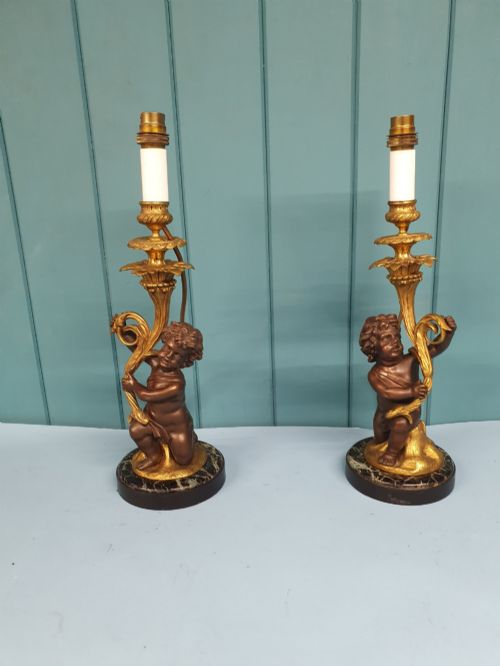
Cherub lamps keep watch over the paperwork.
What varies in quality
Quality depends upon the precision of the veneer work and the crispness of the cast ormolu mounts applied to the frame. Hand-cut marquetry and tightly fitted parquetry distinguish superior examples from simpler production pieces.
The choice of secondary timbers inside the drawer boxes and the weight of the marble or leather top indicate the standard of original manufacture.
JAS Shoolbred·Alphonse Tahan·Charles Schneider
The French Side Desk Glossary
- Bureau plat
- A freestanding writing table fitted with one or more drawers in the frieze. This form originated in France and typically stands on cabriole or tapered legs.
- Marquetry
- The art of applying pieces of veneer to a structure to form decorative patterns and pictorial designs. Cabinet makers use contrasting woods to achieve tonal depth.
- Parquetry
- Geometric mosaic woodwork used for repeating patterns on tabletops and desk surfaces. Triangular and diamond tiles create optical movement across the timber.
- Ormolu
- Gilded bronze mounts applied to furniture edges, feet, and knees for decorative accent. The technique involves mercury amalgamation on cast bronze.
- Cabriole leg
- A furniture leg that bends out in a convex curve and tapers inward to a concave curve, ending in a pad or foot. The design imitates animal limbs.
French Side Desk: Frequently Asked Questions
How are these desks used today?
These pieces function well as compact laptop stations or writing desks in bedrooms and sitting rooms. Their narrow proportions allow placement against walls or behind sofas.
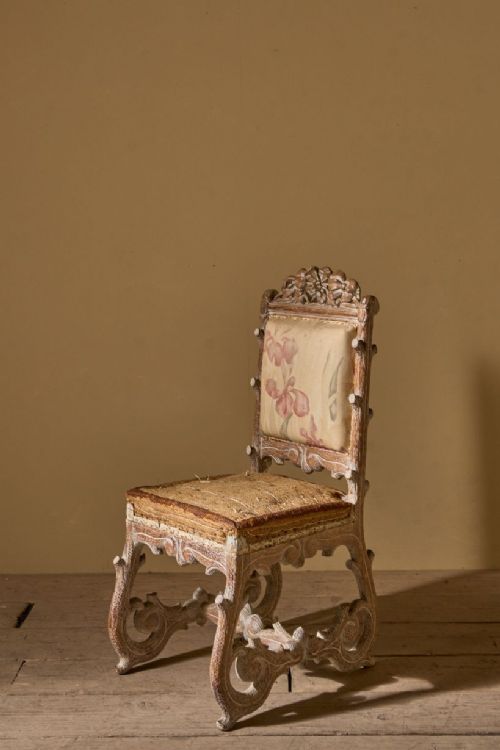
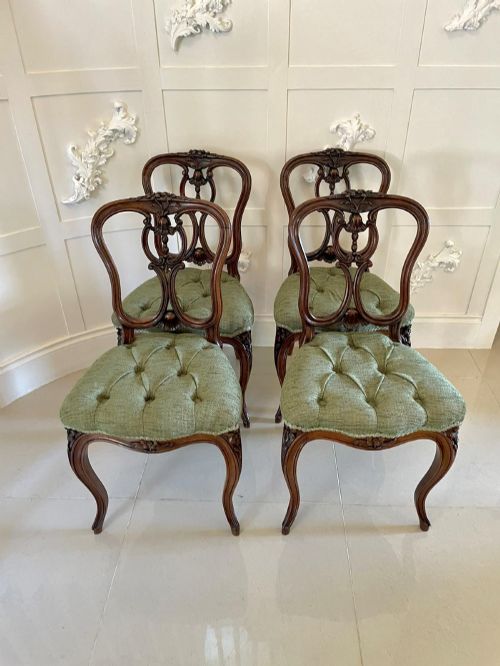
They also serve as dressing tables when paired with a matching side chair or vanity seat.
What periods do these desks date from?
The pieces span the nineteenth century through the early twentieth century, encompassing Victorian production and Edwardian revivals.
Earlier examples from the eighteenth century appear alongside revival styles created during the second half of the nineteenth century.
How do I identify the wood type?
Kingwood displays a dark violet-brown grain with lighter golden streaks, while walnut offers a richer brown tone with varied figuring. Mahogany provides a reddish-brown hue that deepens with age.
Parquetry and marquetry often combine several of these timbers on a single surface.
Can I place a lamp on the desk?
Bronze, brass, and marble table lamps complement the surface materials of these desks. Care should be taken with placement to protect leather or wood finishes from moisture and heat.
Matching pairs of candelabra converted to lamps also appear alongside these tables.