
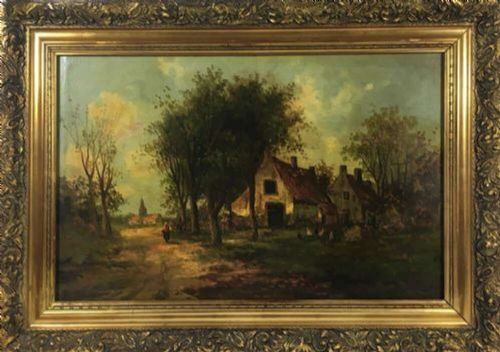


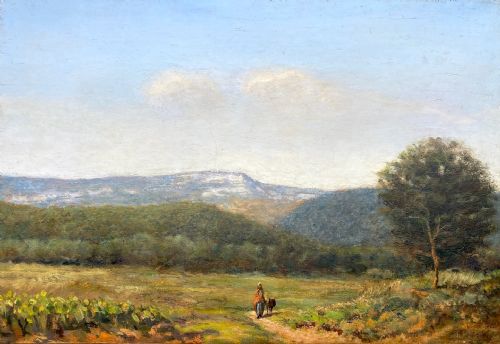


French Rural Scene Painting
A french rural scene painting captures the quiet rhythms of village life, farmyards, and pastoral landscapes across the French countryside.
French Rural Scene Painting
A french rural scene painting transports the viewer to the fields, riversides, and farmyards of France through traditional oil and watercolour media. Buyers searching for this phrase encounter depictions of working horses, laundry scenes, cattle grazing, and quiet village lanes.
The works span from the nineteenth century through the mid-twentieth century, encompassing movements such as the Barbizon School, French Impressionism, and Post-Impressionism. Canvases and panels capture regional settings ranging from Normandy and Brittany to Provence and the Loire.
Landscapes featuring haystacks, farm gates, and rural workers form the core of these offerings. Both signed compositions by listed artists and traditional pastoral works appear across the selection.
Materials and Technique
Artists relied primarily on oil paint applied to canvas, wood panels, or occasionally watercolour on paper to capture the natural light of the countryside. Brushwork ranges from the detailed realism of earlier decades to the looser, expressive strokes of the impressionist and post-impressionist movements.
Many of the works retain their period frames, frequently constructed of giltwood which complements the rich textures of the painted surface. Panel paintings and stretched canvases reflect standard studio practices of the nineteenth and twentieth centuries.
Materials in this selection include oil paint, canvas, wood, watercolour, and giltwood frames.
What Varies in Quality
Quality in these works rests upon the confidence of the brushwork, the handling of natural light, and the compositional balance of the landscape. Stronger pieces convey a palpable atmosphere of their specific regional setting, whether the harsh light of Provence or the damp air of Normandy.
The fidelity of the framing and the preservation of the painted surface significantly influence the overall integrity of the piece. Works that retain their original giltwood frames and show stable pigment adhesion stand higher in the range.
Raimond Louis Lecourt·Robert McGregor·Eugene Battaille·Antoine Bouvard·Maurice Asselin·Henri Joseph Harpignies
The French Rural Scene Painting Glossary
- Barbizon School
- A nineteenth-century French art movement dedicated to realism in landscape painting, strongly influenced by the forest of Fontainebleau. These painters focused on unidealised rural scenes and working life.
- Giltwood
- Wood that has been covered with a thin layer of gold leaf or gold paint. Period frames utilise this finish to enhance oil paintings.
- Pastoral
- A genre of art depicting the rural life of shepherds, farmers, and country villagers in an idealized or naturalistic manner. These scenes emphasise simplicity and harmony with nature.
- Post-Impressionism
- A predominantly French art movement that developed from about 1886 to 1905, extending impressionism while rejecting its limitations. Artists sought greater emotional expression and structural clarity.
French Rural Scene Painting: Frequently Asked Questions
What periods do these paintings cover?
The available works span from the nineteenth century through the mid-twentieth century, capturing shifting artistic approaches to the countryside.
Represented eras include the Barbizon period, the height of French impressionism, and later modernist interpretations of rural life.
Where were these scenes typically painted?
The paintings depict various recognisable regions across France, including Normandy, Brittany, Provence, and the Loire valley.
Each area offered distinct terrain and local customs that shaped the visual character of the landscapes and genre scenes.
How should I hang an oil painting?
Oil paintings on canvas or panel require stable indoor environments away from direct sunlight and excessive humidity.
Secure wall fixings suited to the weight of the piece and its original frame ensure safe and balanced display.
Are these works signed by the artists?
Many compositions bear artist signatures or initials, while others remain anonymous period pieces created by regional painters.
Documentation and signatures help connect individual works to known exhibition histories or artistic circles.