







Earthy Tone Canvas Painting
An earthy tone canvas painting brings the quiet weight of fields, farms, and quiet coastal water straight onto the wall.
Earthy Tone Canvas Painting
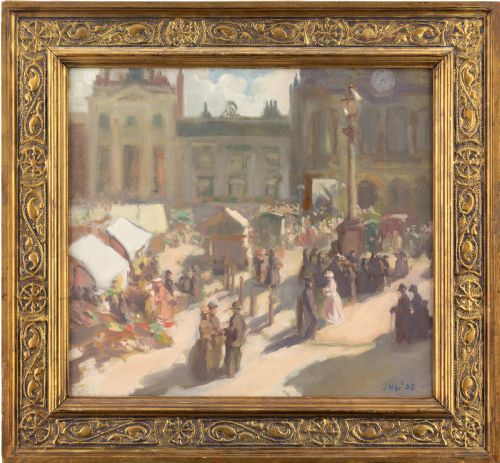
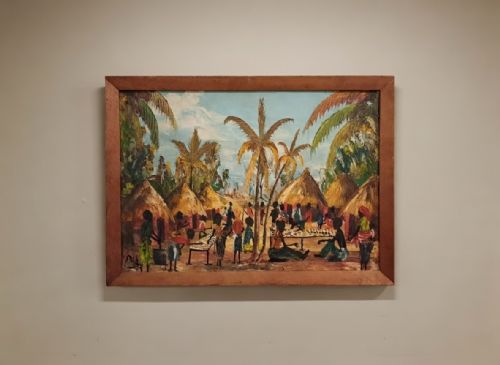
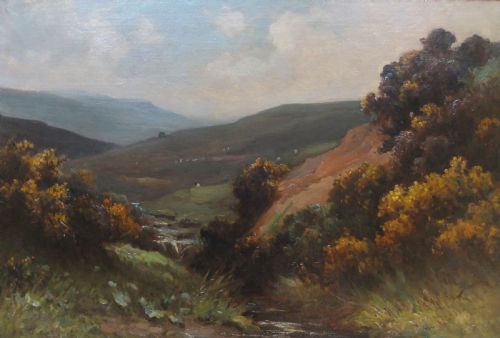
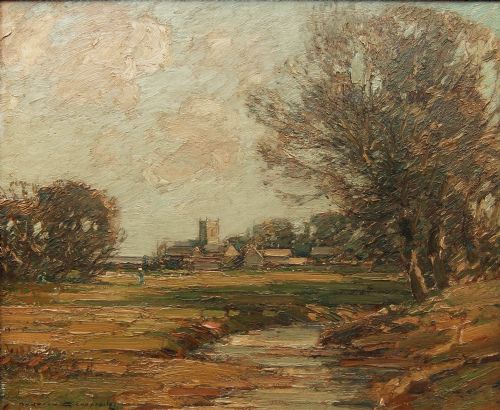
An earthy tone canvas painting captures rustic landscapes, farmyards, and rural scenes through the lens of early twentieth-century and nineteenth-century artists. These works rely on natural pigments of ochre, umber, and muted green to render Yorkshire mornings, Normandy farmsteads, and village streets.
The pieces on this page span British Impressionism, the Barbizon School, and French Provincial traditions. Buyers find oil paintings on canvas and board that preserve the heavy atmosphere of pastures, moorland streams, and working horses.
Subjects range from marine views and park scenes to detailed depictions of livestock and rural domestic life. The canvases are frequently housed in period wood frames that complement the muted palette of the paint.
Materials and construction
These works use oil paint applied directly to woven canvas or rigid board surfaces. Artists built up textures using brushes and palette knives to capture the tactile quality of moorland, stone walls, and farmyard mud.
Many of these paintings are secured within traditional wood frames, sometimes finished with gilt accents. The combination of oil on canvas and heavy wooden surrounds has allowed these pieces to survive from the nineteenth century onward.
Listings feature canvas, oil paint, board, wood, and gilt across periods from the nineteenth century to 1960.
Judging quality in these works
Quality rests in the handling of light and pigment across the canvas surface. Stronger paintings demonstrate a confident application of oil paint that gives depth to skies, water, and foliage without relying on excessive detail.
Provenance and attribution elevate certain works, particularly when signed by established painters from British Impressionist or continental traditions. The cohesion between the subject matter, the restraint of the earthy palette, and the suitability of the frame determines the standing of each piece.
John Hodgson Lobley RBA·Raimond Louis Lecourt·Herbert Royle·Reginald Grange Brundrit RA·Vincenzo Irolli·Majorie Hoare·John Frederick Herring·Thomas Creswick RA·Owen Bowen·Ernest Higgins Rigg·Kershaw Schofield·George F Wetherbee·William Greaves·Maurice Wagermans
The Earthy Tone Canvas Painting Glossary
- Canvas
- A heavy woven fabric stretched across a wooden frame to serve as a support for oil painting. It provides a flexible yet durable ground that responds well to traditional layering techniques.
- Barbizon School
- A nineteenth-century movement centred on realistic, landscape painting rooted in nature. Practitioners focused on rural scenes, atmospheric light, and earthy colour palettes.
- British Impressionism
- A late nineteenth and early twentieth-century painting style characterised by looser brushwork and a focus on natural light. Artists working in this manner often depicted local landscapes and everyday rural life.
- Oil Paint
- A slow-drying paint made by mixing pigments with a drying oil, typically linseed oil. This medium allows for smooth blending and rich, textured applications.
Earthy Tone Canvas Painting: Frequently Asked Questions
How do I care for an old oil painting?
Keep the canvas away from direct sunlight and damp conditions to prevent the oil paint from cracking or fading. Dust the surface very gently with a dry, soft brush without applying pressure.
Avoid using water, chemical cleaners, or modern cloths on the painted area. Professional conservation is best left to specialists if the canvas requires deeper cleaning or repair.
What periods do these paintings cover?
The works on this page stretch from the nineteenth century through the mid-twentieth century. Most examples cluster around the early 1900s and the decades immediately following.
Styles range from Victorian genre scenes to French Provincial landscapes and mid-century modernist interpretations. Each era brings distinct brushwork and framing choices to the canvas.
Are these paintings supplied with frames?
Many of these pieces arrive in their period wood frames, which often show the marks of age and use. These surrounds are chosen to match the traditional aesthetic of the artwork.
Some listings note whether the frame is original to the painting or a later replacement. Buyers should examine the imagery to see the specific framing style accompanying each canvas.
How can I tell a board painting from canvas?
Canvas is a woven textile stretched over a hidden wooden frame, yielding slightly to a gentle touch on the reverse if unlined. Board is a rigid, flat panel made of wood or pressed material that does not flex.
Both supports were widely used by artists during the nineteenth and twentieth centuries. The description typically clarifies whether the oil paint sits on stretched canvas or a rigid board.